Marxist Themes in Tennessee Williams’s The Glass Menagerie
Book Review
Williams, Tennessee. The Glass Menagerie. New Directions Publishing, 1999.
Tennessee Williams’s The Glass Menagerie (1944) is often read as a memory play about familial obligation, fragility, and the melancholy of missed chances. From a Marxist perspective, however, the drama reveals itself as something sharper and more historically determinate: a class text about the forced emotional life of the petty bourgeois household under conditions of economic decline. It exposes the Wingfields not as uniquely “dysfunctional” personalities trapped in private neurosis, but as subjects organized by material pressures—unpaid labor, precarity, gendered dependence, and the ideological violence of the American Dream. Williams’s famous lyricism does not dilute this reality; rather, it performs the ideological fog through which class domination is experienced as fate, personality, or “character.”
Historical materialism and the Wingfield apartment
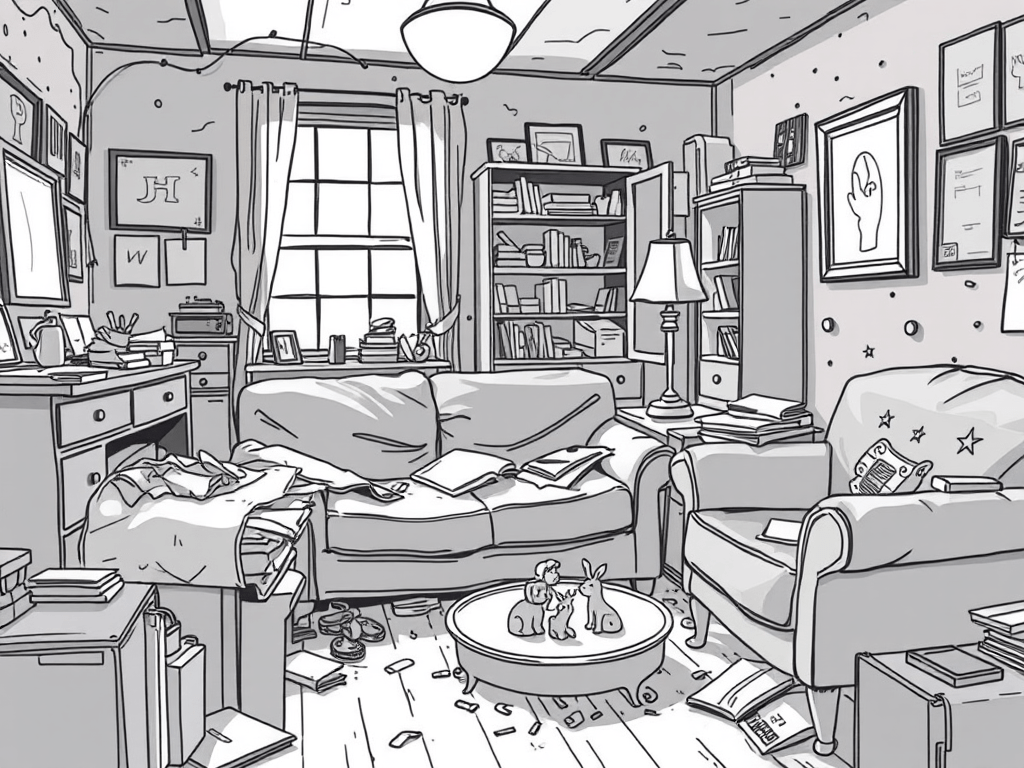
The Wingfield home is not merely a setting but a class enclosure: a cramped St. Louis tenement apartment built to warehouse laboring lives while extracting rent from them. The play’s action is structured by scarcity—money, mobility, time, and prospects. It is no accident that Tom works in a warehouse and that the play repeatedly invokes the factory system, monotonous labor, and the exhaustion of industrial discipline. The apartment becomes a small theater of late-capitalist social reproduction: the family must continually reproduce itself materially (rent, food, clothing) and psychologically (hope, dignity, morale) despite possessing no viable path upward.
Tom’s predicament is therefore not reducible to generational rebellion. His “escape” desire is not simply romantic wanderlust; it is a response to proletarian immiseration, the alienation of work, and the crushing boredom of wage labor. His nightly cinema-going—treated in the play as both irresponsibility and necessity—functions as commodity relief, the purchased illusion of life beyond labor. In Marxist terms, the movies are the opiate of a worker whose days are disciplined by the clock and whose nights must be spent recovering the fantasy of freedom. The play’s memory structure intensifies this: even recollection is shaped by the economy, because the family cannot remember itself except through its defeats.
Amanda and the ideology of the “fallen” petty bourgeoisie
Amanda Wingfield embodies the contradictions of a lower-middle-class subject confronting downward mobility. Her endless recollections of “seventeen gentlemen callers” are not simply comic delusion. They are ideology in its most intimate form: the insistence that social worth is measured through proximity to bourgeois romance and bourgeois security. Amanda’s obsession with propriety, manners, and feminine accomplishment registers the internalization of ruling-class norms, even when the material basis for them has vanished. Her nostalgia is a class nostalgia: the longing for a time when marriage could plausibly function as a secure economic arrangement and when “respectability” could purchase stability.
From this angle, Amanda’s violence toward Tom and Laura is not merely personal. It is structural. She is tasked—brutally—with managing household survival without meaningful income of her own, while also maintaining the appearance of gentility. Her labor is not recognized as labor. It is feminized care work, unpaid, constant, and framed as “motherhood” rather than production. The play’s tragedy is in part that Amanda can only imagine economic security through patriarchal dependency: the return of the absent father in symbolic form (the gentleman caller, the husband, the provider). She polices Laura not because she is cruel by nature but because capitalist patriarchy offers her no alternative social strategy.
Laura as the casualty of commodity culture and patriarchal class relations
Laura is frequently interpreted as an emblem of delicate psyche. Yet her fragility can be read materially: she is the human remainder produced by a system that values people according to productivity, employability, and social exchange. Her disability and anxiety render her “uncompetitive” within capitalist modernity. She cannot easily sell labor power, cannot comfortably perform femininity as social capital, and cannot participate in the rituals of social networking that substitute for community. Her glass collection—beautiful, useless, and easily broken—functions as an objective correlative for those whom capitalism cannot assimilate. In the bourgeois world, to be “unproductive” is to be disposable.
The glass menagerie also represents commodity fetishism transposed into the domestic sphere. These objects are treasured beyond their use-value because they provide meaning in the absence of real agency. Laura’s emotional investment in glass suggests how, under conditions of alienation, people transfer affect from collective life into private possessions. She becomes a curator of ornaments rather than a participant in history. In a Marxist frame, this is not “personal weakness” but the consequence of being structurally denied social power.
Jim O’Connor and the violence of the American Dream
Jim is the play’s most important ideological instrument. He represents not the bourgeoisie itself but its missionary class: the upbeat salesman of self-improvement. His language of confidence, public speaking, and “developing personality” is the language of capitalist realism—the belief that success is primarily a matter of attitude and self-branding. He embodies a culture in which systemic inequality is psychologized. Structural barriers vanish into individual deficiency: if you fail, you did not work hard enough; if you suffer, you did not think positively enough.
Jim’s encounter with Laura is therefore not a simple near-romance. It is a class encounter between the propaganda of meritocracy and the casualties of the system it legitimizes. The moment the unicorn is broken is frequently treated as tender symbolism. Marxistically, it is also an encounter between ideology and reality: Jim’s “normalizing” influence breaks Laura’s singular internal world, briefly drawing her toward social life, but the movement is cruelly revealed to be contingent and temporary. His engagement announcement is not incidental. It is the play’s decisive ideological blow: even the emissary of hope is already absorbed into the conventional structures of capitalist domesticity. He cannot rescue; he can only pass through, inadvertently illuminating the Wingfields’ material abandonment.
Tom: labor, masculinity, and the false freedom of escape
Tom is not a free subject seeking authenticity; he is a worker seeking relief from exploitation. His masculinity is weaponized through economic responsibility—he is expected to be “the man of the house” precisely because the father’s abandonment has left the family vulnerable to economic collapse. This reveals patriarchy’s class function: gender roles are not just cultural tradition; they are mechanisms for allocating labor, enforcing obligation, and stabilizing property relations within the household.
Tom’s final departure appears heroic in some readings, but Marxist critique must resist the romance of individual exit. His escape does not alter the relations of domination; it merely redistributes suffering. Amanda and Laura remain trapped. Tom’s freedom is haunted because it is not political: it is flight, not emancipation. The play’s grief stems from that truth. In capitalism, exit from the family is often the only imaginable route to autonomy, because collective solutions—unionization, social welfare, communal living beyond economic desperation—have been foreclosed from the cultural imagination.
Form as ideology: memory play and bourgeois interiority
The play’s form matters. As a “memory play,” The Glass Menagerie aesthetically reproduces bourgeois ideology: it frames social suffering as personal recollection, private guilt, and emotional fate. What is historically produced appears psychologically inevitable. This is not a flaw in Williams; it is precisely the play’s diagnostic power. Williams stages how capitalism is lived. It is lived not as a set of economic relations but as atmosphere, shame, nostalgia, quarrels, silence, and longing.
In this sense, the audience is invited into a class experience: to witness how the petty bourgeois/proletarian household metabolizes structural violence into interpersonal tragedy. The play’s lyricism becomes a kind of ideological realism—not falsehood but the accurate representation of how ideology feels from within.
Conclusion
From a Marxist perspective, The Glass Menagerie is a drama of class reproduction under duress. Its central conflict is not simply between mother and son, or between dream and reality, but between human need and the economic system that constrains it. The Wingfields’ pain is real, but it is not private. It is produced by labor exploitation, gendered dependence, commodity culture, and the ideological machinery of the American Dream. Williams offers no revolution, no political awakening—only the aching truth that capitalism does not merely impoverish bodies; it impoverishes futures, and then calls the result “tragedy.”


Leave a comment