During this chaotic era of vile rhetoric and manipulative tactics from our so-called bourgeois leaders, I am invigorated by the opportunity to reflect on Socialists, Revolutionaries, Philosophers, Guerrilla Leaders, Partisans, and Critical Theory titans, champions, and martyrs who paved the way for us—my own audacious “Socialism’s Hall of Fame.” These are my heroes and fore-bearers. Not all are perfect, or even fully admirable, but all contributed in some way to our future–either as icons to emulate, or as warnings to avoid in the future.
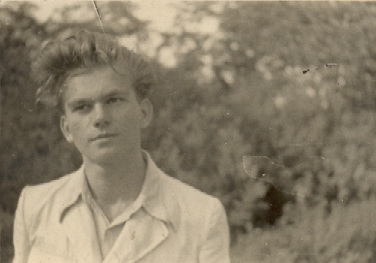
Karel Kosík stands as one of the most significant Czech Marxist philosophers of the twentieth century, a thinker whose synthesis of phenomenology, Marxist humanism, and critical social theory represented one of the most original intellectual contributions to European Marxism during the Cold War. Best known for his 1963 magnum opus Dialektika konkrétního (Dialectics of the Concrete), Kosík forged an approach to Marxist theory that resisted both Stalinist dogmatism and liberal technocratic rationality, instead insisting on the category of the concrete human world as the locus of philosophical critique and political transformation. His thought became a crucial philosophical underpinning for the Prague Spring of 1968, and his subsequent marginalization after the Soviet invasion exemplifies the fate of critical Marxist intellectuals in Eastern Europe.
Early Life and Formation
Born on June 26, 1926, in Prague, Kosík came of age during the Second World War. His involvement in the anti-Nazi resistance—he was arrested by the Gestapo in 1944 and imprisoned in the Terezín (Theresienstadt) concentration camp—served as a formative moral and political experience, fostering a lifelong commitment to anti-fascism and social justice. After the war, he pursued philosophy and sociology at Charles University in Prague and later studied in Leningrad and Moscow, where he encountered Soviet Marxism in its institutional form. These academic experiences paradoxically sharpened his critical stance: he absorbed the Marxist canon deeply while becoming increasingly skeptical of the ossified, positivistic Marxism dominant in the Eastern Bloc.
Intellectual Development and Dialectics of the Concrete
In the 1950s and early 1960s, Kosík entered the philosophical milieu shaped by the revival of Marxist humanism and the re-emergence of Central European phenomenology. Drawing on Marx’s Economic and Philosophic Manuscripts of 1844, Lukács’s History and Class Consciousness, and Heideggerian existential ontology, he articulated a concept of the “concrete totality” that rejected both idealist abstraction and empiricist reduction. His central philosophical claim was that the “pseudoconcrete”—the realm of reified appearance—obscures the dialectical structure of real human practice. To grasp society concretely, one must penetrate beyond surface phenomena into the structured, contradictory totality of lived praxis.
Publication of Dialectics of the Concrete in 1963 marked a watershed in Czechoslovak intellectual life. The book’s dense theoretical vocabulary, combined with its insistence on human subjectivity, freedom, and authentic praxis, resonated strongly with reformist Marxist circles across Europe. Kosík’s work was taken up not only by philosophers but by sociologists, economists, and political reformers who recognized in it a philosophical justification for democratic socialism. He opposed the bureaucratic alienation of late Stalinism as a deformation of Marx’s emancipatory project, arguing instead for a form of socialism grounded in meaningful human activity and collective self-determination.
Political Engagement and the Prague Spring
By the mid-1960s, Kosík emerged as a leading intellectual of the Czechoslovak “socialist reform” movement. His essays in Literární noviny and his public lectures criticized bureaucratic authoritarianism and called for a democratic renewal of socialist society grounded in the “human world.” Kosík’s political stance aligned him with the Prague Spring of 1968, during which Alexander Dubček’s program of “socialism with a human face” sought to reimagine socialism as democratic, participatory, and culturally open. Kosík’s philosophical articulation of dialectical humanism gave theoretical legitimacy to this project.
Following the Warsaw Pact invasion of Czechoslovakia in August 1968, Kosík, like many reformist Marxists, was expelled from public life. He was removed from his university post, banned from publishing, and forced into internal exile throughout the period of “Normalization.” While no longer able to speak publicly, he continued writing privately, developing increasingly critical reflections on modernity, technology, and globalization.
Late Work and Critique of Modern Civilization
Kosík’s later writings, published mostly after 1989, bear the imprint of a thinker who had witnessed the failures of both state socialism and global capitalism. Though his criticisms could be sharp, he remained committed to the Marxist problematic of alienation, commodification, and the crisis of modern subjectivity. His essays in the 1990s—collected in works such as Poslední eseje (Final Essays)—explored themes of the dehumanization of politics, the global triumph of market ideology, and the erosion of meaningful human life under neoliberal modernization.
Rather than abandoning Marxism, Kosík radicalized its philosophical core, arguing that the socialist project had failed not because Marxism was flawed but because bureaucratic forms of socialism betrayed its essence. He insisted that genuine social emancipation requires both structural transformation and a revolution in human self-understanding—a renewal of praxis grounded in ethical, aesthetic, and existential dimensions of life.
Legacy and Influence
Kosík’s legacy is multifaceted. In the 1960s, he was a central figure in the European New Left and a key interlocutor for philosophers seeking a humanist alternative to Soviet orthodoxy. After 1989, his critique of global capitalism found new resonance among scholars investigating the contradictions of post-socialist societies. Dialectics of the Concrete remains a classic of Western Marxism, esteemed for its methodological rigor and its synthesis of phenomenology with dialectical materialism.
Although Kosík spent decades marginalized by political repression, his influence has grown steadily in academic circles. Contemporary scholarship situates him alongside Lukács, Gramsci, and the Praxis School as a major figure in the renewal of critical Marxist philosophy. Kosík’s insistence on understanding the “concrete human world”—in all its contradictions—remains a powerful challenge to both technocratic rationality and post-political capitalism. His work invites ongoing engagement with the central philosophical question that animated his life: How can human beings transform the world in a way that is genuinely human?
Selected Bibliography
Primary Works by Karel Kosík
• Kosík, Karel. Dialectics of the Concrete: A Study on Problems of Man and World. Translated by Karel Kovanda and James Schmidt. Dordrecht: Reidel, 1976.
• Kosík, Karel. Moc a člověk [Power and Man]. Prague: Československý spisovatel, 1969.
• Kosík, Karel. Reflections on the Crisis of Modern Society. Prague: Czechoslovak Academy of Sciences, various essays, 1970s–1990s.
Secondary Literature
• Bernstein, Richard J. “Praxis and Action: Contemporary Philosophies of Human Activity.” Philadelphia: University of Pennsylvania Press, 1971. (Has a substantial section on Kosík.)
• Havelka, Miloš. Karel Kosík a tradice kritického myšlení [Karel Kosík and the Tradition of Critical Thought]. Prague: Filosofia, 2004.
• Harvanek, Jaroslav. “Karel Kosík and the Czechoslovak Marxist Humanist Tradition.” Studies in East European Thought 57, no. 3 (2005): 231–254.
• Kavoulakos, Karolos, and Mattias Iser, eds. The Routledge Handbook of Critical Theory. New York: Routledge, 2018. (Includes broader contextualization of Kosík among European Marxists.)
• Tomsic, Samo. “Concrete Totality and Pseudoconcreteness: Revisiting the Dialectics of Karel Kosík.” Crisis & Critique 7, no. 1 (2020): 154–175.
• Williams, Evan. “Humanism and Praxis in Karel Kosík’s Dialectics of the Concrete.” Historical Materialism 25, no. 2 (2017): 87–116.


Leave a Reply