My Socialist Hall of Fame
During this chaotic era of vile rhetoric and manipulative tactics from our so-called bourgeois leaders, I am invigorated by the opportunity to reflect on Socialists, Revolutionaries, Philosophers, Guerrilla Leaders, Partisans, and Critical Theory titans, champions, and martyrs who paved the way for us—my own audacious “Socialism’s Hall of Fame.” These are my heroes and fore-bearers. Not all are perfect, or even fully admirable, but all contributed in some way to our future–either as icons to emulate, or as warnings to avoid in the future.
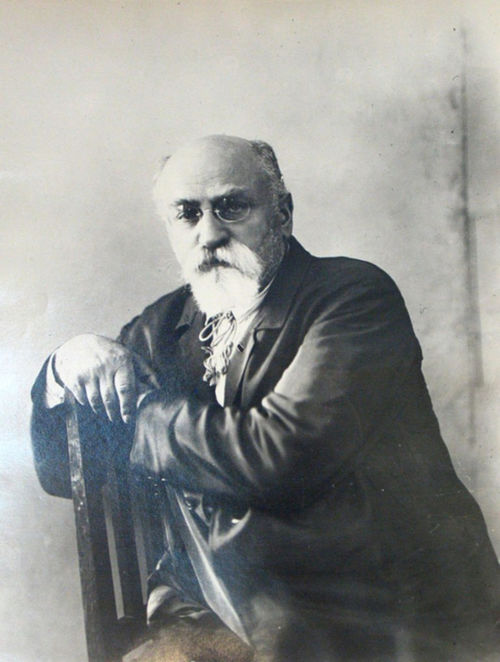
David Borisovich Riazanov (1870–1938) occupies a distinctive and indispensable place in the intellectual history of Marxism. A revolutionary activist, bibliographer, archivist, and scholar, he was the first figure to elevate the study of Marx and Engels to a disciplined, critical, and philologically rigorous academic field. His trajectory—spanning Tsarist repression, European exile, the early Bolshevik state, and Stalinist terror—embodies the contradictory evolution of Russian Marxism itself, from an oppositional current of dissident intellectuals to an institutionalized ideology subject to political control. Riazanov’s contribution rests not only in his editorial mastery but also in his insistence on scholarly autonomy and textual integrity at moments when the Soviet state was increasingly hostile to independent thought.
Early Life and Revolutionary Formation
Born David Zakharyevich Goldendach in Odessa to a Jewish family, Riazanov entered revolutionary politics as a teenager, initially within the populist “People’s Will” tradition before gravitating toward Marxism. His early arrests, deportations, and exiles typified the experience of radical youth in the final decades of the Russian Empire. By the 1890s, he had become involved in the nascent Russian Social Democratic movement and emerged as a significant figure in debates around programmatic unity and organizational strategy.
Notably, throughout the factional disputes of the early 20th century, Riazanov refused to align consistently either with Lenin’s Bolsheviks or with the Menshevik mainstream. His independent theoretical orientation—deeply influenced by German Marxist scholarship, particularly Kautsky and Mehring—made him suspicious of dogmatism and political schematism. This early intellectual independence would later shape both his scholarly achievements and his political vulnerability.
Exile and Intellectual Consolidation
Riazanov’s pre-1917 years were marked by extended periods in European exile, particularly in Germany, Austria, and France. During this time he cultivated relationships with the leading Marxist scholars of Western Europe, gained access to private archives, and began assembling the extensive bibliographic knowledge that later made him indispensable to Soviet institutions.
His work during this period was characterized by two commitments: first, to the recovery and publication of Marxist primary texts; second, to the philosophical and historical interpretation of Marxism as a living tradition rather than a closed doctrine. Riazanov’s essays on Marxist political economy, his studies of the First International, and his work on Hegel attest to a scholar deeply invested in grounding revolutionary theory in rigorous historical inquiry.
The Marx-Engels Institute and the Monumentalization of Marxism
The October Revolution brought Riazanov back to Russia, where his scholarly reputation and non-sectarian credentials enabled him to occupy a unique space within the early Soviet cultural and academic apparatus. In 1921 he was appointed director of the newly founded Marx-Engels Institute (MEI), an institution he shaped into the preeminent global center for Marxological research.
Under Riazanov’s leadership, the Institute undertook the colossal task of gathering all extant manuscripts, correspondence, notebooks, and unpublished fragments of Marx and Engels from across Europe. His success owed much to his meticulous archival methods and to the trust he had earned from figures such as Eduard Bernstein and Laura Lafargue, who granted access to family papers otherwise closed to communist partisans.
The MEI’s flagship achievement was the Marx-Engels Gesamtausgabe (MEGA)—the first attempt to compile a comprehensive, critical edition of the complete works of Marx and Engels with rigorous philological standards. Riazanov insisted on scholarly transparency, non-interventionist editing, and an internationalist ethos in the project’s execution. His editorial principles, influenced by the German historical-critical method, aimed to free Marxist scholarship from the distortions of propagandistic simplification.
Conflict with the Stalinist Turn
Riazanov’s insistence on academic autonomy and his refusal to subordinate scholarship to political expediency brought him increasingly into conflict with the emerging Stalinist intellectual regime. By the late 1920s, as the Soviet state consolidated ideological control and liquidated independent centers of intellectual authority, Riazanov’s independence became intolerable.
His arrest in 1931, on fabricated charges involving alleged association with a fictitious “Menshevik Center,” was a clear attempt to eliminate the last vestiges of Marxological scholarship not dominated by the party bureaucracy. Expelled from the Institute and exiled to Saratov, Riazanov continued to work as a librarian and scholar under surveillance. In 1938, during the height of the Great Terror, he was executed after a perfunctory judicial process.
Rehabilitation and Legacy
Riazanov was officially rehabilitated in 1958, though the Soviet state never restored the full scope of his scholarly vision or acknowledged the extent to which Stalinist orthodoxy had impoverished Marxist studies. Nevertheless, his legacy remains foundational. Modern critical editions of Marx and Engels—including the post-1960s MEGA2 project—are unthinkable without Riazanov’s pioneering work. His editorial principles, archival discoveries, and bibliographic precision set the standard for a global field that continues to draw upon his methods.
Beyond his philological achievements, Riazanov stands as a symbol of Marxism’s intellectual integrity: a scholar who resisted the instrumentalization of theory by the state, and who treated Marxism not as a dogma but as a historically grounded, evolving field of inquiry. His life charts both the possibilities and tragedies of revolutionary scholarship in the 20th century.
Bibliography
Primary Sources
• Riazanov, David. Karl Marx and Friedrich Engels: An Introduction to Their Lives and Work. Translated by Richard Dixon. New York: Monthly Review Press, 1973.
• Riazanov, David. “The First International.” In The First International: Minutes and Documents, edited by David Riazanov. London: New Park Publications, 1964.
• Marx, Karl, and Friedrich Engels. Marx-Engels Gesamtausgabe (MEGA). Various editors including David Riazanov. Berlin: Marx-Engels Institute, 1927–1935.
Secondary Sources
• Anderson, Kevin B. “David Riazanov and the Origins of Marxological Scholarship.” Studies in East European Thought 46, no. 2/3 (1994): 159–177.
• Bober, Stanley. Marx and the Marxists: The Twilight of the Gods. London: Routledge, 1988.
• Draper, Hal. “The Rediscovery of Marx and Engels: David Riazanov and the MEGA.” In Marx-Engels Cyclopedia, edited by Hal Draper. New York: Schocken Books, 1985.
• Rowley, David G. Riazanov and the Fate of Independent Marxism in the USSR. Stanford, CA: Hoover Institution Press, 1999.
• Tucker, Robert C. Stalin in Power: The Revolution from Above, 1928–1941. New York: W. W. Norton, 1990.
• Wada, Haruki. “Riazanov and Soviet Marxology.” International Review of Social History 32, no. 1 (1987): 1–30.
 Letters from Tomis
Leave a comment