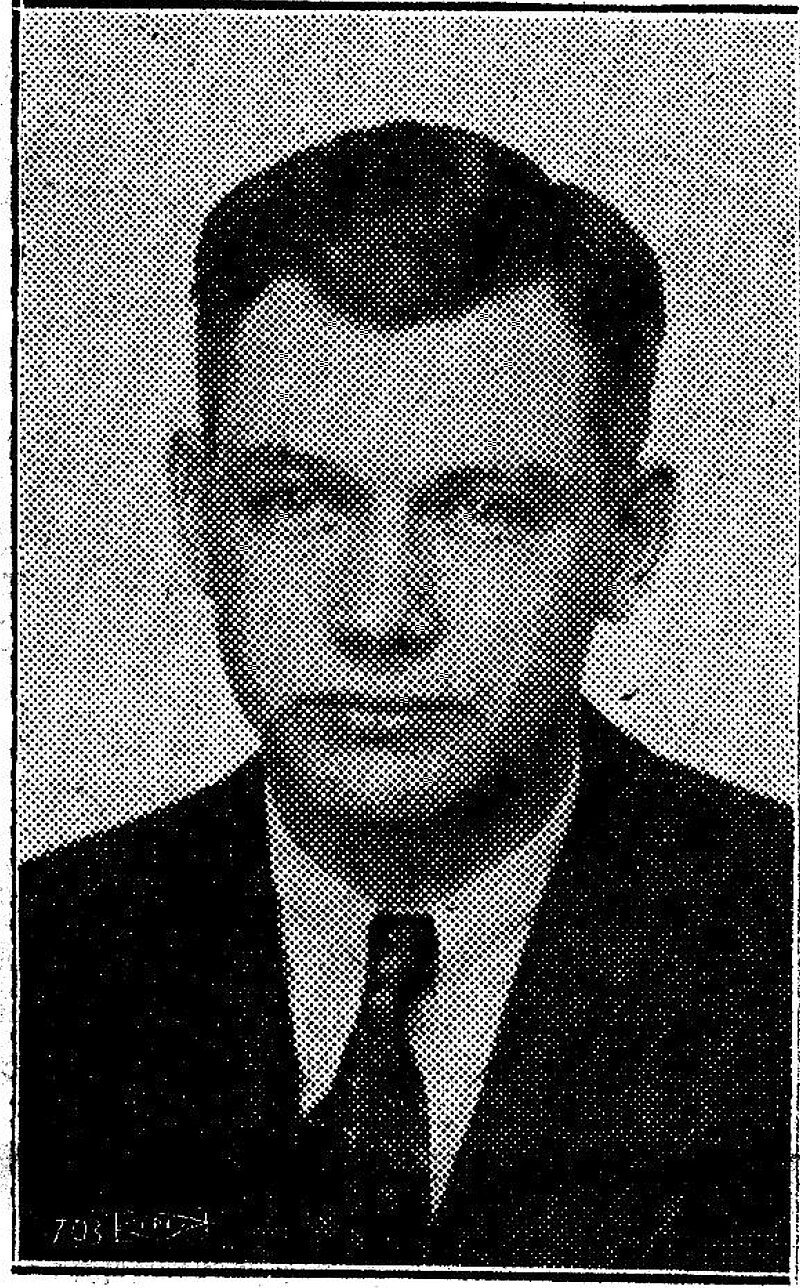
My Socialist Hall of Fame
During this chaotic era of vile rhetoric and manipulative tactics from our so-called bourgeois leaders, I am invigorated by the opportunity to reflect on Socialists, Revolutionaries, Philosophers, Guerrilla Leaders, Partisans, and Critical Theory titans, champions, and martyrs who paved the way for us—my own audacious “Socialism’s Hall of Fame.” These are my heroes and fore-bearers. Not all are perfect, or even fully admirable, but all contributed in some way to our future–either as icons to emulate, or as warnings to avoid in the future.
George Novack (1905–1992) stands as one of the most important American Marxist theoreticians of the twentieth century, a figure whose intellectual labor helped consolidate, interpret, and disseminate classical Marxism within a distinctly American context. Though never as widely known outside revolutionary circles as leaders of mass parties or social movements, Novack’s historical, philosophical, and pedagogical contributions provided an indispensable bridge between the classical Marxist tradition—particularly as mediated by Leon Trotsky—and several generations of militants engaged in the labor, civil rights, antiwar, and socialist struggles of the United States. His body of work is distinguished by its extraordinary clarity, its commitment to dialectical method, and its persistent effort to relate Marxism to the specific conditions of U.S. history, politics, and culture.
Early Life and Intellectual Formation
Born on August 8, 1905, in Boston, Novack grew up in a middle-class Jewish family. His early education included time at Harvard University, where he absorbed a classical liberal and humanistic curriculum. The intellectual milieu of the 1920s—dominated by the crises of liberal democracy, the rise of reactionary movements, and the aftermath of the Russian Revolution—sharpened his interest in radical ideas. Like many American intellectuals of his generation, he was drawn toward Marxism not through party discipline but through philosophical inquiry into history, science, and social development.
Before becoming a professional revolutionary, Novack worked in publishing and advertising. This early career provided him with a foundation in writing and editorial work, skills he later deployed to systematize Marxist theory in a clear, accessible idiom that distinguished him from the academic Marxists of his era.
Joining the Trotskyist Movement
Novack became involved with the U.S. Trotskyist movement in the mid-1930s, joining the newly formed Socialist Workers Party (SWP) shortly after its foundation in 1938. His entry coincided with a formative moment in American Trotskyism—marked by bitter factional struggles, state repression, and the challenge of articulating an anti-Stalinist revolutionary alternative.
He quickly emerged as one of the most intellectually capable figures in the movement. During the Minneapolis Seditions Trial of 1941, in which leaders of the SWP and Teamsters Local 544 were prosecuted under the Smith Act, Novack served as national defense director of the Civil Rights Defense Committee. His work in the case solidified his reputation not only as a theorist but as an organizer capable of linking the defense of democratic rights to the broader political struggle against capitalism and fascism.
The Philosopher of American Trotskyism
Across the 1940s–70s, Novack became the principal Marxist public intellectual of the SWP. His works on dialectical materialism, the history of philosophy, and American political development were designed not for academic institutions but for revolutionary workers and youth in party schools and mass movements.
Dialectical Materialism and the History of Philosophy
Works such as An Introduction to the Logic of Marxism (1942), The Logic of Marxism (1947), and The Origins of Materialism (1965) established Novack as a systematizer of Marxist philosophy. His treatments of dialectics avoided both dogmatism and academic abstraction; rather, he linked dialectical method to concrete historical processes. His writings consistently defended the rational and scientific core of materialism against idealist philosophy, pragmatism, and positivism—currents deeply embedded in American intellectual life.
Historical Materialism in the American Context
Novack’s analyses of U.S. history are among his most original contributions. In works like The American Road to Capitalism (1976) and The First Three Internationals (1974), Novack applied the Marxist conception of social formations to the rise of U.S. capitalism, the Civil War, Reconstruction, and the development of class relations in North America.
He offered one of the earliest sustained Marxist efforts to interpret the American Revolution, Civil War, and frontier expansion as components of a historically specific bourgeois-democratic development, arguing against both exceptionalist and reductionist narratives. His writing helped place U.S. history squarely within the global dynamics of capitalist development, imperialism, and class struggle.
Engagement with Contemporary Movements
From the 1950s through the 1970s, Novack was a key educator within the SWP’s internal schools and a prolific contributor to its theoretical magazine, International Socialist Review. His clear, polemical style—combined with a deep command of Marxist categories—made his works central reading in Trotskyist study circles, civil rights groups, and the anti-Vietnam War movement.
He continued producing accessible pamphlets and books that articulated Marxist positions on democratic rights, human evolution, women’s liberation, and the scientific worldview, thereby keeping classical Marxism in dialogue with contemporary political questions.
Method and Contribution
Novack’s significance rests less on theoretical originality than on rigorous synthesis—an ability to unify historical, philosophical, and political analysis within a consistently dialectical framework. His work is distinguished by:
• Pedagogical precision: His texts remain models of clear exposition of complex Marxist concepts.
• Historical contextualization: His analyses tied abstract theory to concrete social formations, especially the particularities of U.S. capitalism.
• Defense of dialectical reason: He argued persuasively for the continued necessity of dialectical materialism in an age of empiricism, pragmatism, and postwar positivism.
• Revolutionary commitment: His theoretical work was inseparable from practical involvement in working-class struggles and the international Trotskyist movement.
Later Years and Legacy
Even after retiring from full-time party leadership, Novack remained an influential educator and writer. He continued producing essays and lectures—many later collected into books—well into the 1980s. His final decades coincided with the crisis and fragmentation of the Fourth International, yet he remained committed to the defense of its theoretical heritage.
Novack died on July 30, 1992, leaving behind a substantial body of work that continues to serve as a foundational reference in contemporary socialist education. His writings have outlived the organizational forms that shaped them, and they remain essential for understanding the transmission of classical Marxist theory into the American revolutionary tradition. Though scholars have often overlooked the intellectual history of U.S. Trotskyism, Novack’s work stands as a testament to the rigor, internationalism, and philosophical ambition of that movement.
Selected Bibliography
Primary Works by George Novack
• Novack, George. An Introduction to the Logic of Marxism. Pioneer Publishers, 1942.
• ——. Empiricism and Its Evolution: A Marxist View. Pathfinder Press, 1971.
• ——. The Origins of Materialism: The Evolution of Materialist Thought in Ancient Greece. Pathfinder Press, 1965.
• ——. Understanding History: Marxist Essays. Pathfinder Press, 1972.
• ——. The American Road to Capitalism: Studies in Class Structure, Economic Development and Political Democracy. Pathfinder Press, 1976.
• ——. The First Three Internationals: Their History and Lessons. Pathfinder Press, 1974.
• ——. Revolutionary Dynamics of Women’s Liberation. Pathfinder Press, 1971.
• ——. Humanism and Socialism. Pathfinder Press, 1973.
• ——. The Long View of History. Pathfinder Press, 1958.
• ——. Civilization and Evolution. Pathfinder Press, 1964.
Secondary Sources
• Breitman, George. The Last Year of Malcolm X: The Evolution of a Revolutionary. Pathfinder Press, 1967.
• Hansen, Joseph. Leon Trotsky: A Guide to His Life and Thought. Pathfinder, 1973.
• Wald, Alan. The New York Intellectuals: The Rise and Decline of the Anti-Stalinist Left from the 1930s to the 1980s. University of North Carolina Press, 1987.
• Alexander, Robert S. International Trotskyism, 1929–1985: A Documented Analysis of the Movement. Duke University Press, 1991.
• Prickett, Stephen. “American Marxism and the Problem of Philosophy.” Science & Society, vol. 52, no. 4, 1988, pp. 422–441.
• Buhle, Paul. Marxism in the United States: A History of the American Left. Verso, 1987.
 Letters from Tomis
Leave a comment