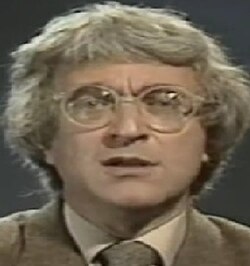
My Socialist Hall of Fame
During this chaotic era of vile rhetoric and manipulative tactics from our so-called bourgeois leaders, I am invigorated by the opportunity to reflect on Socialists, Revolutionaries, Philosophers, Guerrilla Leaders, Partisans, and Critical Theory titans, champions, and martyrs who paved the way for us—my own audacious “Socialism’s Hall of Fame.” These are my heroes and fore-bearers. Not all are perfect, or even fully admirable, but all contributed in some way to our future–either as icons to emulate, or as warnings to avoid in the future.
Introduction
Gerald Allan Cohen (1941–2009) was one of the foremost political philosophers of the late twentieth and early twenty-first centuries, recognized for his rigorous reinterpretation of Marxist theory through the lens of analytic philosophy and for his later contributions to egalitarian political theory. Cohen’s work bridged traditions often seen as incompatible—the analytic and the Marxist—and redefined the methodological and moral contours of socialist thought. His intellectual career, marked by precision, clarity, and wit, transformed both Marxist scholarship and contemporary debates on distributive justice.
Early Life and Education
Born in Montreal, Quebec, in 1941 to working-class Jewish parents who were members of the Communist Party of Canada, Cohen grew up in an environment steeped in socialist activism. His early political consciousness was shaped by his parents’ ideological commitments and by his attendance at the Morris Winchevsky School, which emphasized Yiddish culture and Marxist education. Cohen pursued his undergraduate studies at McGill University, earning a B.A. in philosophy and political science in 1961, before entering the University of Oxford as a Rhodes Scholar. Under the supervision of Gilbert Ryle, a leading figure in ordinary language philosophy, Cohen completed his D.Phil. at Oxford in 1966. His thesis, The Logic of Marxism, laid the groundwork for his later formalization of historical materialism.
Academic Career and Marxist Philosophy
Cohen joined University College London (UCL) in 1963, where he became a central figure in the development of what came to be known as Analytical Marxism. His seminal book Karl Marx’s Theory of History: A Defence (1978) represented a watershed in Marxist theory. Drawing on the tools of analytic philosophy, Cohen sought to reconstruct Marx’s theory of historical materialism with logical rigor, arguing that the development of productive forces plays a primary, determining role in shaping social relations and ideological superstructures. His “technological determinism” sparked extensive debate, both among Marxists and within broader philosophical circles.
Cohen’s defense of Marx was characterized by his insistence that Marxism could be clarified and rendered more scientifically coherent through formal analysis. Yet, he was also self-critical: as debates with fellow analytical Marxists such as Jon Elster, John Roemer, and Philippe Van Parijs unfolded, Cohen revised aspects of his earlier work, acknowledging the need for greater attention to human agency, class struggle, and social context.
From Historical Materialism to Egalitarian Justice
In the 1980s and 1990s, Cohen’s focus shifted from reconstructing Marxist theory to interrogating questions of justice and equality in liberal societies. His Self-Ownership, Freedom, and Equality (1995) critically engaged with the libertarian theories of Robert Nozick and the egalitarian liberalism of John Rawls. Cohen argued that both frameworks failed to address the moral underpinnings of distributive justice: for Cohen, genuine equality required not only just institutions but also an ethos of equality among citizens.
This line of argument reached its fullest expression in If You’re an Egalitarian, How Come You’re So Rich? (2000), a collection of essays blending moral philosophy, political critique, and autobiography. Cohen insisted that egalitarian principles demand not merely structural redistribution but personal commitment to equality in everyday life—a provocative challenge to both academic and political audiences.
Late Work: Socialism, Justice, and the “Camping Trip” Metaphor
Cohen’s final major work, Rescuing Justice and Equality (2008), published shortly before his death, represents his most sustained critique of Rawlsian political theory. He argued that Rawls’s “difference principle,” which allows inequalities that benefit the least advantaged, compromises justice by permitting morally arbitrary advantages. In contrast, Cohen maintained that justice demands the elimination of inequality arising from unearned talent, luck, or market incentives.
His posthumously published Why Not Socialism? (2009) distilled his lifelong ethical commitment to socialism into a simple yet powerful allegory—the “camping trip.” In this scenario, Cohen illustrated how cooperation, mutual concern, and equality could serve as the moral foundation for a just society. The metaphor was both a philosophical argument and a personal testament to his vision of human solidarity.
Legacy and Influence
G. A. Cohen’s legacy spans both Marxist and liberal traditions. As a founding member of the “September Group,” alongside figures such as Jon Elster, John Roemer, and Philippe van Parijs, Cohen helped to create a distinctive form of political philosophy that fused moral reasoning with social science. His clarity of thought, humor, and intellectual humility made him a model of philosophical rigor and moral seriousness.
Cohen’s work continues to shape contemporary debates in political philosophy, particularly discussions of luck egalitarianism, moral motivation, and the nature of socialist justice. His methodological precision remains a touchstone for scholars seeking to reconcile the demands of analytic philosophy with the emancipatory aims of Marxism.
Conclusion
Gerald Allan Cohen stands as a pivotal figure in modern political philosophy. His intellectual journey—from the defense of Marxist determinism to the moral critique of inequality—reflects both the evolution of socialist thought and the enduring quest for a just society. Through his analytic clarity and ethical conviction, Cohen demonstrated that philosophy can illuminate, critique, and humanize the struggle for equality.
Selected Bibliography
Primary Works by G. A. Cohen
• Cohen, G. A. Karl Marx’s Theory of History: A Defence. Oxford University Press, 1978.
• ———. History, Labour, and Freedom: Themes from Marx. Oxford University Press, 1988.
• ———. Self-Ownership, Freedom, and Equality. Cambridge University Press, 1995.
• ———. If You’re an Egalitarian, How Come You’re So Rich? Harvard University Press, 2000.
• ———. Rescuing Justice and Equality. Harvard University Press, 2008.
• ———. Why Not Socialism? Princeton University Press, 2009.
Secondary Sources
• Arneson, Richard J. “Equality and Equality of Opportunity for Welfare.” Philosophical Studies 56, no. 1 (1989): 77–93.
• Carling, Alan. Social Division. Verso, 1991.
• Roemer, John E. Analytical Marxism. Cambridge University Press, 1986.
• Estlund, David, ed. Democracy. Blackwell, 2002.
• Vallentyne, Peter, and Hillel Steiner, eds. The Origins of Left-Libertarianism: An Anthology of Historical Writings. Palgrave Macmillan, 2000.
• Wright, Erik Olin, ed. Recasting Egalitarianism: New Rules for Communities, States, and Markets. Verso, 1999.
 Letters from Tomis
Leave a comment