Introduction
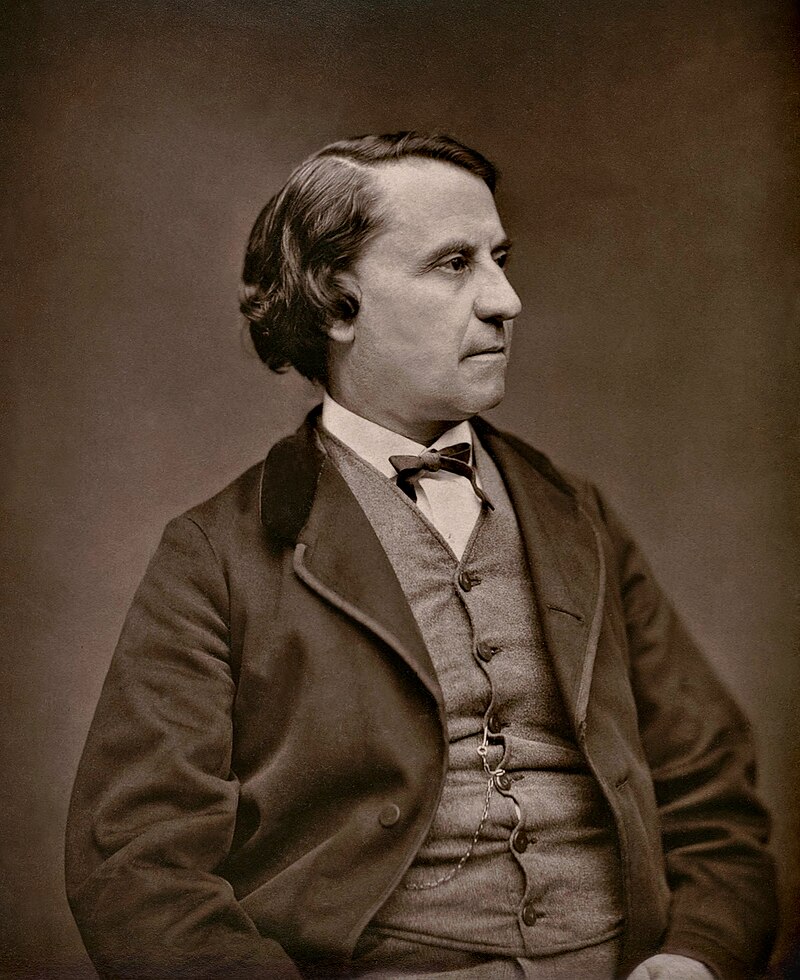
Louis Blanc stands as one of the most significant early figures in nineteenth-century French socialist and republican thought. Born during the Napoleonic era, he emerged in the 1830s and 1840s as both a journalist and political theorist, advanced the notion of the “right to work,” and helped carry socialist ideas into the political realm during the Revolution of 1848 in France. Though his proposals for worker-controlled “social workshops” (ateliers nationaux) did not fully succeed in his lifetime, his thought provided an important bridge between utopian socialism and the later social democratic and labour movements.
Early Life and Intellectual Formation
Louis Blanc was born on 29 October 1811 in Madrid, Spain, where his father served as Inspector-General of Finances under Joseph Bonaparte. After the fall of the French administration in Spain, the Blanc family returned to France. Blanc’s early education was at the royal college in Rodez, and later he began legal studies in Paris, while supporting himself by tutoring and clerical work.
It was during the early 1830s, especially through his tutor-job in Arras, that Blanc became sensitised to the conditions of industrial labourers, and began to reflect on the social consequences of competition, wage-drift and unemployment.
In Paris, he entered journalism and opposition politics, working with liberal and republican press organs, and in 1839 founded the Revue du Progrès.
Major Political Theory and Writings
Blanc’s key theoretical intervention was his 1839–1840 essay L’Organisation du travail (“The Organization of Labour”), serialised in his Revue du Progrès. In it he argued that the system of free competition produced inherent injustice: wages would tend to decline, workers would be driven to the wall, and unemployment would persist as a structural menace.
Blanc’s remedy was for the state to guarantee employment by establishing social workshops (ateliers nationaux) — state-backed, worker-managed cooperatives in major branches of industry. Over time, these would gradually replace capitalist firms and competition.
He also adopted the phrase (based on Saint-Simon) “à chacun selon ses besoins, de chacun selon ses facultés” (“from each according to his abilities, to each according to his needs”) as emblematic of his vision of social association.
Distinctively among socialists of his day, Blanc emphasised the state as the agent of social transformation (rather than purely voluntary cooperatives).
He also published Histoire de dix ans (1830-1840) (1841), a strongly critical history of the July Monarchy, showing the link he drew between democratic politics and social reform.
Political Career: 1848 and Exile
The February 1848 revolution in France opened a moment for Blanc’s political programme. On 26 February the provisional government recognised the “guarantee of existence through work” for citizens. Blanco was appointed head of the Luxembourg Commission (Commission du gouvernement pour les travailleurs) to investigate labour conditions and propose legislation.
He became a member of the provisional government and advocated for national workshops to absorb the unemployed. However, these workshops soon proved over-subscribed, poorly managed, and politically fraught. When the national workshops were closed in June 1848, the worker uprising of the “June Days” ensued, and Blanc’s political position weakened dramatically.
In the aftermath, Blanc went into exile in England, where he remained until 1870. During his exile he wrote a 12-volume Histoire de la révolution française and numerous political pamphlets.
Return and Later Years
After the fall of the Napoleon III’s Second Empire in 1870, Blanc returned to France and was elected to the National Assembly for the Seine in 1871. He opposed the Paris Commune but championed amnesty for the Communards—a sign of his complex position between working-class solidarity and institutional republicanism.
During his final years his influence waned, health deteriorated, and he died in Cannes on 6 December 1882. He was accorded a state funeral and buried in the Père-Lachaise Cemetery, Paris.
Legacy and Significance
Louis Blanc’s importance lies in several interrelated dimensions:
• Political-social synthesis: He sought to unite republican political change with social and economic reform, arguing that political liberty was meaningless without labour and work.
• Right to work: His principle that the state must guarantee work for citizens became a foundational notion in later social democratic thought.
• Precursor of modern socialism: Though characterised as “utopian” by some critics, his ideas influenced successor generations (especially German socialists) and helped pave the way for democratic socialism.
• Critique of competition: His analysis of free-market competition anticipated later labour theory and critiques of capitalism.
However, his reputation is also marked by failed political implementation: the national workshops fiasco, his limited power in 1848, and his long exile. Some historians suggest his political tact and organisational capacities were weaker than his intellectual insight.
Conclusion
Louis Blanc remains a figure of enduring interest for scholars of nineteenth-century political thought, labour and socialist movements. His attempt to couple political democracy with social and economic justice remains salient in current debates about the welfare state, the right to work, and the role of the state in regulation of labour and capital. While his concrete initiatives did not always succeed, his vision anticipated later developments in social democracy and cooperative movements.
Selected Bibliography
Primary works by Louis Blanc:
• Blanc, Louis. L’Organisation du travail. Paris: Revue du Progrès, 1840 (serial).
• Blanc, Louis. Histoire de dix ans. 1830-1840. Paris: Pagnerre, 1841.
• Blanc, Louis. Histoire de la révolution française. 12 vols. Paris: various, 1847-1862.
• Blanc, Louis. Discours politiques (1847-1881). Paris: 1882 (posthumous).
Secondary literature:
• Loubère, Leo A. Louis Blanc: His Life and His Contribution to the Rise of French Jacobin-Socialism. Evanston, Ill.: Northwestern University Press, 1961.
• Vidalenc, Jean. Louis Blanc (1811-1882). Paris: PUF, 1948.
• Renard, Émile. Louis Blanc: sa vie, son œuvre. Paris: Hachette, 1928.
• “Blanc, Louis (1811–1882).” In Encyclopedia.com. [online] 2002-.
• “Louis Blanc.” In Britannica Online. [online] 2025.


Leave a comment