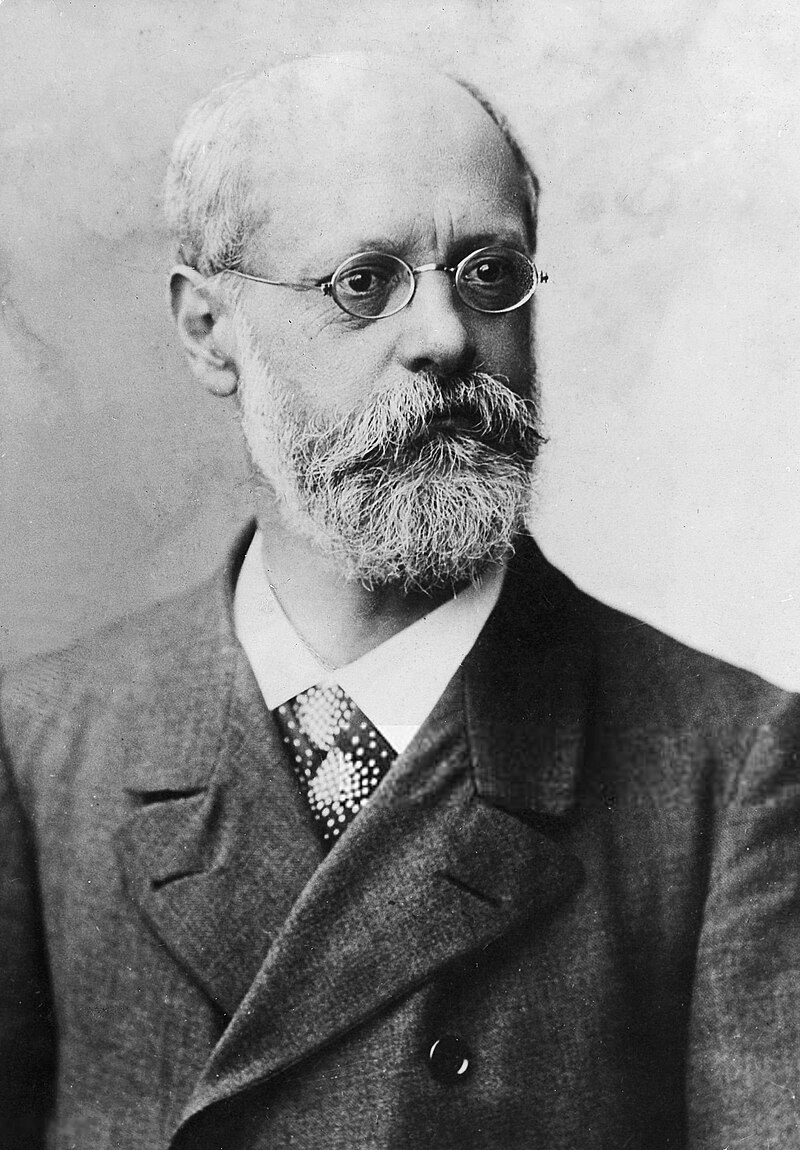
My Socialist Hall of Fame
During this chaotic era of vile rhetoric and manipulative tactics from our so-called bourgeois leaders, I am invigorated by the opportunity to reflect on Socialists, Revolutionaries, Philosophers, Guerrilla Leaders, Partisans, and Critical Theory titans, champions, and martyrs who paved the way for us—my own audacious “Socialism’s Hall of Fame.” These are my heroes and fore-bearers. Not all are perfect, or even fully admirable, but all contributed in some way to our future–either as icons to emulate, or as warnings to avoid in the future.
Karl Johann Kautsky (1854–1938) stands as one of the central figures of Second International Marxism, a theorist whose intellectual legacy defines both the consolidation and the crisis of orthodox Marxism at the turn of the twentieth century. His life and work traverse the critical period between the revolutionary hopes of the late nineteenth century and the disillusionments of the early twentieth, reflecting the tensions between theory and practice, revolution and reform, within the socialist movement.
Early Life and Education
Kautsky was born in Prague, then part of the Habsburg Empire, to a Czech-Austrian artistic family. His father, Johann Kautsky, was a painter and stage designer, and his mother, Minna Jaich, was a novelist and committed liberal. The intellectual milieu of his upbringing predisposed him toward critical inquiry and political engagement. Kautsky studied history and economics at the University of Vienna, where he came under the influence of Karl Grünberg and later of the emergent Marxist current crystallizing around the German Social Democratic Party (SPD).
Formation of Orthodox Marxism
In 1880, Kautsky joined the SPD and soon became one of its leading theoreticians. His founding of Die Neue Zeit in 1883 provided a platform for Marxist scholarship and debate, transforming it into the theoretical organ of the Second International. Kautsky’s editorial work disseminated Marx’s and Engels’ writings to a mass socialist audience and codified “Marxism” as a unified doctrine—a process that was as interpretive as it was preservative.
Kautsky’s interpretation of Marx stressed economic determinism, historical materialism, and the inevitability of socialism arising from capitalist contradictions. His The Economic Doctrines of Karl Marx (1887) became a standard reference for generations of socialist militants. His role as editor and expositor earned him the title “Pope of Marxism,” though this orthodoxy would later be both his strength and his undoing.
Engagement with Revolution and Reform
Kautsky’s writings during the 1890s and early 1900s placed him at the center of debates within the SPD between revisionists, such as Eduard Bernstein, and revolutionary Marxists. In The Social Revolution (1902) and The Road to Power (1909), he defended Marxist principles against Bernstein’s evolutionary socialism, affirming that socialism could not be achieved through mere parliamentary reform but through a class-based revolutionary transformation of society. However, his conception of revolution remained abstract and gradualist, emphasizing the “maturity” of objective conditions rather than the subjective initiative of the working class.
Break with Bolshevism
The outbreak of the First World War marked a profound rupture in the international socialist movement. Though Kautsky opposed the SPD’s vote for war credits, his indecision and refusal to support Lenin’s call for revolutionary defeatism alienated the left wing of the movement. In the aftermath of the Russian Revolution, Kautsky emerged as one of its most formidable critics. His The Dictatorship of the Proletariat (1918) condemned Bolshevik methods as undemocratic and contrary to Marx’s spirit, defending parliamentary democracy as the appropriate form of proletarian rule.
Lenin’s fierce rebuttal, The Proletarian Revolution and the Renegade Kautsky (1918), transformed Kautsky’s name into a byword for betrayal in communist historiography. Yet this controversy also highlights the enduring philosophical divide between Marxism as a science of social evolution and Marxism as a revolutionary praxis.
Later Years and Legacy
After the war, Kautsky lived in exile in Vienna and later in Czechoslovakia, continuing to write prolifically until his death in 1938. His later works, such as The Materialist Conception of History (1927), attempted to reaffirm Marxist principles against both revisionist dilution and Bolshevik authoritarianism.
Kautsky’s historical role is paradoxical: he was simultaneously the guardian of Marxist orthodoxy and a figure whose intellectual rigidity helped ossify Marxism into a deterministic schema. His insistence on the primacy of democratic institutions anticipated later socialist humanism, while his failure to adapt theory to revolutionary crises exposed the limits of Second International Marxism.
In retrospect, Kautsky represents the intellectual high point of pre-Leninist Marxism—a thinker who sought to reconcile scientific socialism with political realism, but who ultimately stood at the crossroads between the old social democracy and the revolutionary century that followed.
Bibliography
• Bernstein, Eduard. Evolutionary Socialism. New York: Schocken Books, 1961.
• Kautsky, Karl. The Economic Doctrines of Karl Marx. London: Swan Sonnenschein, 1891.
• ———. The Social Revolution. Chicago: Charles H. Kerr, 1902.
• ———. The Road to Power. Chicago: Charles H. Kerr, 1909.
• ———. The Dictatorship of the Proletariat. Vienna: Wiener Volksbuchhandlung, 1918.
• ———. The Materialist Conception of History. London: Allen & Unwin, 1927.
• Lenin, V. I. The Proletarian Revolution and the Renegade Kautsky. Moscow: Progress Publishers, 1972.
• Lichtheim, George. Marxism: An Historical and Critical Study. London: Routledge, 1961.
• Salvadori, Massimo. Karl Kautsky and the Socialist Revolution, 1880–1938. London: Verso, 1990.
• Tudor, Henry, and J. M. Tudor, eds. Marxism and Social Democracy: The Revisionist Debate, 1896–1898. Cambridge: Cambridge University Press, 1988.
 Letters from Tomis
Leave a comment