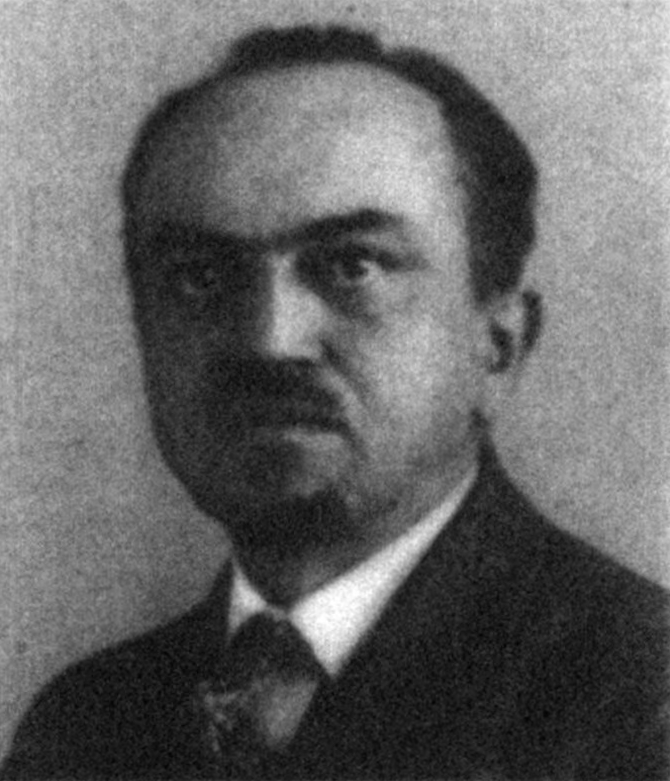
My Socialist Hall of Fame
During this chaotic era of vile rhetoric and manipulative tactics from our so-called bourgeois leaders, I am invigorated by the opportunity to reflect on Socialists, Revolutionaries, Philosophers, Guerrilla Leaders, Partisans, and Critical Theory titans, champions, and martyrs who paved the way for us—my own audacious “Socialism’s Hall of Fame.” These are my heroes and fore-bearers. Not all are perfect, or even fully admirable, but all contributed in some way to our future–either as icons to emulate, or as warnings to avoid in the future.
Paul Frölich was a German Marxist journalist, theorist, and militant whose political itinerary mirrors—and helps to illuminate—the promise and defeats of the twentieth-century revolutionary left. Born on August 7, 1884, in Leipzig to a large working-class family, he received his early intellectual formation at the Leipzig Workers’ School, where he studied history and social science and gravitated to socialism. He joined the Social Democratic Party of Germany (SPD) in 1902, part of a generation radicalized by industrialization, imperial rivalry, and the crisis tendencies of late Wilhelmine capitalism.
From Social Democracy to Communism
Frölich emerged from the prewar SPD’s left wing as a sharp critic of class collaboration and militarism. The traumas of World War I and the collapse of the Second International accelerated his break with reformism. In the revolutionary wave of 1918–19, he became a founding member of the Communist Party of Germany (KPD), helping to build its press and serving twice as a deputy in the Reichstag. His emphasis on principled opposition to imperialist war and on the necessity of a revolutionary party positioned him among those who sought to translate mass insurgency into durable proletarian power.
Yet Frölich’s career also tracks the fragmentation of German Communism. During the mid-1920s, amid strategic oscillations and factional struggles shaped by the Communist International’s shifting line, he was expelled from the KPD in 1928 and associated with the German Communist Opposition (KPO). This move reflected his persistent critique of bureaucratic distortions and his insistence on sober strategic analysis—traits that would later mark his historical writing.
Confronting Defeat and Exile
After the Nazi seizure of power, Frölich was arrested and imprisoned; upon release he entered exile, first in France and then in the United States, before returning to West Germany after the war. The arc from Weimar crisis to fascist dictatorship impressed on him both the weight of missed revolutionary opportunities and the murderous logic of counter-revolution. These experiences fed his later assessments of the German left’s strategic impasses and the dangers of sectarianism and passivity in the face of a rising fascist movement.
Historian of Revolution: Rosa Luxemburg and Beyond
Frölich’s most enduring scholarly contribution is his pioneering biography of Rosa Luxemburg. First published in German in Paris in 1939 (Rosa Luxemburg. Gedanke und Tat), the work appeared in English with Victor Gollancz’s Left Book Club in 1940 and rapidly reached a mass readership; it has since been republished many times, including a widely used Haymarket Books edition. Frölich blended political biography with movement history, situating Luxemburg’s theoretical innovations—on mass strike strategy, spontaneity and organization, imperialism, and democracy—within the institutional conflicts of the SPD and the conjuncture of 1905–19. His book also preserved the intellectual legacy of a revolutionary murdered in 1919, insisting that Luxemburg’s strategic insights remained vital for any renewal of socialist politics.
Frölich’s historical writing sought not antiquarian detail but militant clarity. That commitment is equally evident in his newly published political memoir, In the Radical Camp: A Political Autobiography 1890–1921, which offers granular reflections on the formation of the KPD and the contested lessons of the 1921 “March Action.” The memoir adds first-person texture to his historiography, clarifying how international interventions, factional alignments, and strategic misjudgments shaped the possibilities and limits of the German Revolution.
Intellectual Profile and Legacy
As an intellectual, Frölich was less a system-builder than a rigorous political writer whose analytics were forged in struggle. Three features stand out:
1. A party-centred conception of strategy. For Frölich, mass insurgency requires an organization capable of linking class experience to revolutionary objectives; the tragedy of 1918–23, in his view, lay not in the absence of proletarian militancy but in leadership deficits and strategic incoherence.
2. An historical materialist method sensitive to agency. His Luxemburg biography rejects determinism: counter-revolution triumphed not by iron necessity but through specific betrayals, paralysis, and errors—lessons he drew for future militants.
3. An ethics of revolutionary democracy. Against both reformist accommodation and bureaucratic substitutionism, Frölich emphasized workers’ self-activity and the indispensable role of political debate, reflecting Luxemburg’s own insistence that “freedom is always the freedom of the one who thinks differently.” (Here Frölich serves as both biographer and transmitter of Luxemburg’s democratic Marxism.)
Frölich died in Frankfurt on March 16, 1953. His trajectory—from SPD radical to KPD founder, from imprisoned anti-fascist to exiled historian—embodies the contradictions of a century in which the revolutionary left alternated between world-historical possibility and catastrophic defeat. His writings remain essential for scholars of German Communism and for militants seeking to think strategically about organization, leadership, and the dialectic of revolution and counter-revolution.
Bibliography
Primary Works by Paul Frölich
• Frölich, Paul. Rosa Luxemburg: Gedanke und Tat. Paris: Éditions Nouvelles Internationales, 1939; English trans. Rosa Luxemburg: Her Life and Work. London: Victor Gollancz (Left Book Club), 1940. (Modern eds.: Chicago: Haymarket Books, 2010.)
• ———. In the Radical Camp: A Political Autobiography 1890–1921. Chicago: Haymarket Books, 2020.
• ———. (misc. early pamphlets) Der Weg zum Sozialismus (1919); Keinen Pfennig den Fürsten! (1919); Die Politik des Hamburger Arbeiterrats (1919).
Secondary Sources
• Altieri, Riccardo. “Paul Frölich, American Exile, and Communist Politics.” European Review of History 25, no. 5 (2018): 911–935.
• “Paul Frölich.” Weekly Worker, June 12, 2014.
• “Rosa Luxemburg—Haymarket Books Edition (About the Author).” Haymarket Books.
• “Paul Frölich.” Spartacus Educational.
 Letters from Tomis
Leave a comment