My Socialist Hall of Fame
During this chaotic era of vile rhetoric and manipulative tactics from our so-called bourgeois leaders, I am invigorated by the opportunity to reflect on Socialists, Revolutionaries, Philosophers, Guerrilla Leaders, Partisans, and Critical Theory titans, champions, and martyrs who paved the way for us—my own audacious “Socialism’s Hall of Fame.” These are my heroes and fore-bearers. Not all are perfect, or even fully admirable, but all contributed in some way to our future–either as icons to emulate, or as warnings to avoid in the future.
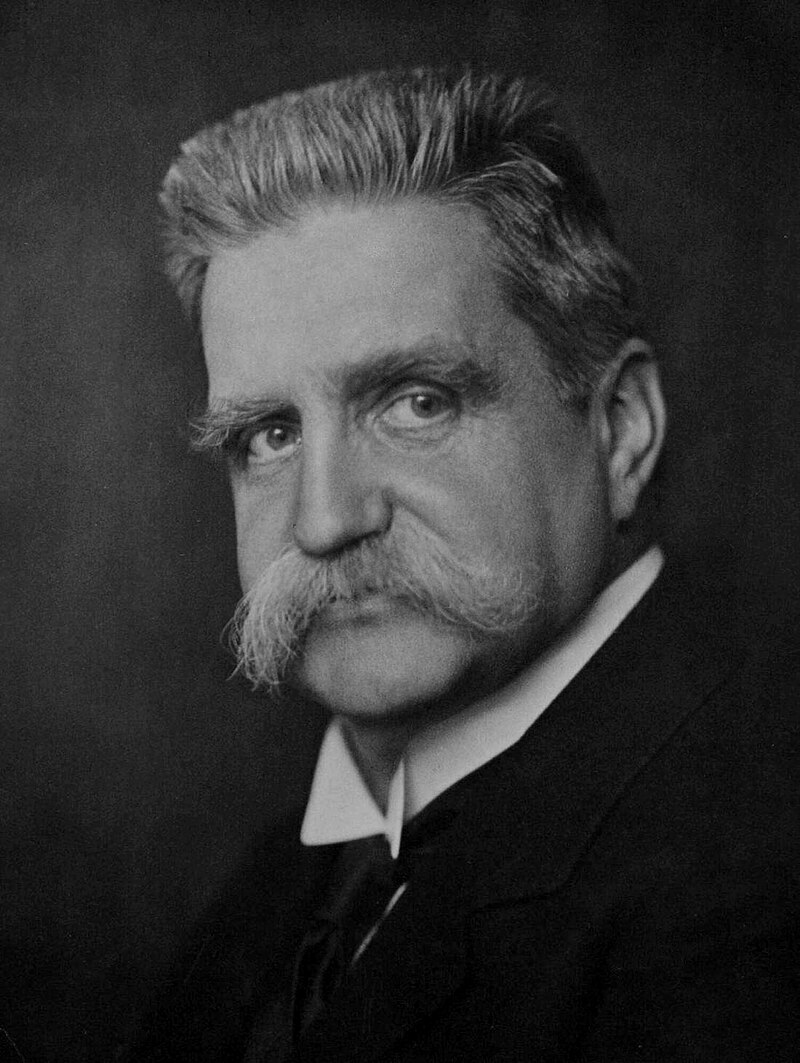
Karl Hjalmar Branting was a pioneering Swedish socialist, journalist, and statesman whose intellectual and political leadership helped to transform Sweden from a constitutional monarchy into one of Europe’s most stable social democracies. As the first Social Democratic Prime Minister of Sweden, Branting’s life bridged the gap between the utopian socialist ideals of the nineteenth century and the pragmatic, reform-oriented socialism that would come to dominate European social democracy in the twentieth.
Early Life and Intellectual Formation
Branting was born in Stockholm on November 23, 1860, into a bourgeois household. His father, Lars Gabriel Branting, was a professor of mathematics, and his mother, Emma Afzelius, came from a family of prominent intellectuals. Educated at Uppsala University, Branting initially studied mathematics and astronomy, but his interests gradually turned toward politics, philosophy, and social reform. During the 1880s, amid the intellectual ferment of the Scandinavian modern breakthrough, Branting became influenced by the writings of Karl Marx, Ferdinand Lassalle, and the British Fabian Society.
He joined the editorial staff of Tiden and later co-founded Social-Demokraten in 1885, which became the primary organ of the Swedish labor movement. Through his writing, Branting translated Marxist theory into accessible language for workers and intellectuals alike, stressing that socialism was not an imported ideology but the logical culmination of Sweden’s democratic and industrial development.
Leadership of the Swedish Social Democratic Party (SAP)
Branting’s political activity intensified as industrialization transformed Sweden’s economy and class structure. In 1889, he co-founded the Swedish Social Democratic Party (Sveriges socialdemokratiska arbetareparti, SAP), becoming its first parliamentary leader after being elected to the Riksdag in 1897.
Unlike many of his continental counterparts, Branting pursued a strategy of gradual reform through parliamentary democracy rather than revolutionary upheaval. He believed that socialism could be achieved through universal suffrage, trade union organization, and legislative reform. His approach—sometimes criticized by left communists as “revisionist”—nonetheless laid the foundation for the Swedish model of social democracy: a synthesis of capitalism, welfare policy, and collective bargaining.
Prime Minister and Architect of Swedish Democracy
Branting served three terms as Prime Minister (1920, 1921–1923, and 1924–1925). His governments advanced progressive taxation, education reform, and the extension of welfare services. He played a decisive role in implementing full universal suffrage, including for women, in 1921—a landmark in Swedish democracy.
His foreign policy reflected his internationalist commitments. A strong advocate of the League of Nations, Branting argued that peace and disarmament were essential preconditions for socialist progress. His work on international arbitration and minority rights earned him the Nobel Peace Prize in 1921, which he shared with Norwegian explorer and humanitarian Fridtjof Nansen.
Theoretical Contributions and Ideological Legacy
Branting’s socialism was grounded in ethical humanism and democratic gradualism rather than strict Marxist determinism. While he admired Marx’s critique of capitalism, he rejected the idea of violent revolution. Instead, he emphasized social reform through the democratic state—a position that influenced later figures such as Ernst Wigforss and Tage Erlander.
Branting envisioned the state as a mediator between capital and labor, capable of enforcing social justice through rational planning and welfare legislation. This conception became the ideological core of Sweden’s postwar “folkhemmet” (“People’s Home”)—a social democratic ideal of national solidarity and equality.
Death and Historical Assessment
Branting died in Stockholm on February 24, 1925, while still in office. His funeral drew massive crowds, symbolizing his enduring connection to the Swedish working class. Historians regard him as the principal architect of Sweden’s democratic socialism—a system that balanced parliamentary democracy, economic modernization, and social justice.
Critics from the revolutionary left, however, argued that Branting’s moderate socialism failed to challenge capitalist property relations, integrating the labor movement into the structures of the bourgeois state. Nonetheless, Branting’s synthesis of socialism and democracy profoundly shaped twentieth-century European politics, providing a model of reformist socialism that influenced labor movements across Scandinavia and Western Europe.
Bibliography
Selected Works
• Socialism och demokrati (1892) – A foundational text articulating Branting’s view of democratic socialism.
• Om arbetarrörelsens mål och medel (1897) – A series of essays defining the strategic aims of the Swedish labor movement.
• Tal och skrifter (Collected Speeches and Writings, posthumously published) – A multi-volume edition chronicling Branting’s political philosophy and rhetoric.
Secondary Sources
• Carlsson, Sten. Hjalmar Branting och den svenska socialdemokratin. Stockholm: Bonniers, 1960.
• Tilton, Timothy A. The Political Theory of Swedish Social Democracy: Through the Welfare State to Socialism. Oxford: Oxford University Press, 1990.
• Misgeld, Klaus. Social Democracy and the Working Class: The Swedish Model and Its Historical Roots. Lund: Arkiv förlag, 1997.
• Heckscher, Gunnar. The Swedish Social Democrats: Their Ideological Development. Stockholm: Almqvist & Wiksell, 1951.
• Nyström, Lars. Hjalmar Branting: En biografi. Stockholm: Natur & Kultur, 2007.
• Nobel Foundation. Nobel Lectures, Peace 1921–1925. Amsterdam: Elsevier, 1972.
 Letters from Tomis
Leave a comment