https://www.marxists.org/archive/lenin/works/1920/lwc/
Introduction: Context and Revolutionary Purpose
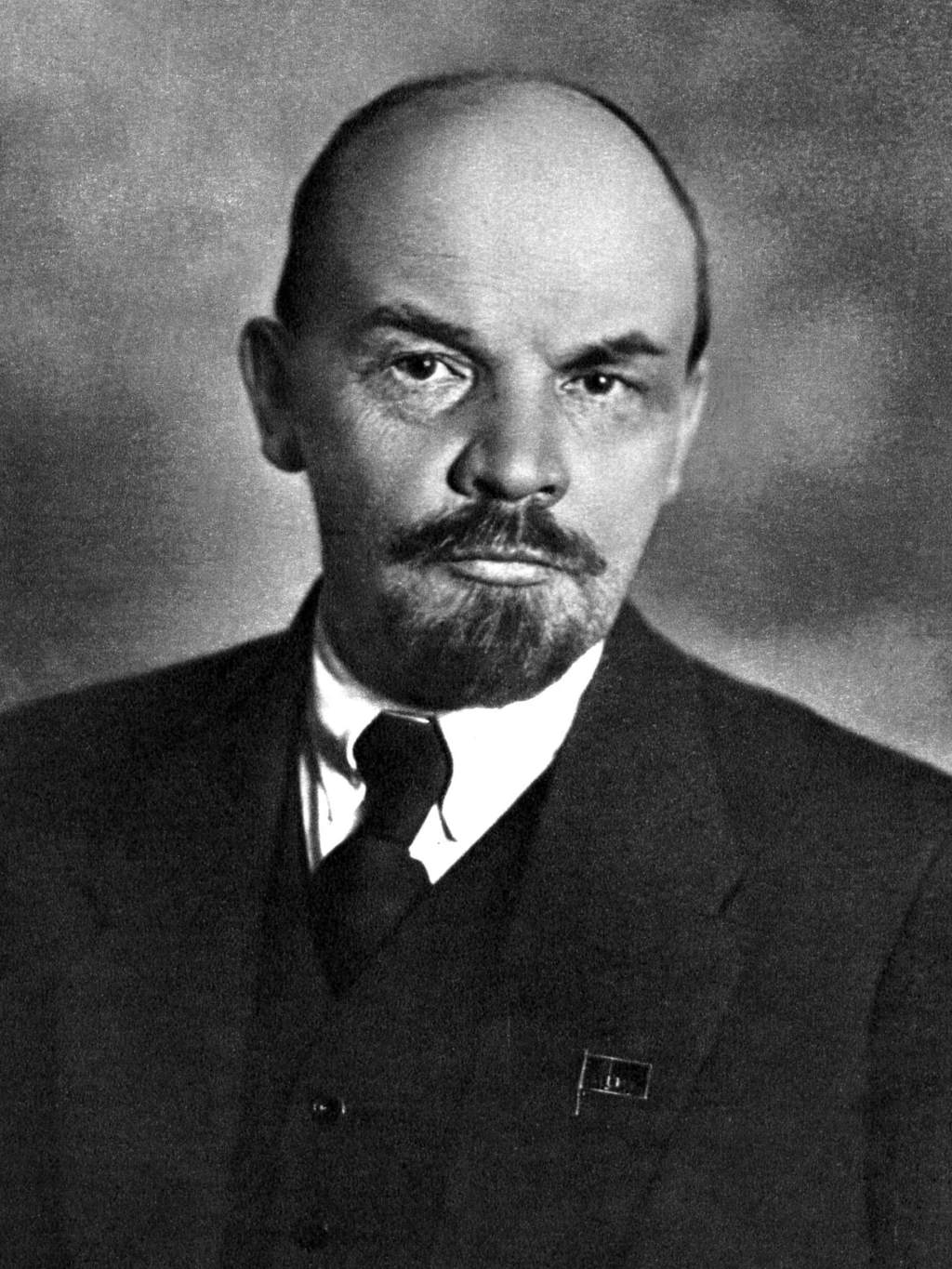
Vladimir Ilyich Lenin’s Left-Wing Communism: An Infantile Disorder (1920) remains one of the most incisive theoretical and strategic texts in the history of revolutionary Marxism. Written during the crucial consolidation period following the October Revolution, the pamphlet was intended as both a polemic and a guide—addressed primarily to European communists who, in Lenin’s view, risked isolating themselves from the working masses through sectarian dogmatism and ultraleft voluntarism.
This work is not simply a tactical manual but a reaffirmation of dialectical materialism applied to revolutionary practice. Lenin situates his critique within the contradictions of the postwar period: the devastation of the First World War, the collapse of the Second International, and the emergence of the Communist International (Comintern) as the vanguard of proletarian revolution. The text must therefore be understood not as a retreat from revolutionary principles, but as a defense of revolutionary strategy against those who confused radical rhetoric with revolutionary effectiveness.
Dialectics Against Dogmatism: The Marxist Method in Practice
Central to Lenin’s argument is the dialectical principle that revolutionary strategy must arise from concrete analysis of concrete conditions. Against the “left communists” who refused to participate in bourgeois parliaments or reactionary trade unions, Lenin reasserts that communists must not abandon the field of struggle wherever the masses are present.
This position reflects a profoundly materialist understanding of politics. For Lenin, revolutionary consciousness does not arise spontaneously or abstractly—it develops through the contradictions of capitalist society and through organized engagement within those contradictions. His admonition that communists must “learn to work legally in the most reactionary parliaments” expresses the dialectical synthesis of revolutionary aim and tactical flexibility. To withdraw from such arenas is not to preserve purity but to abdicate leadership.
Lenin’s polemic thus marks a defense of Marxist realism against two dangers: reformist adaptation on one side, and sectarian isolation on the other. His method stands as a rebuke to both mechanical opportunism and idealist impatience.
The Struggle Within the Workers’ Movement
A major strength of Left-Wing Communism lies in its historical and strategic grounding. Lenin examines the German and British communist movements in particular, arguing that their refusal to engage in parliamentary or trade-union work betrays a misunderstanding of revolutionary development. The proletariat, he insists, cannot be led to seize power through mere denunciations of reformism—it must be educated and organized through the transitional structures already present in its daily life.
This is an extension of the Bolshevik experience: Lenin recalls how the Russian workers’ movement advanced not by rejecting every legal form, but by transforming these forms into vehicles for revolutionary consciousness. The Soviets themselves emerged as organs of dual power precisely because revolutionaries remained embedded in the mass struggle.
The “infantile disorder” that Lenin diagnoses is therefore not simply a tactical error but a class one. The ultraleft tendency reflects, in part, the impatience of radicalized petty-bourgeois layers unable to endure the slow, dialectical process of organizing the working class as a class for itself.
Revolutionary Flexibility and the Question of State Power
From a revolutionary communist perspective, Lenin’s insistence on tactical flexibility does not signal opportunism—it demonstrates the rigorous application of Marxism to the problem of power. The revolutionary vanguard must engage with all contradictions, including those within bourgeois democracy, in order to transform them. Lenin’s argument that communists must utilize every available “chink” in the bourgeois state apparatus is not reformist participation but subversive infiltration.
This is consistent with his earlier writings in State and Revolution (1917), where he emphasized the necessity of smashing the bourgeois state. Left-Wing Communism clarifies that the path to that moment of rupture must be strategically prepared within the real, living institutions of capitalist society. The revolutionary party, armed with Marxist theory, must balance intransigence in principle with elasticity in tactics—what Lenin called “revolutionary realism.”
The Party and the Masses
Lenin’s pamphlet also offers a profound lesson on the dialectical relationship between the vanguard and the class. The party, as the organized consciousness of the proletariat, must neither substitute itself for the masses nor tail behind them. The “left-wing” error, by contrast, substitutes its own impatience for the historical movement of the class.
In the revolutionary communist tradition, this insight underpins the later strategic debates of the Comintern and remains relevant for contemporary struggles. Lenin’s call for “iron discipline” and centralized leadership reflects not bureaucratism, but the material necessity of coordination in the face of a disciplined bourgeois state. Discipline without democracy degenerates into Stalinism; democracy without discipline collapses into anarchism. Lenin sought the dialectical unity of both.
Relevance for the Contemporary Revolutionary Movement
A revolutionary Marxist reading today must grasp Left-Wing Communism as more than an artifact of the early 20th century—it is a living text for revolutionary praxis under conditions of imperialist decay. Lenin’s critique of ultraleftism applies directly to modern forms of activism that valorize spontaneity, social media militancy, or abstention from electoral or union struggles.
The revolutionary task remains what it was in 1920: to merge the advanced consciousness of Marxism with the mass movement of the proletariat. Lenin’s argument that revolutionaries must “go among all classes of the people” and learn “to find, to understand, to awaken, to rouse” is the antidote to both sectarianism and reformism.
Conclusion: Lenin’s Revolutionary Legacy
From a revolutionary communist perspective, Left-Wing Communism: An Infantile Disorder endures as a critical document of revolutionary pedagogy. It reaffirms that Marxism is not a set of slogans but a living method of struggle—one that requires the fusion of theory, practice, and historical consciousness.
Lenin’s text insists that the revolution will not be made through moral fervor or ideological purity, but through disciplined, organized engagement with the contradictions of capitalism. To ignore this lesson is to repeat the very “infantile disorder” that he diagnosed—a malady that, in every generation, reappears in new ideological forms.
In the final analysis, Left-Wing Communism is not a call for moderation, but a call for maturity: the maturity of a movement capable of leading the working class to victory, armed with revolutionary theory and tempered by practical experience.
 Letters from Tomis
Leave a comment