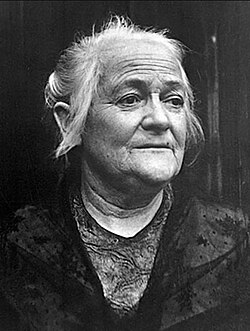
Klara Zetkin (1857–1933) stands among the most influential revolutionary Marxists and feminist theorists of the late nineteenth and early twentieth centuries. Her political and intellectual career bridged the formative decades of the socialist women’s movement and the revolutionary upheavals surrounding World War I. Zetkin’s legacy lies in her synthesis of Marxist theory and feminist praxis, her insistence on the inseparability of class and gender oppression, and her tireless efforts to build international proletarian solidarity.
Early Life and Political Formation
Born Klara Eißner in Wiederau, Saxony, Zetkin was raised in a family of teachers and became politically conscious in the radical milieu of German unification and industrialization. Her early engagement with socialist circles led her to join the nascent Social Democratic Party of Germany (SPD) in the late 1870s, during the period of Bismarck’s Anti-Socialist Laws (1878–1890). Exiled to Zurich and later Paris, she absorbed the internationalist spirit of the Second International and became close to key Marxist figures such as Rosa Luxemburg, Wilhelm Liebknecht, and August Bebel. Her partnership with Ossip Zetkin, a Russian revolutionary exile, deepened her international orientation and introduced her to the revolutionary politics of the Russian émigré circles.
The Socialist Women’s Movement and Theoretical Contributions
Returning to Germany in the 1890s, Zetkin became editor of Die Gleichheit (“Equality”), the SPD’s women’s newspaper, which under her leadership became the most influential socialist feminist journal in Europe. She argued vigorously against the bourgeois suffragist movement, contending that genuine emancipation could only be achieved through the abolition of capitalism. Her theoretical writings, such as Only in Conjunction with the Proletarian Woman Will Socialism Be Victorious (1896), elaborated the Marxist conception of women’s liberation as inseparable from class struggle. Zetkin’s analysis prefigured later Marxist-feminist thought: she located women’s oppression in the social relations of production and reproduction, asserting that the capitalist mode of production both commodified women’s labor and confined them to unpaid domestic service.
Zetkin’s organizational work culminated in her proposal for an International Women’s Day—adopted by the Second International Socialist Women’s Conference in Copenhagen in 1910. March 8, first celebrated in 1911, became a global day of working-class women’s solidarity, linking gender emancipation to anti-capitalist struggle.
War, Revolution, and the Communist International
During World War I, Zetkin broke with the reformist leadership of the SPD over their support for war credits. Aligning with the Spartacus League and figures such as Luxemburg and Karl Liebknecht, she became a leading voice in the anti-war socialist opposition. Her International Socialist Women’s Conference Against the War (1915) convened in Bern was one of the few internationalist gatherings during the conflict, affirming her commitment to proletarian internationalism against nationalist chauvinism.
After the German Revolution of 1918–1919, Zetkin joined the newly founded Communist Party of Germany (KPD). In the early 1920s, she represented the KPD in the Reichstag and at the Third and Fourth Congresses of the Communist International (Comintern), where she served as a key advocate for the inclusion of women’s work within the revolutionary movement. Her reports to the Comintern articulated a distinctly Marxist feminist strategy, warning against both bourgeois feminism and sectarian dogmatism.
Later Years and Legacy
Zetkin’s later years were marked by declining health and the rise of fascism. She opposed the bureaucratic degeneration of the Comintern under Stalin and the opportunistic compromises of the German Communist Party leadership. In her final speech to the Reichstag in 1932, delivered at age seventy-five, she called upon workers to form a united front against Nazism, emphasizing that only a revolutionary alliance of all exploited people could defeat the fascist threat.
Exiled to the Soviet Union following Hitler’s rise to power, Zetkin died near Moscow in 1933. She was buried in the Kremlin Wall Necropolis, a testament to her lifelong devotion to proletarian revolution. Her intellectual and political synthesis of Marxism and feminism influenced subsequent generations of socialist feminists, from Alexandra Kollontai to Clara Fraser, and continues to shape debates around gender, labor, and class struggle in the Marxist tradition.
Bibliography
• Bebel, August. Woman and Socialism. Translated by Meta L. Stern, Socialist Literature Co., 1910.
• Foner, Philip S. Klara Zetkin: Selected Writings. International Publishers, 1984.
• Hunt, Karen, and June Hannam. Klara Zetkin: Socialist, Feminist and Revolutionary. Manchester University Press, 2010.
• Luxemburg, Rosa. The Rosa Luxemburg Reader. Edited by Peter Hudis and Kevin B. Anderson, Monthly Review Press, 2004.
• Zetkin, Klara. Only in Conjunction with the Proletarian Woman Will Socialism Be Victorious: Selected Writings of Klara Zetkin. Edited by David Riazanov, Progress Publishers, 1978.
• Zetkin, Klara. Reminiscences of Lenin. International Publishers, 1934.
• Zetkin, Klara. “For the International Socialist Women’s Conference.” Die Gleichheit, March 1915.
• Zetkin, Klara. Against the Current: Essays on Women, Socialism, and the Struggle for Emancipation. Edited by Philip Foner, International Publishers, 1984.
• Zimand, S. The Women’s Movement in Germany: A Study in Social Democracy. Columbia University Press, 1919.
 Letters from Tomis
Leave a comment