My Socialist Hall of Fame
During this chaotic era of vile rhetoric and manipulative tactics from our so-called bourgeois leaders, I am invigorated by the opportunity to reflect on Socialists, Revolutionaries, Philosophers, Guerrilla Leaders, Partisans, and Critical Theory titans, champions, and martyrs who paved the way for us—my own audacious “Socialism’s Hall of Fame.” These are my heroes and fore-bearers. Not all are perfect, or even fully admirable, but all contributed in some way to our future–either as icons to emulate, or as warnings to avoid in the future.
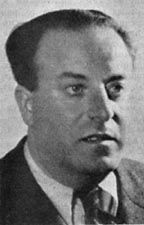
Ignace Reiss, born Nathan Poretsky in 1899 in Podolia, Ukraine, emerged as a committed Bolshevik revolutionary whose political trajectory intersected with the crises and contradictions of the early Soviet state. A brilliant linguist and intellectual, Reiss embodied the fervor and moral earnestness of the generation radicalized by the First World War, the October Revolution, and the subsequent Civil War. Joining the Bolshevik Party at a young age, Reiss fought for the revolutionary cause with ideological conviction and personal courage, distinguishing himself in both the political and military struggles that shaped the Soviet regime’s formative years.
By the 1920s, Reiss had entered the Soviet intelligence apparatus (the Cheka and later the OGPU/NKVD), serving as an undercover operative in Europe. He became renowned for his organizational acumen and absolute discretion, attributes that secured him positions of significant trust within Soviet foreign intelligence. Operating in multiple European capitals, Reiss played a critical role in Soviet clandestine networks, especially in France, Switzerland, and the Low Countries.
Yet, as Stalin consolidated power and the purges engulfed the Communist Party and the Comintern, Reiss grew increasingly disillusioned. The Moscow Trials (1936–1938) and the assassinations of leading Old Bolsheviks profoundly disturbed him. A man of revolutionary ethics, Reiss interpreted Stalinism not as a continuation of Leninism but as its betrayal, a counterrevolutionary Thermidor within the Soviet state. His break became irrevocable after the first Moscow Trial (August 1936), which saw leading revolutionaries like Zinoviev and Kamenev condemned on fabricated charges.
In July 1937, while stationed in Switzerland, Reiss publicly defected from the NKVD in a dramatic open letter addressed to the Soviet leadership. He denounced Stalin’s regime, declared loyalty to the ideals of October rather than to the bureaucratic dictatorship in Moscow, and implicitly aligned himself with the anti-Stalinist Left Opposition associated with Leon Trotsky. His letter circulated widely among socialist exiles, electrifying anti-Stalinist currents across Europe.
The Kremlin responded swiftly. On September 4, 1937, Ignace Reiss was assassinated near Lausanne, Switzerland, likely by NKVD agents under the direction of Stalin’s secret police chief, Nikolai Yezhov. His murder symbolized the transnational reach of the Great Terror and the regime’s determination to silence dissent, even among its own elite operatives.
Reiss’s defection and assassination reverberated through the international left. For Trotskyists, he became a martyr of revolutionary conscience—a man who chose the perilous path of opposition rather than remain complicit in Stalinist crimes. Historiographically, Reiss stands at the intersection of Soviet intelligence history, the moral crises of Communism in the interwar period, and the broader narrative of Stalinist repression. His life illuminates the ideological fractures within the international Communist movement and the tragic fate of those who resisted the encroachments of totalitarianism from within its own ranks.
Bibliography
• Krivitsky, Walter G. In Stalin’s Secret Service: Memoirs of the First Soviet Master Spy to Defect. Enigma Books, 2000.
• Orlov, Alexander. The Secret History of Stalin’s Crimes. Random House, 1953.
• Reiss, Ignace. “Open Letter to the Central Committee of the Communist Party of the Soviet Union.” 1937.
• Rogovin, Vadim. 1937: Stalin’s Year of Terror. Mehring Books, 1998.
• Trotsky, Leon. The Stalin School of Falsification. Pathfinder Press, 1976.
• Ulam, Adam B. Stalin: The Man and His Era. Viking Press, 1973.


 Letters from Tomis
Leave a reply to Kenneth Graves Cancel reply