Book Review
Morrow, Felix. Revolution and Counter-Revolution in Spain. New York: Pathfinder Press, 1974.
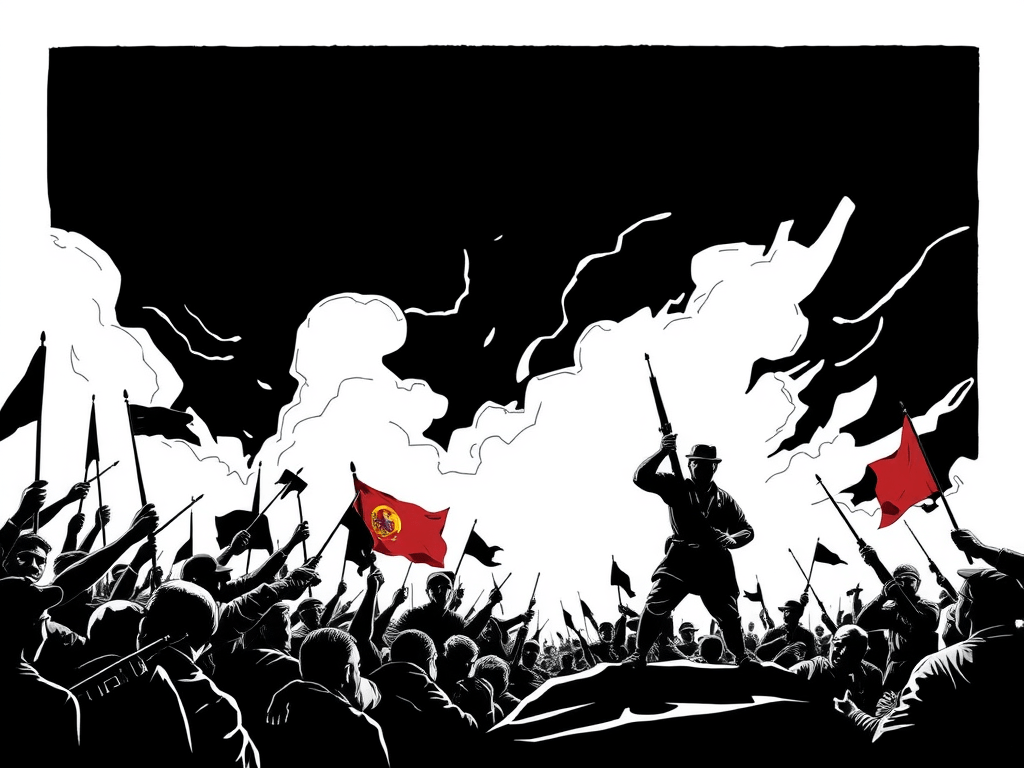
Felix Morrow’s Revolution and Counter-Revolution in Spain remains one of the most incisive Marxist analyses of the Spanish Civil War, offering both a searing critique of reformism and a profound vindication of revolutionary Marxism in practice. Written with the immediacy of a participant-observer, yet shaped by the theoretical clarity of Trotskyist method, the work dissects the Spanish Revolution of 1936–37 not merely as a national tragedy but as a world-historic turning point in the struggle between fascism, reformism, and proletarian revolution.
Morrow’s central thesis—that the Spanish proletariat held power in embryo through its armed militias, workers’ committees, and collectivized industries, only to see it systematically dismantled by the very Popular Front leaderships sworn to defend it—remains a cornerstone of revolutionary historiography. From a Marxist perspective, his unflinching critique of the Spanish Communist Party’s counterrevolutionary role, abetted by Stalinist diplomacy and the bourgeois Republican state, provides a devastating indictment of class collaboration as a strategy. Morrow’s method, firmly rooted in historical materialism, locates the betrayal of the Spanish working class not in abstract “errors” but in the political logic of reformism itself, contrasting the hesitations of the Republican and Stalinist leaderships with the urgent necessity of revolutionary internationalism.
What makes Morrow’s account particularly compelling for Marxist scholarship is its synthesis of concrete narrative and theoretical rigor. His analysis of the May Days of 1937 in Barcelona, when workers resisted the Stalinist-led suppression of their own organizations, illustrates the tragic dialectic whereby a revolution that does not overthrow the bourgeois state will itself be overthrown. Here, Morrow echoes Lenin and Trotsky: the revolution betrayed from within opens the door to fascist victory from without. Yet he writes not as a detached chronicler but as a militant intellectual, insisting that history’s bitter lessons serve as weapons for future struggles.
Eighty years on, Morrow’s work retains an urgent relevance. In an era of resurgent authoritarianism and exhausted reformist projects, Revolution and Counter-Revolution in Spain continues to illuminate the central Marxist lesson of the twentieth century: that only the independent, revolutionary mobilization of the working class can defeat both fascism and capitalist “democracy.” Its pages burn with the conviction that history offers no guarantees, only opportunities seized—or squandered—by living forces in struggle.
For revolutionary Marxists, Morrow’s text endures as both historical analysis and political arsenal. It stands alongside Trotsky’s History of the Russian Revolution as a classic demonstration of how Marxist theory, fused with militant commitment, can illuminate the path from defeat toward future victory.
 Letters from Tomis
Leave a comment