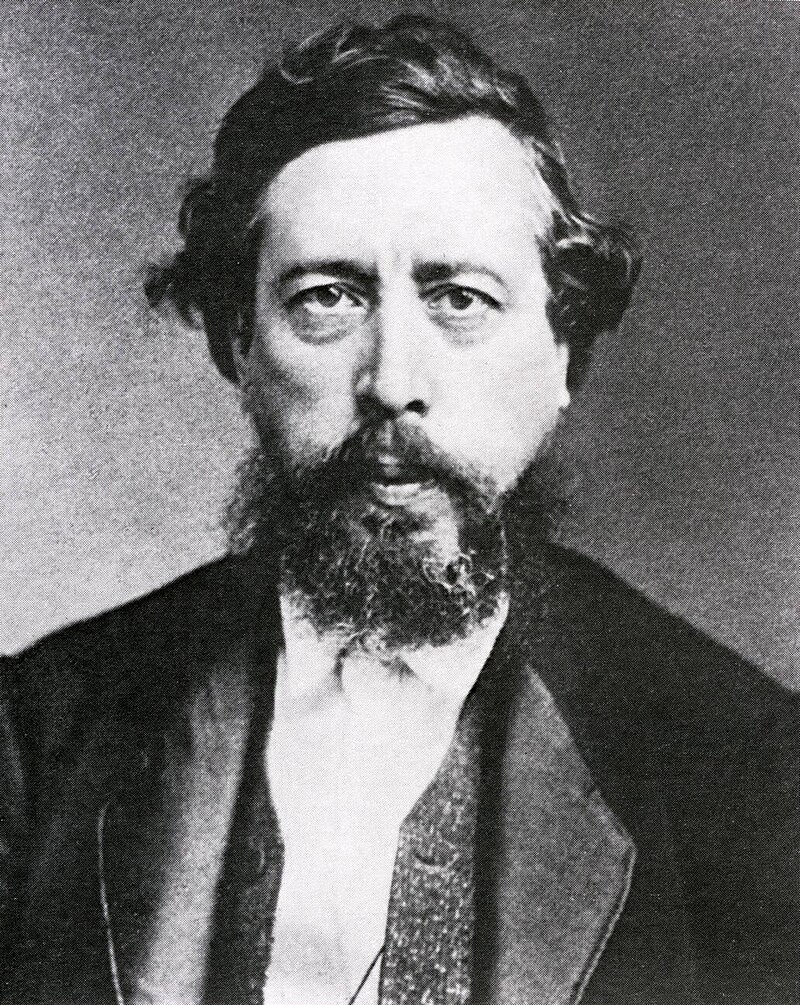
My Socialist Hall of Fame
During this chaotic era of vile rhetoric and manipulative tactics from our so-called bourgeois leaders, I am invigorated by the opportunity to reflect on Socialists, Revolutionaries, Philosophers, Guerrilla Leaders, Partisans, and Critical Theory titans, champions, and martyrs who paved the way for us—my own audacious “Socialism’s Hall of Fame.” These are my heroes and fore-bearers. Not all are perfect, or even fully admirable, but all contributed in some way to our future–either as icons to emulate, or as warnings to avoid in the future.
Early Life, Education, and Intellectual Formation (1826–1848)
Wilhelm Liebknecht was born on 29 March 1826 in Gießen, in the Grand Duchy of Hesse, to Ludwig Christian Liebknecht and Katharina Elisabeth Henrietta (née Hirsch). His early life was marked by tragedy: his mother died when he was still young, and his father passed away in 1832, leaving Wilhelm and his siblings orphaned. After his grandmother’s death in 1834, he was taken in by family acquaintances (notably Karl Wilhelm Oßwald) as a guardian.
Liebknecht attended the local gymnasium in Gießen, completing his secondary education by 1842. He then enrolled at the University of Gießen, and over subsequent years studied philology, theology, philosophy, and other humanities disciplines; he also spent semesters studying in Berlin and Marburg. Alongside academic work, he trained in manual trades (e.g. as a carpenter and gunsmith) in the belief that practical skills might serve him if he ever emigrated.
By the mid-1840s, Liebknecht was drawn into the currents of radical and democratic thought then rippling across the German states. Influenced by liberalism, early socialist writings (especially those found in French socialist circles), and the democratic agitation of the 1848 revolutions, he began writing for provincial newspapers and moving in political circles. He intended at one time to emigrate to America, but instead accepted a teaching post in Switzerland and thereby shifted into a more overtly political trajectory.
Exile, Radicalization, and Return (1848–1863)
When the 1848 revolutions—especially in Baden and along the Rhine—broke out, Liebknecht joined the democratic uprisings, but following the defeats of 1849 he found himself in danger of arrest. He sought refuge in Switzerland and subsequently other parts of Western Europe, where he deepened his contacts with radical émigré networks. During this period, he came into contact with and developed ties to Karl Marx and Friedrich Engels. On multiple occasions, he was expelled from Swiss territories (e.g. from Murten) for his “socialist agitation.”
By the early 1860s, following an amnesty (after the accession of King Wilhelm I of Prussia) and the loosening of reactionary repression in parts of the German states, Liebknecht returned to Germany. He resumed work in the workers’ movement, joining the Allgemeiner Deutscher Arbeiterverein (ADAV, General German Workers’ Association) founded by Ferdinand Lassalle, though later he parted company from the Lassallean leadership over disputes about the primacy of the state, the role of capitalism, and tactics in socialist organization.
Party-building, Conflict, and the Birth of the German Social Democracy (1863–1875)
From the 1860s onward, Liebknecht worked assiduously toward the political organization of the German labor movement. He was expelled from Prussia (along with his wife) and ultimately settled in Leipzig (Saxony) as a base for socialist organizing. In 1866, he and August Bebel founded the Saxon People’s Party (Sächsische Volkspartei), bringing together workers’ associations and progressive intellectuals. In 1869, this group merged into the newly formed Sozialdemokratische Arbeiterpartei (SDAP, Social Democratic Workers’ Party). Liebknecht played a central part in that foundation and in framing its platform.
A notable episode in Liebknecht’s political career was the Leipzig “Hochverratsprozeß” (High Treason Trial) of March 1872, in which he and Bebel were prosecuted for their publications and speeches advocating republican and socialist views. The trial, though politically motivated and legally dubious, boosted their stature among workers and radicals. They were sentenced to fortress imprisonment (Festungshaft).
By 1875, under considerable pressure to unify socialist forces, Liebknecht and Bebel joined forces with the more moderate ADAV to form the Socialist Workers’ Party of Germany (SAP), which would evolve into the Social Democratic Party (SPD). The merging was controversial because it entailed significant compromises—particularly on issues of immediate reform, tactics, and parliamentary engagement. Nevertheless, Liebknecht was a principal architect of this foundational consolidation.
National Politician, Thought Leader, and Later Years (1875–1900)
Once the SPD (or its predecessor incarnation) began functioning under the constraints of Bismarckian repression—the so-called Sozialistengesetze (Socialist Laws, 1878–1890)—much of the party’s activity had to be clandestine or limited to permitted spheres. Liebknecht became a central figure in navigating that constrained terrain: he was repeatedly elected as a Reichstag deputy (first in 1874, and continuously from 1874 until his death, with occasional interruptions) and was a leading voice in the party’s press (including the SPD organ Vorwärts).
Intellectually, Liebknecht was committed to a socialist program rooted in class analysis and republicanism. He defended Marxist positions in debates internal to the party (e.g. over tactics, reform versus revolution, participation in parliamentary structures), while always advocating a principled and radical stance. He represented the German delegation to the Second International’s founding congress in 1889, and presided (jointly) over parts of that congress, contributing to the adoption of May Day as an international workers’ holiday.
Liebknecht’s later years also saw struggles over “revisionism” in socialist thought—especially as Eduard Bernstein’s proposals for evolutionary reform began to attract attention. Liebknecht remained skeptical of revisionism, and attempted to steer the SPD along a more uncompromising socialist path. He died on 7 August 1900 in Berlin (Charlottenburg).
Liebknecht’s legacy is as a foundational figure of German social democracy, one who bridged the revolutionary aspirations of mid-19th century socialism with the institutional realities of mass politics. His commitment to ideological consistency, his skill in political organization under repression, and his intellectual contributions to socialist theory render him a central figure in the history of European socialism.
Select Bibliography
Below is a curated bibliography including primary writings by Liebknecht and secondary monographs or articles that are influential in the scholarly literature. (This is not exhaustive but is intended as a starting point for graduate research.)
Primary Works (by Wilhelm Liebknecht)
• Liebknecht, Wilhelm. Robert Blum und seine Zeit. Nürnberg: 1896.
• Liebknecht, Wilhelm. Ein Blick in die Neue Welt. Stuttgart: 1887.
• Liebknecht, Wilhelm. Die Emscher Depesche oder wie Kriege gemacht werden. Nürnberg: 1895.
• Liebknecht, Wilhelm. Robert Owen: Sein Leben und sozialpolitisches Wirken. Nuremberg: 1892.
• Liebknecht, Wilhelm. Zur Grund- und Bodenfrage. Leipzig: 1876.
• Liebknecht, Wilhelm. Karl Marx: Biographical Memoirs. First published in German in 1896; English translation by Ernest Untermann (1901).
• Liebknecht, Wilhelm. On the Political Position of Social-Democracy (in various pamphlet forms).
• Liebknecht, Wilhelm. No Compromise, No Political Trading (pamphlet).
• Liebknecht, Wilhelm. Kleine Politische Schriften. (A collection of his shorter works.)
• Liebknecht, Wilhelm. Das Brief-Geheimnis Vor dem Deutschen Reichstag: Nach den amtlichen stenographischen Berichten.
Secondary Literature and Scholarly Studies
• Dominick, Raymond H., III. Wilhelm Liebknecht and the Founding of the German Social Democratic Party. Chapel Hill: University of North Carolina Press, 1982.
• (Ed.) Wilhelm Liebknecht and German Social Democracy: Selected Writings and Speeches, (editorial collection). Haymarket Books.
• Bonnell, Andrew. “Wilhelm Liebknecht Was the Leader of German Socialism in Its Heroic Age.” Jacobin (Dec. 2023).
• [In German] Helge Dvorak, Biographisches Lexikon der Deutschen Burschenschaft (entry on Liebknecht) (Heidelberg, 1999).
• [In German] Works on SPD and the socialist movement in the 19th century (e.g. party histories, articles on the Sozialistengesetze, debates over revisionism) — these often include useful chapters on Liebknecht (see references in the German Wikipedia article)
• Scholarly articles on the Marxist debates and internal SPD conflict (e.g. between Liebknecht’s wing and revisionists) — see references in Wilhelm Liebknecht and German Social Democracy and in general histories of the SPD
 Letters from Tomis
Leave a comment