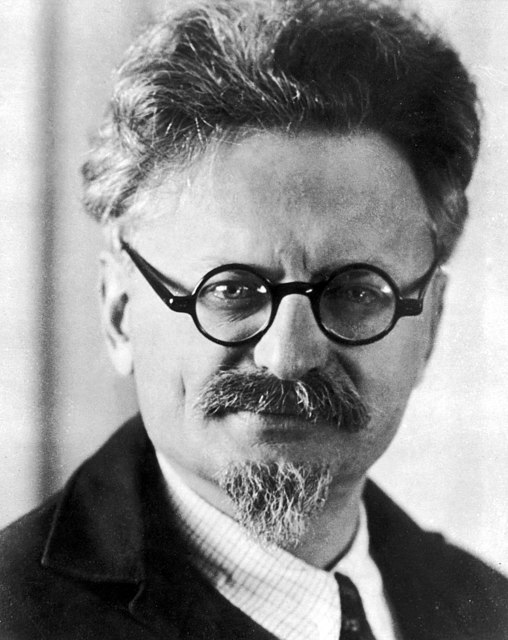
Book Review
Trotsky, Leon. In Defence of Marxism. Introduction by Rob Sewell, Wellred Books, 2019. ISBN 978-1-913026-03-5.
Leon Trotsky’s In Defence of Marxism remains one of the most concentrated demonstrations of revolutionary method under polemical fire—a living workshop in which dialectical materialism, party strategy, and class analysis are hammered into usable steel. Written in 1939–40 amid the bitter factional dispute inside the U.S. Socialist Workers Party (SWP), these letters and essays are not antiquarian curiosities. They are high-caliber interventions in questions that recur whenever the workers’ movement faces war, bureaucratic deformation, and the seductive drift toward petty-bourgeois skepticism. The new Wellred Books edition (312 pp., 2019) returns the collection to its intended function: a handbook for militants who must think clearly and act decisively.
Trotsky’s immediate antagonist is not simply the Shachtman–Burnham current in the SWP; it is the philosophical capitulation that underwrote their politics. Against the retreat from dialectics into pragmatism and empiricism, Trotsky shows that method is not an ornament to doctrine but the precondition for revolutionary conclusions. If social being determines consciousness, then the decisive test is the class location and trajectory of a tendency: in this case, a drift toward petty-bourgeois moralism that, unable to locate the contradictory class dynamics of the USSR, substitutes subjective outrage for analysis. The enduring brilliance of the book is how it welds “abstract” method to concrete strategic lines. The sections on dialectics repay close reading; for a generation shaped by post-truth cynicism and NGO activism, Trotsky’s insistence that reality is knowable through practice, and that contradiction is the motor of change rather than a scandal to be papered over, is tonic.
Politically, the collection revolves around the “Russian question”: why defend the USSR—then a degenerated workers’ state—against imperialist attack while simultaneously fighting the Stalinist bureaucracy to the death? Trotsky’s answer avoids two symmetrical errors. On one side lies moral equivalence (collapsing the social content of the property forms into the crimes of the bureaucracy); on the other, apologetics for Stalinism. Defence of the USSR’s proletarian property relations is not an alibi for the Kremlin but an obligation imposed by the class struggle at the world scale. This dialectical position—defeat imperialism, overthrow the bureaucracy—remains the best guide to any situation where deformed or contradictory workers’ gains coexist with parasitic leaderships.
A second, equally contemporary thread concerns party democracy and discipline. Trotsky’s polemic demonstrates that democratic centralism is not a bureaucratic fetish but the organizational form adequate to revolutionary politics: wide-open, ruthless debate before a decision; unified action after. The “freedom” to form permanent factions in normal times is a freedom to dissolve the party into a debating society; the obligation to resolve differences through programmatic struggle is a precondition for cohering a combat organization. In an epoch of endless “horizontalism” that often amounts to the tyranny of structurelessness, these pages offer a bracing corrective.
Stylistically, the book is a master class in polemic. Trotsky never confuses sharpness with invective. He quotes, reconstructs, and then demolishes arguments, not opponents. Graduate readers will appreciate his method of determinate negation: he identifies the rational kernel in the opposition’s concern (e.g., horror at Stalinist crimes), extracts it, and then shows how, abstracted from class analysis, it slides into reactionary conclusions. This approach models what Marxist critique ought to be: charitable in exposition, ruthless in logic, always anchored in the movement of real social forces.
The Wellred Books edition is notable for accessibility and completeness. With a clean layout and helpful front matter (including an introduction by Rob Sewell in retail listings), it is easy to assign to seminars and reading groups; and at 312 pages, it can be read closely within a term. The volume consolidates the core 1939–40 texts, originally published posthumously in 1942, in a format that encourages collective study—a crucial point, because the work was itself born of collective struggle.
From a revolutionary communist perspective, five strengths stand out:
1. Unity of theory and tactics. Trotsky demonstrates that philosophical concessions (to pragmatism or positivism) cascade into political capitulations. Method is not a graduate-seminar luxury; it is the scaffolding of strategy.
2. Class analysis without sentimentality. The discussion of the USSR exemplifies how to hold two thoughts at once: defend proletarian property forms against imperialism; fight the bureaucratic caste at home. This dual line inoculates militants against both liberal “campism” and ultraleft abstention.
3. Party-building as a scientific art. The text shows how a revolutionary organization conducts internal struggle without degenerating into either bureaucratism or federalism. The emphasis on program over personality is especially salutary.
4. Polemic as pedagogy. Each letter trains the reader to locate the class content of an argument, not merely its rhetorical surface. For cadre formation, this is gold.
5. Relevance in the long downturn. In an era of war, creeping Bonapartism, and ideological confusion, Trotsky’s clarity on internationalism, the state, and the tasks of a revolutionary minority remains unmatched.
Are there limitations? Readers should situate Trotsky’s categories historically: the USSR of 1939–40 cannot be mapped one-to-one onto later bureaucratic regimes or today’s “state capitalist” debates. Some terminology is of its time; and the polemical heat presupposes familiarity with the SWP’s internal life. But these are not defects of the work; they are invitations to historical study and theoretical application.
In sum, In Defence of Marxism is indispensable for any serious revolutionary who wants to learn how to think—and fight—like a Marxist. Read it with comrades. Argue it line by line. Then carry its method into the living struggles of the present.
 Letters from Tomis
Leave a comment