https://marxist.com/the-degeneration-and-collapse-of-the-fourth-international.htm
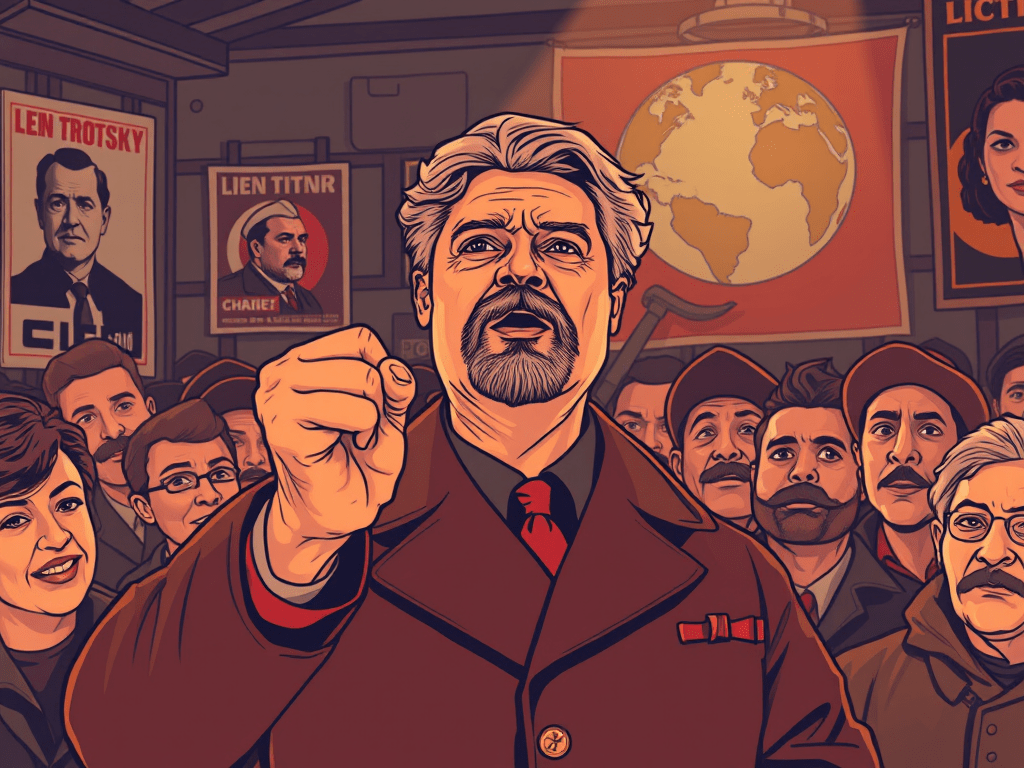
The above article offers a comprehensive analysis and polemic on the rise, degeneration, and collapse of the Fourth International, originally founded by Leon Trotsky in 1938 as a response to the betrayals and bureaucratic degeneration of the Second and Third Internationals. The central argument is that, after Trotsky’s assassination, the Fourth International failed to provide the necessary revolutionary leadership to the international working class, falling prey to sectarianism, opportunism, and a fatal inability to adapt Marxist theory to changing historical circumstances.
Historical Context and Foundation
Trotsky established the Fourth International because the prior Internationals had become obstacles to socialist revolution, serving the interests of reformism and Stalinism rather than those of the proletariat. The Fourth International’s foundation was an urgent necessity for global revolutionary leadership, grounded in Marxist principles.
Crisis of Leadership and Internal Degeneration
However, the document asserts that the Fourth International was doomed by the quality of its post-Trotsky leadership. After Trotsky’s death, the new leaders—Cannon, Pablo, Mandel, Frank, Healy, and others—are criticized for either ultra-leftism or opportunism, for bureaucratic methods, and for their repeated failures to understand or apply dialectical materialism in practice. The text gives particular emphasis to the negative legacy of James P. Cannon and the SWP, whose sectarian and bureaucratic approach is contrasted with Trotsky’s theoretical flexibility and insistence on democratic debate.
The Role of Ted Grant and the British Tendency
Central to the polemic is the claim that Ted Grant and the Workers’ International League (WIL, later the Revolutionary Communist Party in Britain) represented the sole genuine continuation of Trotskyist Marxism during this period. Grant’s tendency is praised for its correct analysis of the postwar world, rejection of both Stalinist betrayals and the false perspectives advanced by the Fourth International’s leadership, and insistence on linking revolutionary perspectives to real material conditions (such as recognizing the postwar economic boom and the persistence of reformist illusions in the working class).
Grant’s faction is presented as the only section capable of adapting Marxist theory to changing realities, warning against both sectarian isolation and opportunist adaptation, while also being the victim of slander, bureaucratic intrigue, and exclusion from the “official” international leadership.
Historical Lessons and Contemporary Relevance
The collapse of the Fourth International is presented not as a historical curiosity, but as a vital lesson for today’s revolutionary communists: the failure was not inevitable, but the result of concrete theoretical and organizational errors by its leadership. The document insists that defending the authentic heritage of Trotskyism—now embodied by the Revolutionary Communist International (RCI)—means upholding both revolutionary theory and revolutionary methods of organization, free from bureaucratic degeneration and open to creative adaptation based on dialectical analysis.
The conclusion is a call to reclaim and defend the revolutionary Marxist heritage against the distortions of Stalinism, reformism, and revisionism, and to build a new international based on genuine communist principles, critical analysis, and the lessons of past defeats.
In essence
From a revolutionary communist perspective, the document is a defense of the necessity of revolutionary leadership, the correct application of Marxist theory, and the ongoing struggle to preserve and revive the authentic, undistorted heritage of Trotskyism in the face of betrayal, bureaucratism, and opportunism—pointing to the work of Ted Grant and his followers as the true standard-bearers for international communism after Trotsky.
 Letters from Tomis
Leave a comment