Book Review
Enrigue, Álvaro. You Dream of Empires. Translated by Natasha Wimmer, Riverhead Books, 2024.
Álvaro Enrigue’s You Dream of Empires ambitiously sets out to reconstruct the final days of the Aztec empire through a postmodern lens, merging surrealist humor with historical fiction. Yet for all its stylistic flair and intellectual posturing, the novel ultimately succumbs to a fatal contradiction: it is a book about imperial spectacle that curiously lacks staying power. Despite flashes of brilliance, You Dream of Empires proves disappointingly forgettable.
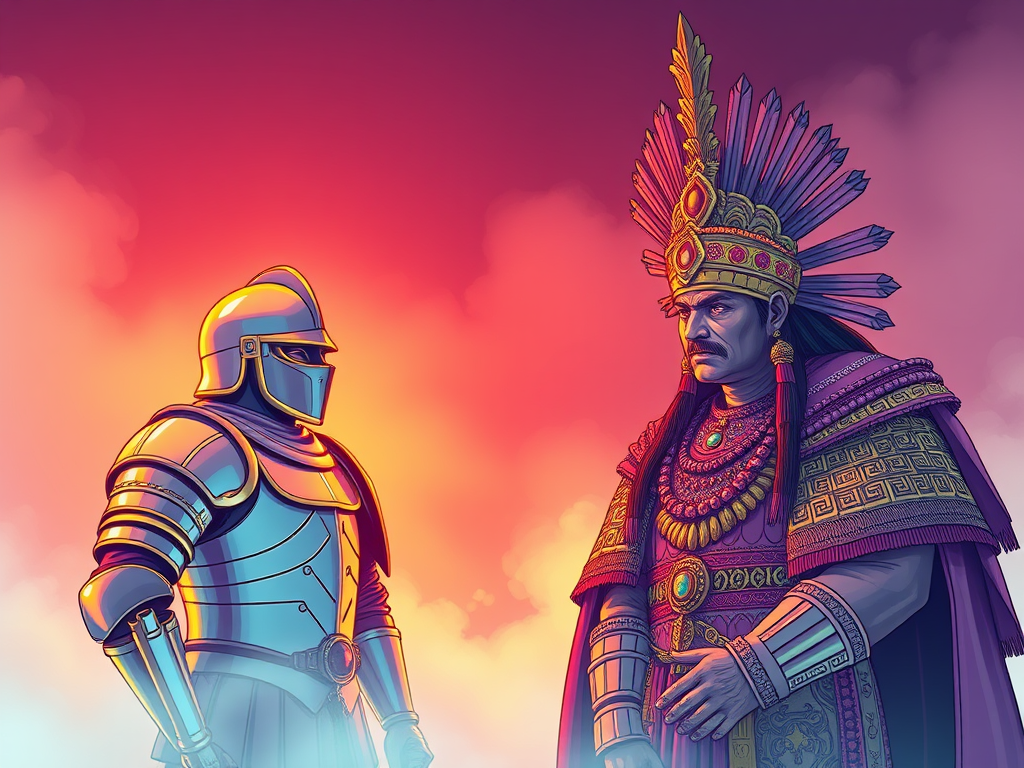
Set around Hernán Cortés’s arrival in Tenochtitlan, the novel toys with genre, chronology, and perspective in ways reminiscent of Bolaño or Pynchon, with time-bending interludes and irreverent characters populating an otherwise grave historical moment. Enrigue’s portrayal of Moctezuma as an anxious autocrat, and Cortés as an almost farcical invader, is clearly meant to subvert the “great man” narratives of conquest. However, the effect often feels more like academic playacting than trenchant critique. The characters rarely rise above the level of ideas in costume—allegorical figures that fail to resonate emotionally or dramatically.
This weakness is compounded by the prose itself, which—though erudite and occasionally sharp—lacks the kind of memorable lyricism or evocative clarity that would tether the novel to the reader’s imagination. One can admire Enrigue’s cleverness, yet the book’s disjointed tone and mannered detours quickly grow tiresome. Moments meant to provoke awe or revelation—such as Moctezuma’s surreal rituals or the philosophical musings on time—fade soon after reading, as if wrapped in a fog of cleverness that obscures meaning rather than revealing it.
More concerning is the book’s tendency to gesture at profundity without ever quite arriving there. The imperial collapse, a subject rich with human tragedy and political consequence, feels oddly sterile in Enrigue’s hands—like a museum exhibit curated by a trickster who keeps changing the placards. There is no doubt that You Dream of Empires is intellectually ambitious and steeped in historical insight, but ambition without emotional or narrative gravity leaves the reader adrift.
In the end, You Dream of Empires is a novel easier to admire than to love—and easier still to forget. It may appeal to those steeped in Latin American literary theory or fans of formally inventive fiction, but for most readers, it will be a beautiful mirage: intriguing in outline, hollow in memory.
 Letters from Tomis
Leave a comment