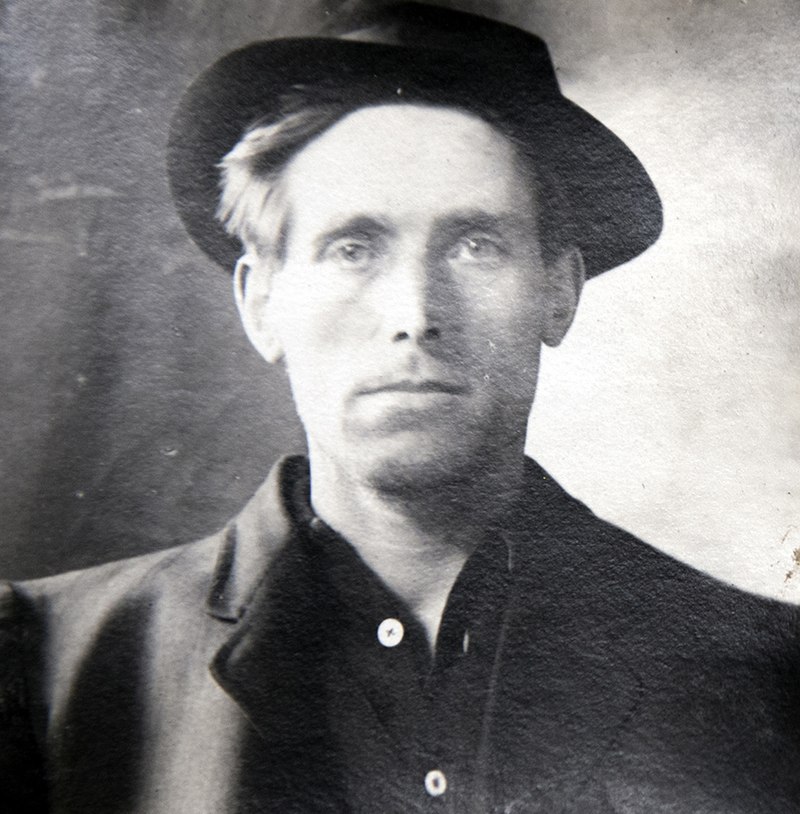
My Socialist Hall of Fame
During this chaotic era of vile rhetoric and manipulative tactics from our so-called bourgeois leaders, I am invigorated by the opportunity to reflect on Socialists, Revolutionaries, Philosophers, Guerrilla Leaders, Partisans, and Critical Theory titans, champions, and martyrs who paved the way for us—my own audacious “Socialism’s Hall of Fame.” These are my heroes and fore-bearers. Not all are perfect, or even fully admirable, but all contributed in some way to our future–either as icons to emulate, or as warnings to avoid in the future.
Joe Hill (1879–1915) was a Swedish-American labor activist, songwriter, and member of the Industrial Workers of the World (IWW), widely remembered as a martyr for the American labor movement. Born Joel Emmanuel Hägglund in Gävle, Sweden, Hill emigrated to the United States in 1902, where he adopted the name Joe Hill.
Hill became prominently involved with the IWW, a radical labor organization advocating for industrial unionism and the abolition of capitalism. Known for his sharp wit and talent for songwriting, Hill composed numerous labor anthems and satirical songs designed to inspire workers and ridicule oppressive employers. Among his most famous songs are “The Preacher and the Slave,” “Casey Jones—the Union Scab,” and “There is Power in a Union.” His songs were featured in the IWW’s “Little Red Songbook,” which became essential to the union’s organizing strategy.
In 1914, Hill was arrested in Salt Lake City, Utah, and charged with the murder of a grocer and his son. Despite the circumstantial nature of the evidence and widespread belief in his innocence among supporters, Hill was convicted and sentenced to death. His case garnered international attention, sparking protests from prominent figures including Helen Keller, Eugene V. Debs, and President Woodrow Wilson. Hill himself insisted he had been framed because of his union activities, famously advising supporters, “Don’t waste time mourning, organize!”
Joe Hill was executed by firing squad on November 19, 1915. His death made him a symbol of resistance and solidarity within the labor movement. His life and legacy continue to inspire labor activists and cultural artists worldwide, underscoring the enduring power of music and activism in the struggle for workers’ rights and social justice.
Hill’s songs and writings continue to be studied as critical contributions to labor history, embodying the vibrant intersection of cultural expression and working-class activism.
Bibliography:
• Adler, William M. The Man Who Never Died: The Life, Times, and Legacy of Joe Hill, American Labor Icon. New York: Bloomsbury, 2011.
• Rosemont, Franklin. Joe Hill: The IWW & the Making of a Revolutionary Workingclass Counterculture. Chicago: Charles H. Kerr Publishing, 2003.
• Smith, Gibbs M. Joe Hill. Salt Lake City: University of Utah Press, 1984.
• Foner, Philip S., ed. The Case of Joe Hill. New York: International Publishers, 1965.
• Kornbluh, Joyce L., ed. Rebel Voices: An IWW Anthology. Ann Arbor: University of Michigan Press, 1964.
 Letters from Tomis
Leave a comment