My Socialist Hall of Fame
During this chaotic era of vile rhetoric and manipulative tactics from our so-called bourgeois leaders, I am invigorated by the opportunity to reflect on Socialists, Revolutionaries, Philosophers, Guerrilla Leaders, Partisans, and Critical Theory titans, champions, and martyrs who paved the way for us—my own audacious “Socialism’s Hall of Fame.” These are my heroes and fore-bearers. Not all are perfect, or even fully admirable, but all contributed in some way to our future–either as icons to emulate, or as warnings to avoid in the future.
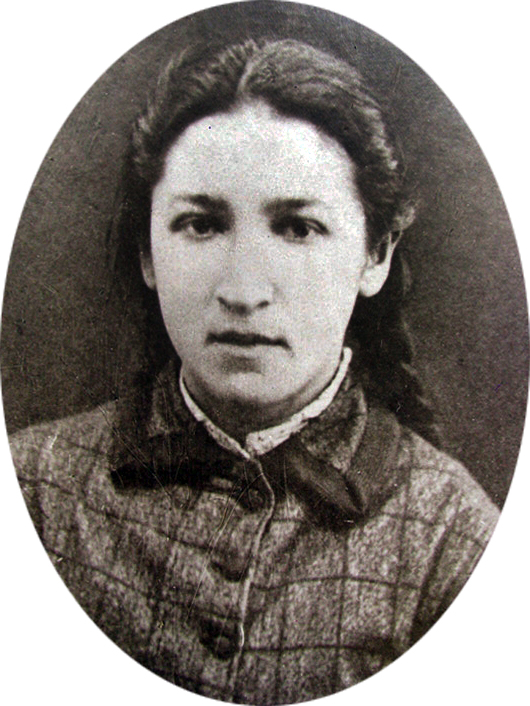
Vera Ivanovna Zasulich was a Russian revolutionary, political theorist, and intellectual bridge between Russian populism and Marxism. Born into a minor noble family in Mikhaylovka in the Smolensk Governorate, she became one of the most influential female revolutionaries in late 19th-century Russia, best known for her 1878 attempted assassination of General Fyodor Trepov and her subsequent political transformation into a Marxist theoretician closely aligned with Georgi Plekhanov and the early Russian Social-Democratic movement.
Early Life and Revolutionary Beginnings
Zasulich’s political consciousness was shaped by the oppressive conditions of Tsarist Russia and the liberal reforms that followed the Emancipation of the Serfs (1861). Educated in Moscow and later St. Petersburg, she became involved with radical student circles and was influenced by the ideas of Nikolai Chernyshevsky and the populist Narodnik movement.
In 1878, Zasulich gained international fame when she shot General Fyodor Trepov, the governor of St. Petersburg, in retaliation for his brutal flogging of a political prisoner. Her trial became a cause célèbre; a sympathetic jury acquitted her, reflecting growing public discontent with autocracy. Following this, she fled abroad to avoid further prosecution and joined the émigré revolutionary milieu in Switzerland.
Emigration and Turn to Marxism
While in exile in Geneva, Zasulich co-founded the Emancipation of Labor Group in 1883 with Georgi Plekhanov, Lev Deutsch, and Pavel Axelrod. This group marked the first organized effort to introduce Marxist theory into the Russian revolutionary context, translating and disseminating Marxist works and arguing for the development of capitalism in Russia as a necessary precondition for socialism.
Zasulich became a key theorist and translator, corresponding directly with Karl Marx and Friedrich Engels. One of her most significant contributions was her 1881 letter to Marx questioning whether the Russian mir (communal village structure) could provide a unique path to socialism without passing through full capitalist development. Marx’s response—cautiously affirming the potential of the mir if supported by revolutionary action—remains a crucial text in debates over the universality of Marxist historical stages.
Intellectual Role and Later Years
Zasulich remained a committed Marxist, though she retained certain Narodnik sympathies, particularly in her nuanced view of the Russian peasantry. Through her work in the Iskra newspaper (1900–1903), alongside Lenin, she helped shape the ideological foundation of Russian Social Democracy. However, during the Second Congress of the RSDLP in 1903, she sided with the Mensheviks in the split with Lenin’s Bolsheviks, aligning herself with Plekhanov’s more moderate approach.
Her later years were marked by a retreat from political life and growing estrangement from the revolutionary movement, particularly as Bolshevik radicalism deepened. After the 1917 Russian Revolution, Zasulich did not support the Bolshevik seizure of power and lived quietly until her death in Petrograd in 1919.
Legacy
Vera Zasulich occupies a distinctive place in revolutionary history. As a populist-turned-Marxist, a theorist, and a participant in foundational socialist debates, her life reflects the complex transitions within Russian radicalism from the 1870s to the 1910s. Though overshadowed by male contemporaries, her writings, translations, and political activism contributed significantly to the early dissemination of Marxism in Russia. Her correspondence with Marx remains a cornerstone for understanding the flexibility—and limits—of Marxist theory across different social formations.
Bibliography
Primary Sources
• Zasulich, Vera. Selected Revolutionary Writings. Translated and edited by Jane Tabrisky Goldsmith. London: Pluto Press, 1983.
• Marx, Karl. Letter to Vera Zasulich, March 1881. In Marx and Engels Collected Works, Vol. 24. New York: International Publishers, 1989.
• Zasulich, Vera. Correspondence with Karl Marx and Friedrich Engels. In Karl Marx and the Russian Road, edited by Teodor Shanin. New York: Monthly Review Press, 1983.
Secondary Sources
• Harding, Neil. Marxism in Russia: Key Documents 1879–1906. Cambridge: Cambridge University Press, 1983.
• Venturi, Franco. Roots of Revolution: A History of the Populist and Socialist Movements in 19th Century Russia. Chicago: University of Chicago Press, 1983.
• Shanin, Teodor, ed. Late Marx and the Russian Road: Marx and the Peripheries of Capitalism. New York: Monthly Review Press, 1983.
• Haimson, Leopold. The Russian Marxists and the Origins of Bolshevism. Cambridge, MA: Harvard University Press, 1955.
• Engelstein, Laura. Russia in Flames: War, Revolution, Civil War, 1914–1921. Oxford: Oxford University Press, 2018.
• Fitzpatrick, Sheila. The Russian Revolution. Oxford: Oxford University Press, 2008.
 Letters from Tomis
Leave a comment