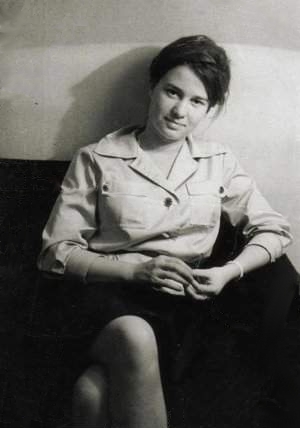
My Socialist Hall of Fame
During this chaotic era of vile rhetoric and manipulative tactics from our so-called bourgeois leaders, I am invigorated by the opportunity to reflect on Socialists, Revolutionaries, Philosophers, Guerrilla Leaders, Partisans, and Critical Theory titans, champions, and martyrs who paved the way for us—my own audacious “Socialism’s Hall of Fame.” These are my heroes and fore-bearers. Not all are perfect, or even fully admirable, but all contributed in some way to our future–either as icons to emulate, or as warnings to avoid in the future.
Introduction
Ulrike Marie Meinhof (1934–1976) was a German journalist, public intellectual, and co-founder of the Red Army Faction (RAF), one of the most controversial urban guerrilla organizations in postwar Europe. Her transformation from a respected left-wing commentator into an armed revolutionary remains a subject of extensive debate among historians, sociologists, and political theorists. Meinhof’s life and thought embody the tensions between radical humanism, anti-imperialism, and violent militancy that shaped European New Left politics during the Cold War.
Early Life and Education
Born in Oldenburg, Germany, on October 7, 1934, Meinhof was raised in a middle-class academic family. Her father, art historian Werner Meinhof, died in 1940, and her mother died in 1949. Meinhof was taken in by the family of Renate Riemeck, a socialist historian who profoundly influenced her intellectual development and political values.
She studied philosophy, education, sociology, and German literature at the universities of Marburg and Münster. As a student, she joined the Socialist German Student Union (Sozialistischer Deutscher Studentenbund, or SDS), the intellectual engine of the postwar German Left. Her academic work was heavily influenced by the legacy of German idealism, Christian ethics, and Marxist theory. Early on, she gravitated toward a form of ethical socialism, deeply committed to anti-fascism, anti-nuclear activism, and the moral imperative of social justice.
Journalism and Political Formation
In the late 1950s and early 1960s, Meinhof gained national prominence as a journalist and editor for the radical-left monthly konkret, one of West Germany’s most influential countercultural publications. Her articles reflected a sharp critique of West German society, particularly its failure to come to terms with its Nazi past, its rearmament, and its alignment with American Cold War policy. Meinhof’s writing style was analytical and often moralistic, shaped by an acute sense of injustice and the conviction that intellectuals had a duty to intervene in political life.
In this period, Meinhof identified as a Marxist-humanist, critiquing the alienation and commodification inherent in capitalist society while advocating for democratic socialism and anti-authoritarian cultural transformation. She opposed both Soviet-style communism and liberal capitalism, seeking a “third way” that centered human dignity, education, and participatory democracy.
Radicalization and Founding of the Red Army Faction
The late 1960s marked a decisive turn in Meinhof’s life. Disillusioned with the limits of legal protest and journalism, she became increasingly involved with radical leftist networks following the student movement of 1968. Her connections with Andreas Baader, Gudrun Ensslin, and other militant activists would culminate in the founding of the Red Army Faction (RAF) in 1970.
The pivotal moment came in May 1970, when Meinhof helped organize and publicize the armed liberation of Baader from police custody—an act that pushed her into illegality and initiated her transition from theorist to militant. She became the RAF’s primary ideologue, crafting its manifestos and communiqués, including the infamous “Concept of the Urban Guerrilla.” Here, she argued that armed struggle in the imperialist metropole was a necessary extension of the global fight against capitalism, colonialism, and fascism.
Her turn to violence was justified on the basis of Marxist-Leninist and anti-imperialist theories, but also on ethical grounds: Meinhof believed that the suffering of the Vietnamese, Palestinians, and Third World peoples demanded solidarity through action, not just words. She wrote: “Protest is when I say I don’t like this. Resistance is when I put an end to what I don’t like.” This fusion of moral conviction and revolutionary violence defined her legacy—and ensured its polarizing reception.
Arrest, Imprisonment, and Death
In 1972, Meinhof was arrested along with other RAF members following a nationwide crackdown. Her incarceration at the high-security Stammheim prison was marked by prolonged isolation, surveillance, and mental decline. She continued to write political texts from prison, although these became less frequent as her psychological condition worsened.
On May 9, 1976, Ulrike Meinhof was found hanged in her cell. The official ruling was suicide, but questions about the circumstances of her death remain unresolved. Some supporters suspected foul play, while others viewed it as the culmination of political and personal disintegration. Her death shocked Germany and became a symbol of both state repression and revolutionary tragedy.
Intellectual Legacy and Contested Memory
Ulrike Meinhof’s legacy is deeply contested. For some, she is a tragic figure: a brilliant woman destroyed by her own radicalism and the authoritarian backlash it provoked. For others, she represents a misguided idealism that descended into terrorism. Feminists have revisited her life to explore the gendered dimensions of militancy, motherhood, and intellectual alienation in the male-dominated New Left.
More recently, scholars have attempted to disentangle Meinhof’s writings from the RAF’s later acts of violence. Her early essays remain essential documents of West German dissent, grappling with questions of guilt, resistance, and historical responsibility in a society still haunted by fascism. Her prison writings, though fragmentary, offer insight into the psychological toll of repression and the limits of revolutionary subjectivity.
Ulrike Meinhof’s life raises enduring questions about the ethics of political violence, the role of the intellectual in times of crisis, and the tragic dialectic of hope and despair that often marks revolutionary movements. Whether seen as martyr, criminal, or moral philosopher gone astray, she remains one of the most enigmatic and influential figures of the postwar European left.
Selected Bibliography
Primary Sources
• Meinhof, Ulrike. Everybody Talks About the Weather… We Don’t: The Writings of Ulrike Meinhof. Translated by Luise von Flotow. New York: Seven Stories Press, 2008.
• Meinhof, Ulrike. Bambule: Fürsorge—Sorge für wen? Berlin: Wagenbach, 1971.
Secondary Sources
• Aust, Stefan. The Baader-Meinhof Complex. Translated by Anthea Bell. London: Bodley Head, 2008.
• Kundnani, Hans. Utopia or Auschwitz: Germany’s 1968 Generation and the Holocaust. New York: Columbia University Press, 2009.
• Varon, Jeremy. Bringing the War Home: The Weather Underground, the Red Army Faction, and Revolutionary Violence in the Sixties and Seventies. Berkeley: University of California Press, 2004.
• Passmore, Leith. Ulrich Meinhof and the Red Army Faction: Performing Terrorism. Basingstoke: Palgrave Macmillan, 2011.
• Gill, Anton. A Dance Between Flames: Berlin Between the Wars. London: John Murray, 1993. (for context on post-Weimar intellectual legacy)
• Frohlich, Claudia. Ulrike Meinhof and the West German Left. In German Politics and Society, Vol. 22, No. 2 (2004): 34–55.
 Letters from Tomis
Leave a comment