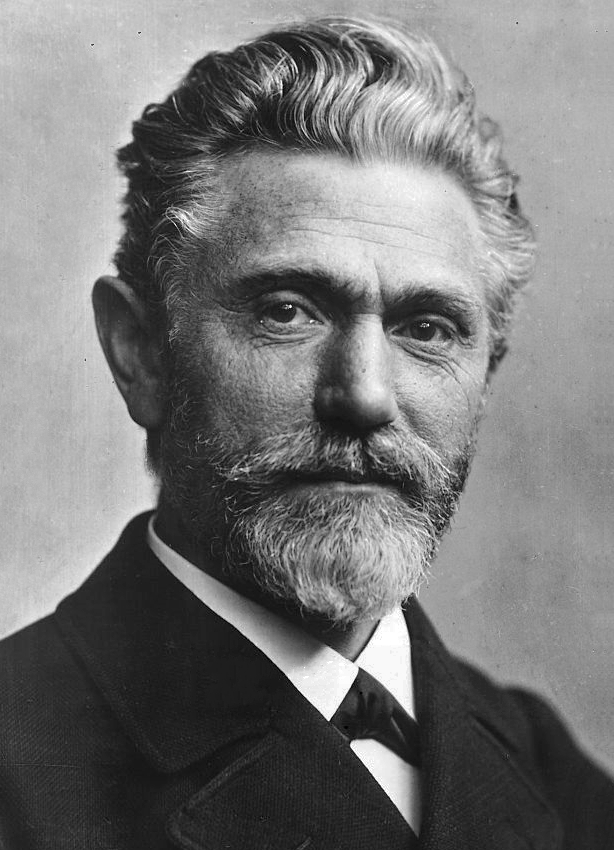
My Socialist Hall of Fame
During this chaotic era of vile rhetoric and manipulative tactics from our so-called bourgeois leaders, I am invigorated by the opportunity to reflect on Socialists, Revolutionaries, Philosophers, Guerrilla Leaders, Partisans, and Critical Theory titans, champions, and martyrs who paved the way for us—my own audacious “Socialism’s Hall of Fame.” These are my heroes and fore-bearers. Not all are perfect, or even fully admirable, but all contributed in some way to our future–either as icons to emulate, or as warnings to avoid in the future.
August Ferdinand Bebel (1840–1913) was a pivotal figure in the history of German socialism and a founder of the Social Democratic Party of Germany (SPD). Born on February 22, 1840, in Cologne, Bebel emerged from humble origins, working initially as a carpenter and a turner. His working-class roots profoundly shaped his political philosophy and activism.
Bebel co-founded the German Workers’ Association in 1867 and subsequently the Social Democratic Workers’ Party in 1869, later known as the SPD, alongside Wilhelm Liebknecht. Under his leadership, the SPD evolved from a marginalized workers’ movement into one of Europe’s most influential political parties, advocating for socialism through parliamentary means.
A committed Marxist, Bebel was notably influential in integrating Marxist theory with practical politics, thereby setting a model for democratic socialism. He firmly opposed militarism, colonialism, and capitalism, promoting international solidarity among workers. His seminal work, “Woman and Socialism” (1879), was revolutionary for advocating gender equality and linking women’s liberation explicitly with the socialist cause, significantly influencing feminist and socialist thought.
Throughout his career, Bebel faced frequent persecution from German authorities due to his revolutionary ideals. Despite numerous imprisonments, his advocacy significantly impacted social policies, particularly labor rights and social welfare.
Bebel died on August 13, 1913, in Passugg, Switzerland. His legacy endures as a cornerstone of democratic socialism, demonstrating the potential for social transformation through political engagement.
Annotated Bibliography
• Bebel, August. Woman and Socialism. Translated by Daniel De Leon, New York: Socialist Literature Company, 1910.
This is Bebel’s groundbreaking treatise on gender equality and socialism, considered one of the earliest comprehensive Marxist feminist texts.
• Harsch, Donna. German Social Democracy and the Rise of Nazism. Chapel Hill: University of North Carolina Press, 1993.
Provides context for Bebel’s influence on the SPD, examining how internal debates and ideologies evolved post-Bebel, contributing to later historical developments.
• Tudor, Henry. Political Myth. London: Pall Mall Press, 1972.
Examines Bebel’s use of political symbolism and rhetoric in building the SPD into a mass political movement.
• Miller, Susanne. August Bebel: Sozialdemokrat im Kaiserreich. Munich: Beck, 1988.
A definitive German biography of Bebel, detailing his personal, political, and ideological developments within the context of the German Empire.
• Steenson, Gary P. Not One Man! Not One Penny!: German Social Democracy, 1863-1914. Pittsburgh: University of Pittsburgh Press, 1981.
Focuses on Bebel’s role in shaping the SPD’s opposition to militarism and capitalism, situating his work within broader socialist movements.
 Letters from Tomis
Leave a comment