My Socialist Hall of Fame
During this chaotic era of vile rhetoric and manipulative tactics from our so-called bourgeois leaders, I am invigorated by the opportunity to reflect on Socialists, Revolutionaries, Philosophers, Guerrilla Leaders, Partisans, and Critical Theory titans, champions, and martyrs who paved the way for us—my own audacious “Socialism’s Hall of Fame.” These are my heroes and fore-bearers. Not all are perfect, or even fully admirable, but all contributed in some way to our future–either as icons to emulate, or as warnings to avoid in the future.
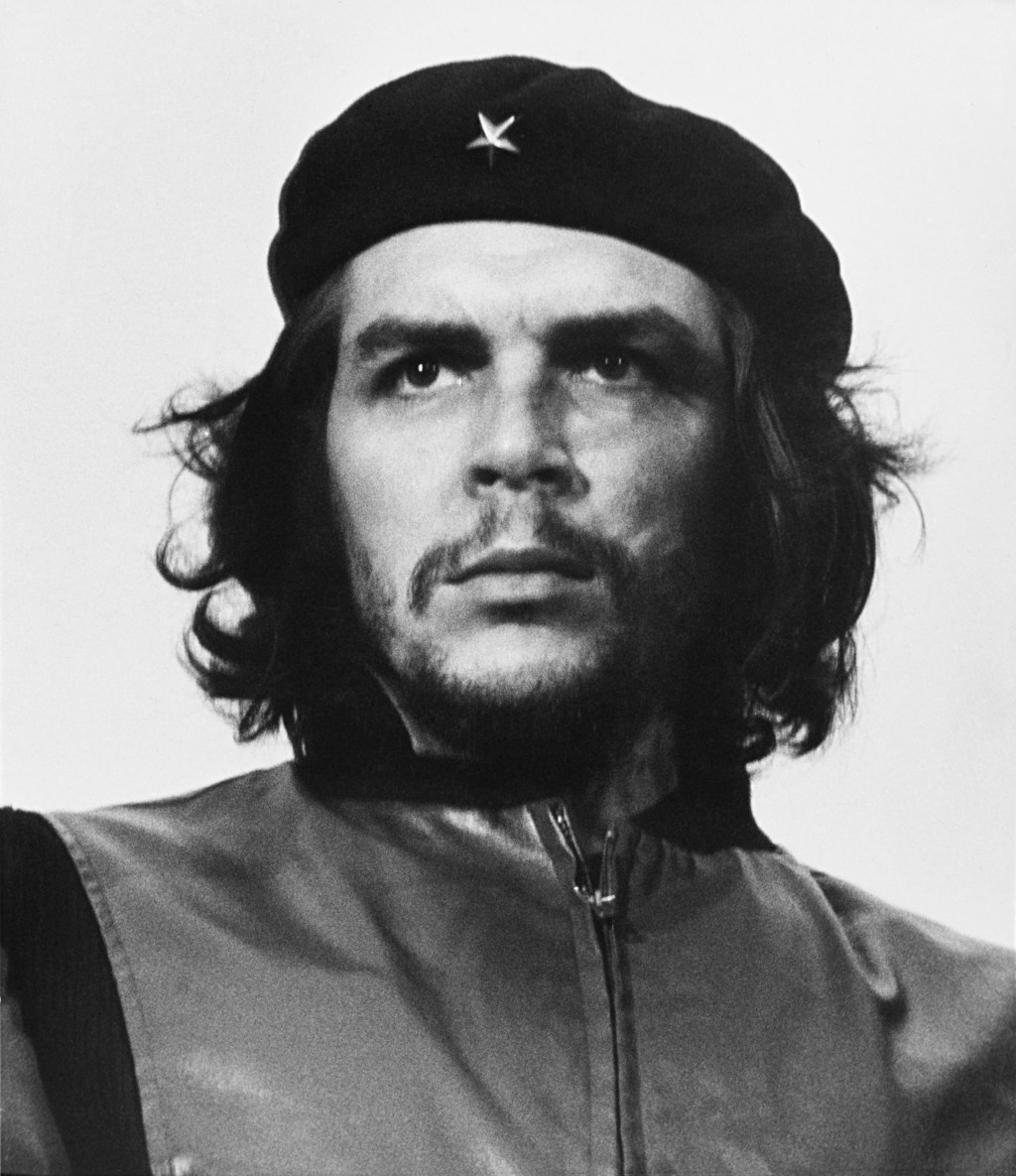
Ernesto “Che” Guevara (June 14, 1928 – October 9, 1967) was an Argentine Marxist revolutionary, physician, author, guerrilla leader, diplomat, and military theorist. He became a central figure in the Cuban Revolution and later a symbol of rebellion and anti-imperialism across the world.
Born in Rosario, Argentina, Guevara was raised in a middle-class family and studied medicine at the University of Buenos Aires. During a motorcycle journey across South America, he was exposed to deep poverty and social injustices that profoundly influenced his political views. These experiences were later chronicled in his memoir, The Motorcycle Diaries.
In 1955, Guevara met Fidel Castro in Mexico and joined Castro’s 26th of July Movement, aiming to overthrow Cuban dictator Fulgencio Batista. As a key commander during the Cuban Revolution, Guevara led several successful guerrilla campaigns and played a significant role in Batista’s downfall in 1959. Following the revolution, he held various roles in the new Cuban government, including Minister of Industries and President of the National Bank.
Guevara advocated for global revolution and left Cuba in 1965 to foment uprisings abroad. After a failed mission in the Congo, he traveled to Bolivia to incite rebellion but was captured by the Bolivian army with the assistance of the CIA. He was executed on October 9, 1967, in La Higuera, Bolivia.
Che Guevara remains a controversial and polarizing figure—revered by some as a hero of social justice and reviled by others as a ruthless ideologue. His stylized image has become a global icon of rebellion and counterculture.
Bibliography
1. Anderson, Jon Lee. Che Guevara: A Revolutionary Life. New York: Grove Press, 1997.
• A comprehensive and authoritative biography based on extensive interviews and archival research.
2. Guevara, Ernesto “Che”. The Motorcycle Diaries: Notes on a Latin American Journey. Translated by Alexandra Keeble. London: Verso, 1995.
• Guevara’s personal account of his transformative journey through South America.
3. Guevara, Ernesto “Che”. Guerrilla Warfare. New York: Monthly Review Press, 1961.
• A military manual and revolutionary treatise outlining his theories of guerrilla combat.
4. Taibo II, Paco Ignacio. Ernesto Guevara, Also Known as Che. Translated by Martin Schifino. New York: St. Martin’s Press, 1999.
• A well-documented biography blending personal narrative with historical detail.
5. Castañeda, Jorge G. Compañero: The Life and Death of Che Guevara. New York: Alfred A. Knopf, 1997.
• A critical biography that provides both political context and psychological analysis.
6. Kornbluh, Peter (ed.) The Cuba Reader: History, Culture, Politics. Durham: Duke University Press, 2003.
• Contains a variety of perspectives on Che and the Cuban Revolution.
 Letters from Tomis
Leave a comment