Socialist Hall of Fame
During this chaotic era of vile rhetoric and manipulative tactics from our so-called bourgeois leaders, I am invigorated by the opportunity to reflect on Socialists, Revolutionaries, Philosophers, Guerrilla Leaders, Partisans, and Critical Theory titans, champions, and martyrs who paved the way for us—my own audacious “Socialism’s Hall of Fame.” These are my heroes and fore-bearers. Not all are perfect, or even fully admirable, but all contributed in some way to our future–either as icons to emulate, or as warnings to avoid in the future.
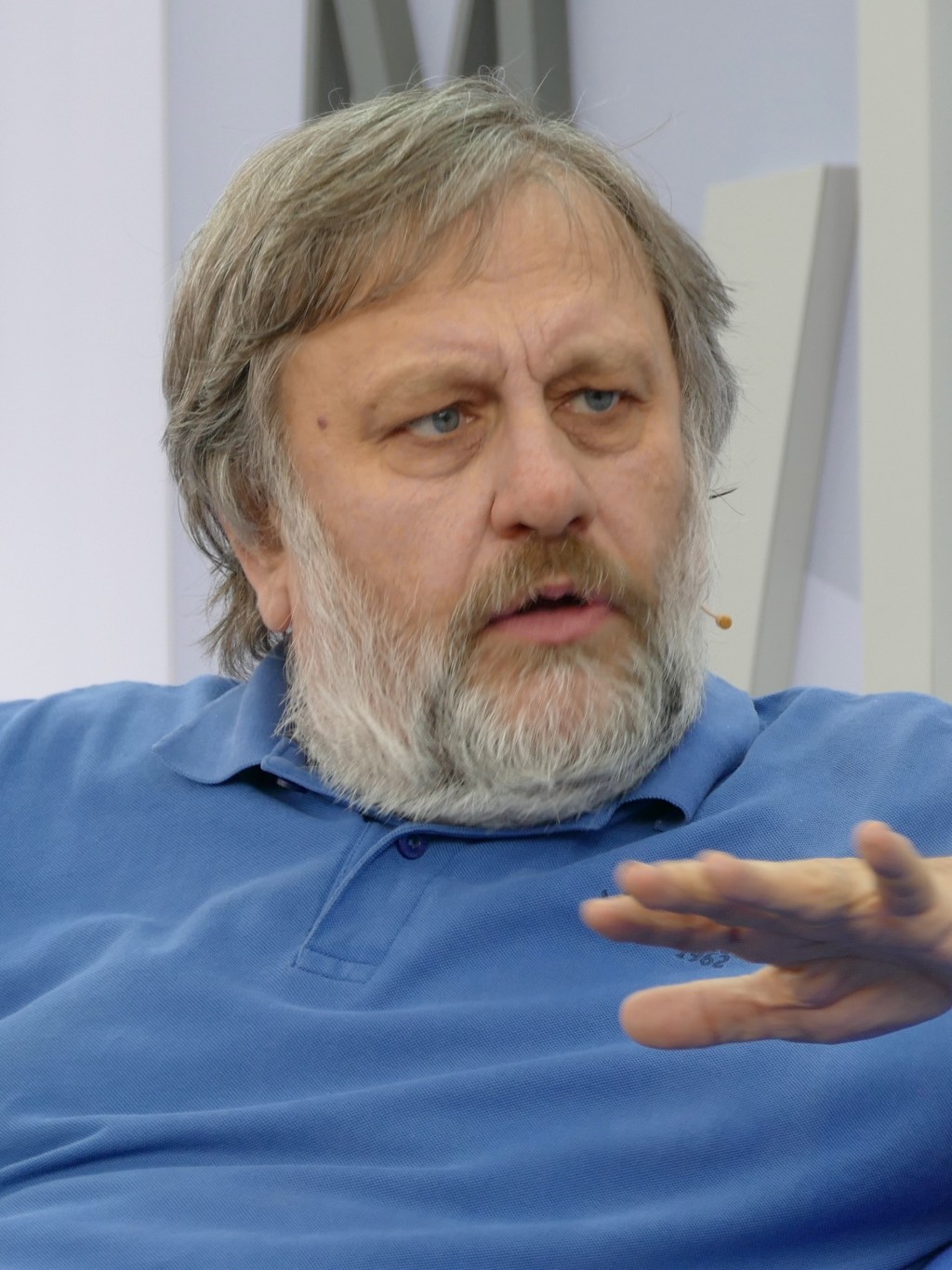
Slavoj Žižek (born March 21, 1949) is a Slovenian philosopher, cultural critic, and public intellectual known for his eclectic and provocative analyses of contemporary culture, politics, and psychoanalysis. He has been influential in fields such as critical theory, film studies, and political philosophy, often blending Marxist theory with Lacanian psychoanalysis.
Žižek was born in Ljubljana, then part of socialist Yugoslavia (now Slovenia). He studied philosophy at the University of Ljubljana, earning his PhD in 1981 with a dissertation on French structuralism. He later pursued further studies in psychoanalysis at the University of Paris VIII under Jacques-Alain Miller, a key figure in the Lacanian school.
During the late 1980s and early 1990s, Žižek emerged as a public intellectual, particularly following the collapse of Yugoslavia. He was briefly involved in Slovenian politics, running for the presidency of Slovenia in 1990 as a candidate of the Liberal Democratic Party. However, his primary influence has been academic, particularly in Western intellectual circles, where he gained prominence through his sharp critiques of ideology, capitalism, and liberal democracy.
Žižek’s work is characterized by a synthesis of German Idealism (Hegel), Marxism, and Lacanian psychoanalysis. His writing style is highly rhetorical and rich in pop culture references, drawing on cinema, literature, and contemporary events to illustrate philosophical concepts. He has been a vocal critic of both right-wing nationalism and liberal multiculturalism, advocating instead for a radical leftist politics.
Žižek has held academic positions at numerous institutions, including Birkbeck, University of London, and the International Institute of Social Studies in the Netherlands. He is also a senior researcher at the Institute of Sociology and Philosophy at the University of Ljubljana.
Selected Bibliography
Žižek has authored numerous books spanning philosophy, politics, psychoanalysis, and cultural criticism. Below is a selection of his major works:
1. The Sublime Object of Ideology (1989) – His first major English-language work, which applies Lacanian psychoanalysis to ideological critique.
2. For They Know Not What They Do: Enjoyment as a Political Factor (1991) – A continuation of his exploration of ideology and subjectivity.
3. Looking Awry: An Introduction to Jacques Lacan through Popular Culture (1991) – A study of Lacanian psychoanalysis through film and literature.
4. The Metastases of Enjoyment: Six Essays on Women and Causality (1994) – Explores gender, psychoanalysis, and ideology.
5. Enjoy Your Symptom!: Jacques Lacan in Hollywood and Out (1997) – Examines Hollywood films through a Lacanian lens.
6. The Plague of Fantasies (1997) – Discusses the role of fantasy in ideology.
7. The Ticklish Subject: The Absent Centre of Political Ontology (1999) – A critique of postmodernism and liberal democracy.
8. Did Somebody Say Totalitarianism? Five Interventions in the (Mis)Use of a Notion (2001) – Challenges the common liberal understanding of totalitarianism.
9. Welcome to the Desert of the Real (2002) – Analyzes post-9/11 global politics and ideology.
10. Iraq: The Borrowed Kettle (2004) – A critique of the ideological narratives surrounding the Iraq War.
11. The Parallax View (2006) – A philosophical treatise on dialectics, subjectivity, and ideology.
12. Violence: Six Sideways Reflections (2008) – Examines different forms of violence in modern society.
13. First as Tragedy, Then as Farce (2009) – Analyzes the financial crisis and political responses to it.
14. Living in the End Times (2010) – Discusses contemporary ideological crises and the decline of global capitalism.
15. Less Than Nothing: Hegel and the Shadow of Dialectical Materialism (2012) – His most ambitious work on Hegelian dialectics.
16. The Year of Dreaming Dangerously (2012) – A reflection on global political events of 2011.
17. Trouble in Paradise: From the End of History to the End of Capitalism (2014) – A critique of contemporary capitalism.
18. Like a Thief in Broad Daylight: Power in the Era of Post-Human Capitalism (2018) – Addresses digital capitalism and ideological control.
19. Pandemic! COVID-19 Shakes the World (2020) – A rapid response to the ideological implications of the COVID-19 crisis.
20. Surplus-Enjoyment: A Guide for the Non-Perplexed (2022) – Further develops his ideas on desire, ideology, and capitalism.
Žižek continues to be a prolific writer and speaker, engaging with contemporary political and philosophical issues while maintaining his reputation as a provocative and often controversial thinker.
 Letters from Tomis
Leave a comment