My Socialist Hall of Fame
During this chaotic era of vile rhetoric and manipulative tactics from our so-called bourgeois leaders, I am invigorated by the opportunity to reflect on Socialists, Revolutionaries, Philosophers, Guerrilla Leaders, Partisans, and Critical Theory titans, champions, and martyrs who paved the way for us—my own audacious “Socialism’s Hall of Fame.” These are my heroes and fore-bearers. Not all are perfect, or even fully admirable, but all contributed in some way to our future–either as icons to emulate, or as warnings to avoid in the future.
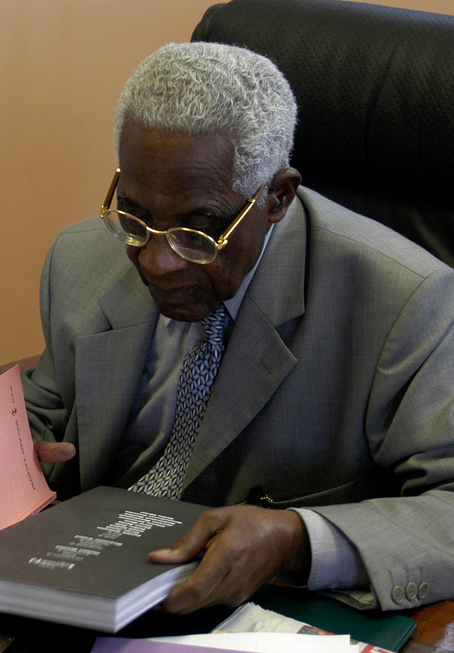
Aimé Césaire (1913–2008) occupies a foundational position in twentieth century Francophone literature, anticolonial thought, and Caribbean political history. Poet, playwright, essayist, teacher, and politician, Césaire was one of the principal architects of Négritude and among the most influential intellectual critics of European colonialism in the decades following the Second World War. His significance lies partly in his ability to unite literary experimentation with historical and political critique. From Cahier d’un retour au pays natal to Discours sur le colonialisme, Césaire developed a body of work in which the recovery of Black historical consciousness became inseparable from the struggle against colonial domination. At the same time, his long political career in Martinique exposed the tensions between cultural liberation, economic transformation, national identity, and political autonomy that characterized the broader process of decolonization.
Early Life and Education
Aimé Fernand David Césaire was born on June 26, 1913, in Basse-Pointe, Martinique, then a French colony. After attending the Lycée Schoelcher in Fort-de-France, he received a scholarship that enabled him to continue his education in Paris at the prestigious Lycée Louis-le-Grand. There he met the Senegalese intellectual Léopold Sédar Senghor, beginning an intellectual and personal friendship that would profoundly influence both men. Césaire subsequently entered the École normale supérieure in 1935.
Césaire’s encounter with African and other Black colonial students in Paris contributed to a transformation in his understanding of Martinican identity. French colonial education had generally presented assimilation into metropolitan French culture as the path toward intellectual and social advancement. Césaire increasingly rejected the implication that advancement required the suppression of African history and Black cultural identity.
In the mid-1930s, Césaire participated with Senghor and Léon-Gontran Damas in the intellectual milieu surrounding L’Étudiant noir. It was in this context that the concept of Négritude emerged. Rather than accepting the colonial representation of Blackness as deficiency or backwardness, Négritude asserted Black history and cultural identity as legitimate sources of intellectual and artistic creation. Césaire would later describe Négritude in terms of recognizing and accepting Black history and culture.
Négritude was never a completely unified philosophical doctrine. Senghor would increasingly emphasize African cultural values and civilization, while Césaire generally gave the concept a more insurgent and anticolonial character. For Césaire, the recovery of Black identity represented not simply cultural affirmation but a revolt against the structures of colonial alienation.
Cahier d’un retour au pays natal
Césaire began composing Cahier d’un retour au pays natal during the latter half of the 1930s. First published in the journal Volontés in 1939 and subsequently revised and expanded, the Cahier became one of the foundational literary works of Négritude and modern Francophone Caribbean literature.
The poem is simultaneously autobiographical, political, and philosophical. Césaire confronts the poverty and social degradation produced by colonialism while rejecting both colonial assimilation and a romanticized representation of Martinique. The speaker initially encounters the colonized world through images of exhaustion and humiliation. Yet the poem gradually moves toward an affirmation of historical consciousness and collective agency.
Stylistically, Césaire combined influences from French surrealism with Caribbean experience, African cultural references, and an increasingly revolutionary political vocabulary. His language is characterized by neologisms, abrupt changes of rhythm, unusual syntax, violent imagery, and movement between prose and verse. Rather than abandoning French as the language of the colonizer, Césaire transformed it. The French language became an instrument through which the colonial subject could challenge the civilization that had imposed it.
This appropriation of French was characteristic of Césaire’s larger intellectual project. Colonialism had attempted to define the colonized through the categories of European civilization. Césaire appropriated those categories, destabilized them, and turned them against colonialism itself.
Return to Martinique and Tropiques
Césaire returned to Martinique with his wife, Suzanne Roussi Césaire, in 1939. Both became teachers at the Lycée Schoelcher. Among the students who passed through the school during this period were figures who would become important intellectuals in their own right, including Frantz Fanon and Édouard Glissant.
During the Second World War, Aimé and Suzanne Césaire became central figures in the journal Tropiques. The journal represented an important effort to articulate a distinctively Caribbean intellectual and cultural identity during a period when Martinique was governed under the authoritarian colonial administration associated with the Vichy regime.
Césaire’s encounter with André Breton during the war strengthened his association with surrealism. Yet Césaire never functioned simply as a Caribbean disciple of a European movement. Surrealism offered techniques for attacking rationalized bourgeois culture, but Césaire adapted those techniques to the historical circumstances of colonialism, slavery, racism, and Black liberation.
His subsequent poetry collections, including Les Armes miraculeuses, Soleil cou coupé, Corps perdu, Ferrements, and Moi, laminaire, developed this distinctive poetic language.
Communism and Political Life
The end of the Second World War marked Césaire’s entrance into formal politics. Running with the French Communist Party, he became mayor of Fort-de-France in 1945 and was elected to the French Constituent Assembly that same year. His parliamentary career would eventually extend until 1993, while he remained mayor of Fort-de-France until 2001.
Césaire initially regarded communism as an important political vehicle for anticolonial struggle and social transformation. Marxism provided an analysis of exploitation that could connect colonial domination with capitalism and class relations. His Communist affiliation also reflected the considerable prestige enjoyed by the French Communist Party after its role in the Resistance.
Yet Césaire’s politics cannot be reduced to orthodox Marxism. Race, slavery, colonialism, and cultural alienation remained autonomous historical problems in his thought even when they were connected to capitalism.
One of the most consequential decisions of his early parliamentary career concerned Martinique’s constitutional relationship with France. Césaire supported the 1946 departmentalization legislation that transformed Martinique, Guadeloupe, French Guiana, and Réunion from colonies into French overseas departments. He served on the National Assembly’s Overseas Territories Commission and presented a report supporting the legislation that became the departmentalization law of March 19, 1946.
Departmentalization reflected the contradictory character of Césaire’s politics during this period. Formal incorporation into the French Republic promised social rights and legal equality, but it did not automatically eliminate the economic structures or cultural consequences inherited from colonialism.
Discourse on Colonialism
Césaire’s most important theoretical intervention came with Discours sur le colonialisme, first published in 1950. The essay represented a fundamental attack on the ideological legitimacy of European empire.
Césaire rejected the proposition that colonialism constituted a civilizing mission. Instead, he interpreted colonial relations as systems of coercion, economic exploitation, racism, and dehumanization. Colonialism did not merely brutalize colonized peoples. It also transformed the colonizer by normalizing violence and racial hierarchy.
Particularly significant was Césaire’s reversal of Europe’s claim to moral universality. European civilization proclaimed humanism while denying basic humanity to colonized populations. For Césaire, this contradiction was structural rather than accidental. Colonial violence revealed limits within bourgeois European humanism itself.
The essay also connected fascism with the longer history of European imperial violence. Césaire’s argument was not that colonialism and European fascism were historically identical. Rather, he argued that methods of domination long tolerated when applied to colonized peoples became intolerable to Europeans when comparable practices were brought into Europe. This argument made Discourse on Colonialism an important precursor to later postcolonial critiques of European modernity.
Break with the French Communist Party
The contradictions between Césaire’s Marxism and the institutional politics of the French Communist Party became increasingly pronounced during the 1950s. In 1956 he resigned from the party and explained his decision in his celebrated Lettre à Maurice Thorez, addressed to the PCF’s general secretary.
The break occurred within the wider crisis of international communism following Khrushchev’s revelations concerning Stalin, the Soviet suppression of the Hungarian uprising, and intensifying anticolonial struggles. For Césaire, however, the problem also concerned the relationship between European socialism and colonial peoples.
He objected to political frameworks in which the particular historical experiences of Black and colonized peoples were subordinated to organizational priorities established in Europe. The emancipation of colonized peoples could not simply be treated as a secondary consequence of European working class revolution.
Césaire subsequently founded the Parti progressiste martiniquais, or Martinican Progressive Party, in 1958. His political thought thereafter combined socialism, anticolonialism, Martinican cultural identity, and demands for greater local autonomy while stopping short of making immediate national independence his consistent political program. His parliamentary activity increasingly focused on overseas development, decentralization, and the political relationship between France and its overseas departments.
Theater, Revolution, and the Colonial Past
During the 1960s Césaire increasingly turned toward theater as another means of examining colonialism and revolutionary politics. His historical study Toussaint Louverture appeared in 1962, followed by major dramatic works including La Tragédie du roi Christophe in 1963, Une saison au Congo in 1967, and Une tempête in 1969.
These works reveal Césaire’s growing concern with the problems that follow political liberation. La Tragédie du roi Christophe, centered upon postrevolutionary Haiti, examines the contradiction between emancipation and authoritarian state construction. The destruction of slavery does not automatically resolve the economic, cultural, and institutional problems inherited from colonialism.
Une saison au Congo, focused on Patrice Lumumba and Congolese independence, similarly explores the vulnerability of formal political sovereignty within an international system still shaped by imperial power.
Une tempête, Césaire’s adaptation of Shakespeare’s The Tempest, relocates the relationship among Prospero, Caliban, and Ariel within an explicitly colonial framework. Shakespeare’s island becomes a political space in which competing strategies of resistance can be examined. Césaire thereby transformed a canonical European text into an interrogation of colonial authority.
Césaire, Marxism, and Decolonization
Césaire’s intellectual relationship to Marxism remained complex after his departure from the Communist Party. He never abandoned the importance of material exploitation or social class. What he rejected was the reduction of colonial and racial domination to class alone.
This position helps explain his lasting importance to later anticolonial and postcolonial thought. Césaire insisted that capitalism, colonialism, slavery, and racism had to be understood in relation to one another without assuming that they constituted precisely the same historical phenomenon.
His work therefore occupied a productive position between Marxist analysis and theories of colonial subjectivity. Frantz Fanon’s later investigations of racial alienation, colonial violence, and national liberation developed questions that Césaire and the Négritude movement had already placed at the center of Francophone intellectual life.
Yet Césaire differed from some later theorists of decolonization in his continuing insistence upon a universal human emancipation. Négritude was not intended merely to invert the racial hierarchy and substitute Black superiority for white supremacy. Its historical function was to recover forms of humanity that colonialism had attempted to suppress.
Later Years and Legacy
Césaire remained a major figure in Martinican public life for more than half a century. He served as a deputy in the French National Assembly until 1993 and as mayor of Fort-de-France until 2001. He died in Fort-de-France on April 17, 2008.
His intellectual legacy extends across several fields. In literature, he helped transform Francophone poetry by combining surrealist experimentation with the historical experience of slavery and colonialism. In political theory, Discourse on Colonialism became a foundational document of anticolonial thought. In Caribbean intellectual history, his formulation of Négritude helped make Black historical consciousness an explicit philosophical and aesthetic category.
Perhaps the central tension running through Césaire’s life was the relationship between universal emancipation and historical particularity. He believed in liberation as a universal human project while insisting that genuine universalism could not be constructed by suppressing the distinctive experiences of colonized peoples. Colonial universalism had demanded assimilation. Césaire sought another universalism, one constructed through recognition rather than erasure.
This tension also explains the continuing relevance of his break with orthodox communism. Césaire did not simply exchange Marxism for nationalism. Instead, he insisted that socialist emancipation had to incorporate the histories of slavery, race, empire, and colonial culture rather than expecting those questions to disappear automatically through the abolition of capitalism.
Césaire therefore belongs simultaneously to several intellectual traditions: surrealism, Marxism, Négritude, Caribbean literature, Black internationalism, and anticolonial theory. None alone adequately encompasses him. His distinctive achievement was to force these traditions into dialogue, sometimes productive and sometimes contradictory. In doing so, he helped establish the conceptual vocabulary through which much of the later twentieth century would debate race, empire, culture, and decolonization.
Selected Bibliography
Primary Works
Césaire, Aimé. Cahier d’un retour au pays natal. Présence Africaine, 1956.
Césaire, Aimé. Discourse on Colonialism. Translated by Joan Pinkham, Monthly Review Press, 2000.
Césaire, Aimé. Ferrements. Éditions du Seuil, 1960.
Césaire, Aimé. Letter to Maurice Thorez. Translated by Chike Jeffers, Social Text, vol. 28, no. 2, 2010, pp. 145–152.
Césaire, Aimé. The Collected Poetry. Translated by Clayton Eshleman and Annette Smith, University of California Press, 1983.
Césaire, Aimé. The Tragedy of King Christophe. Translated by Ralph Manheim, Grove Press, 1969.
Césaire, Aimé. Toussaint Louverture: La Révolution française et le problème colonial. Présence Africaine, 1962.
Césaire, Aimé. A Tempest: Based on Shakespeare’s The Tempest, Adaptation for a Black Theatre. Translated by Richard Miller, Theatre Communications Group, 2002.
Secondary Works
Arnold, A. James. Modernism and Negritude: The Poetry and Poetics of Aimé Césaire. Harvard UP, 1981.
Breslin, Paul. Nobody’s Nation: Reading Derek Walcott. University of Chicago Press, 2001.
Davis, Gregson. Aimé Césaire. Cambridge UP, 1997.
Irele, F. Abiola. The African Imagination: Literature in Africa and the Black Diaspora. Oxford UP, 2001.
Kelley, Robin D. G. “A Poetics of Anticolonialism.” Césaire, Discourse on Colonialism, Monthly Review Press, 2000, pp. 7–28.
Nesbitt, Nick. Caribbean Critique: Antillean Critical Theory from Toussaint to Glissant. Liverpool UP, 2013.
Wilder, Gary. Freedom Time: Negritude, Decolonization, and the Future of the World. Duke UP, 2015.


Leave a Reply