Book Review
Riesman, David, Nathan Glazer, and Reuel Denney. The Lonely Crowd: A Study of the Changing American Character. Introduction by Richard Sennett, Yale University Press, 2020.
David Riesman’s The Lonely Crowd: A Study of the Changing American Character remains one of the foundational texts of postwar American sociology. First published in 1950 and reissued by Yale University Press in 2020 with a new introduction by Richard Sennett, the work seeks to explain the transformation of American social character through the emergence of what Riesman, together with Nathan Glazer and Reuel Denney, calls the “other directed” personality. Rather than locating historical development primarily in the dynamics of political economy, Riesman examines the psychological and cultural consequences of demographic change, bureaucratic expansion, and consumer society. The result is an intellectually sophisticated diagnosis of postwar America whose enduring insights are matched by important theoretical limitations when examined from a Marxist perspective.
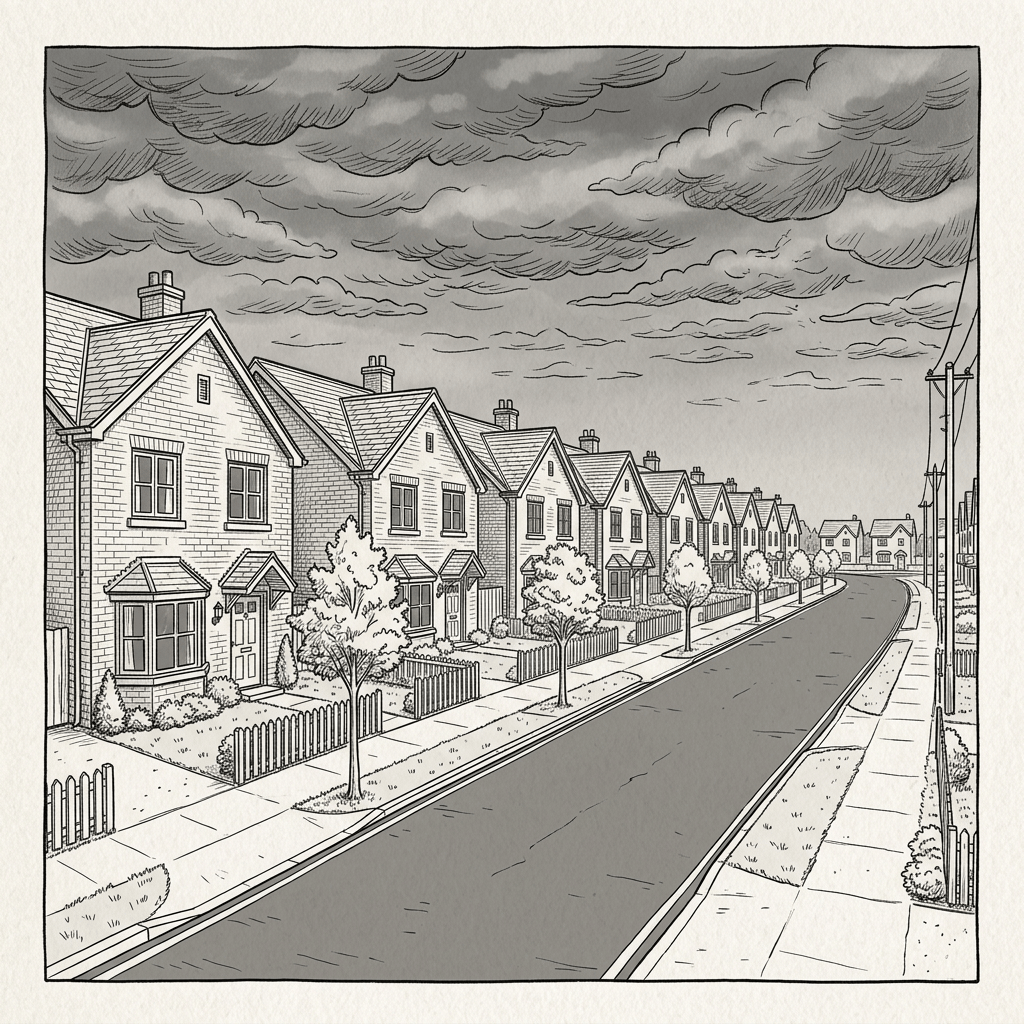
Riesman distinguishes three dominant forms of social character: tradition directed, inner directed, and other directed. These ideal types describe the prevailing mechanisms through which individuals internalize social expectations. The transition from inner direction to other direction reflects the rise of affluent capitalism, expanding corporate bureaucracies, mass communication, and suburban middle class life. The other directed individual no longer relies upon inherited tradition or deeply internalized moral discipline but instead seeks continual validation through peer approval and social conformity. Riesman argues that this personality structure produces remarkable adaptability while simultaneously undermining autonomy and critical independence.
Riesman deserves considerable credit for recognizing that capitalism reshapes consciousness rather than merely organizing production. His observations concerning conformity, commodified leisure, consumer culture, and the increasing importance of advertising parallel concerns expressed by Marx, Lukács, Gramsci, and later members of the Frankfurt School. Riesman understood that individuals increasingly define themselves through consumption, social recognition, and organizational belonging rather than through productive activity or communal solidarity. His sociology captures many of capitalism’s subjective effects with remarkable precision decades before discussions of branding, social media, and digital identity made such themes commonplace.
Yet the central weakness of The Lonely Crowd lies precisely in its treatment of these phenomena as transformations of social character instead of expressions of historically specific class relations. Marxism insists that consciousness cannot ultimately be explained apart from the material organization of production. Riesman’s categories remain primarily descriptive. They illuminate changing forms of personality but leave largely unexplained the economic forces generating those changes. The rise of the other directed individual appears almost as an evolutionary adaptation to modern society rather than as the ideological product of monopoly capitalism and its institutional requirements.
Marx’s concept of commodity fetishism provides a more penetrating explanation than Riesman’s framework. Under capitalism, social relations increasingly appear as relations between commodities, while human needs become mediated through exchange value. Riesman correctly identifies the resulting search for approval through consumption and social prestige, but he seldom analyzes how the commodity form itself structures these behaviors. Consumer conformity is treated more as a psychological orientation than as a consequence of capital’s perpetual need to expand markets and reproduce labor power.
Similarly, Riesman’s analysis of bureaucracy remains detached from questions of class power. He perceptively observes the growing influence of large organizations over everyday life, but these organizations appear as neutral institutions rather than instruments through which capitalist production coordinates labor and accumulates profit. The corporate manager, advertising executive, and bureaucratic administrator emerge as social actors without sufficient attention to their location within capitalist relations of production. Marxist theory instead views bureaucratic rationalization as inseparable from the concentration and centralization of capital.
The book also exhibits the ideological limitations characteristic of postwar American liberal sociology. Riesman remains fundamentally concerned with preserving individual autonomy within existing social institutions. His critique aims to recover authentic individuality rather than to transform the social relations producing alienation. Consequently, alienation becomes primarily psychological rather than structural. Marx, by contrast, argues that alienation originates in wage labor itself, where workers lose control over the products, processes, and purposes of their own activity. Without overcoming capitalist property relations, the restoration of authentic individuality remains impossible.
Nevertheless, Riesman’s liberalism should not obscure the critical force of his analysis. His account of peer conformity anticipated many later critiques of mass consumer society. The mechanisms through which individuals monitor one another, cultivate marketable personalities, and pursue endless social recognition appear even more relevant in the era of algorithmic surveillance and social media platforms. Contemporary digital capitalism has intensified the other directed personality into an economy of continuous self presentation, quantified approval, and commercialized identity. In this sense, Riesman’s sociology remains strikingly prophetic.
The Lonely Crowd is indispensable but incomplete work. It brilliantly documents the subjective consequences of advanced capitalism while stopping short of identifying capitalism itself as the fundamental source of those consequences. Riesman maps the symptoms of alienation with exceptional clarity but offers only liberal reform as a remedy. Marxism instead situates those symptoms within the contradictions of commodity production, class domination, and capital accumulation. The loneliness Riesman describes is not simply cultural isolation or psychological insecurity. It is the lived experience of individuals whose social existence has been subordinated to the imperatives of capital.
More than seventy years after its original publication, The Lonely Crowd continues to reward careful reading because it captures a decisive historical transition in American society. Its portrait of conformity, consumerism, and the search for external validation remains compelling, while its theoretical limitations reveal the necessity of a materialist critique. Read alongside Marx, Lukács, Gramsci, or Adorno, Riesman’s work becomes even more illuminating. It demonstrates how liberal sociology can accurately observe the effects of capitalist modernity while failing to uncover their underlying causes. For Marxist readers, The Lonely Crowd is valuable not because it provides a complete theory of modern society but because it offers a rich empirical account of the human consequences of capitalist social relations.


Leave a Reply