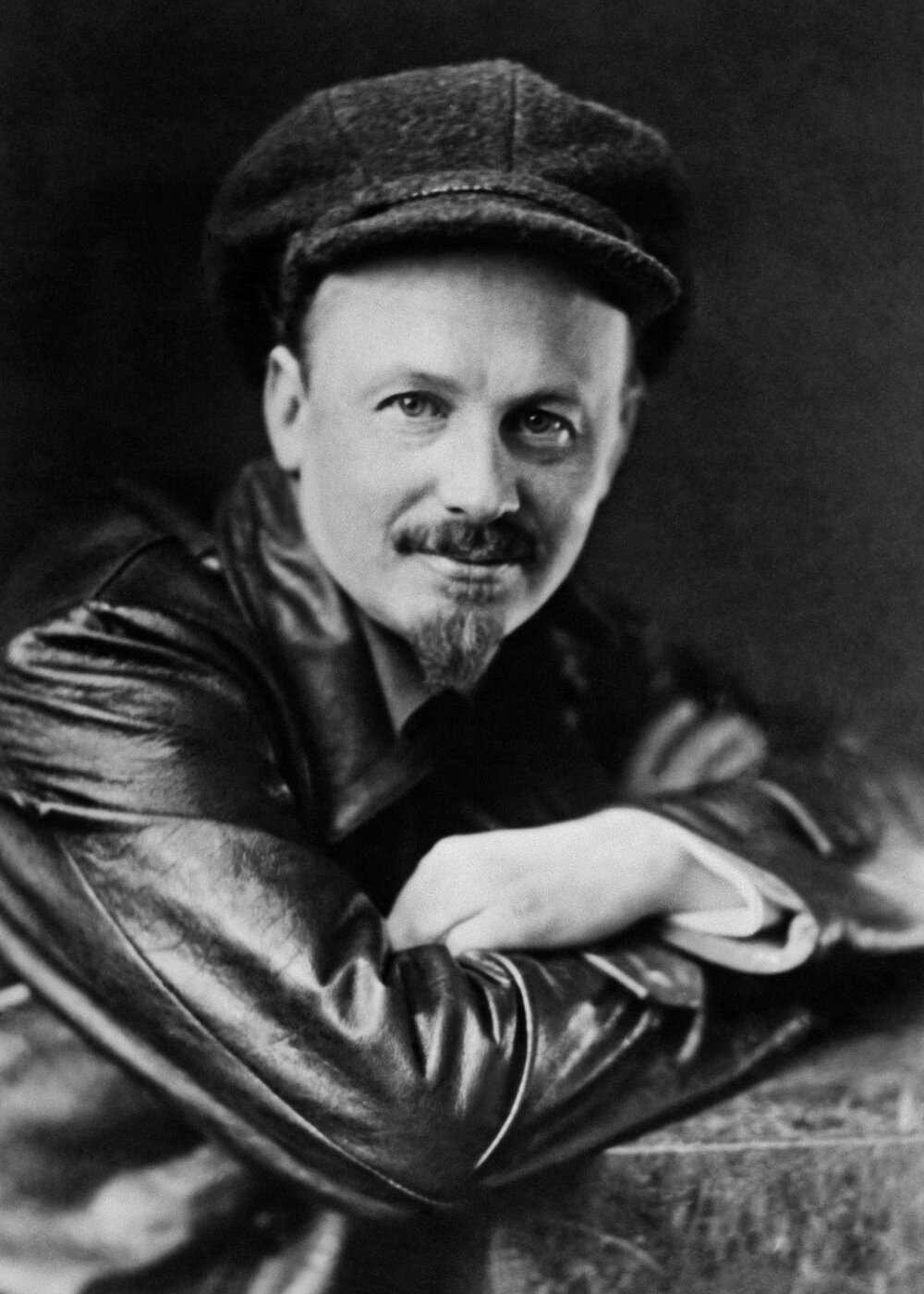
Book Review
Bukharin, Nikolai. The Economic Theory of the Leisure Class. Monthly Review Press, 1972.
Nikolai Bukharin’s The Economic Theory of the Leisure Class (1914) occupies a distinctive place within the Marxist critique of bourgeois political economy. Written in direct engagement with the Austrian School, particularly Eugen von Böhm-Bawerk, the text constitutes a systematic and polemical defense of the labor theory of value against marginal utility theory. Bukharin’s intervention is not merely theoretical but sociological in method, seeking to ground economic doctrines within the class positions that generate them. The Monthly Review Press edition preserves this dual character, presenting the work as both a critique of neoclassical economics and a methodological extension of Marxism into the terrain of ideology critique.
From a revolutionary Marxist perspective, Bukharin’s central contribution lies in his insistence that economic theory is not neutral but class-bound. He interprets marginalism as the ideological expression of a “rentier” or leisure stratum of the bourgeoisie, whose standpoint privileges consumption over production. This move is methodologically decisive. Rather than debating marginal utility on purely abstract grounds, Bukharin situates it within the historical development of capitalism, exposing its function as a theoretical rationalization of capitalist relations. In this sense, Bukharin extends Marx’s critique of political economy into a critique of economic epistemology itself.
Bukharin’s attack on methodological individualism is particularly significant. He rejects the neoclassical premise of the isolated economic subject, arguing that economic behavior is always mediated by a determinate social totality. As he emphasizes, the “economic subject” is not an atom but a node within a network of social relations structured by production. This position aligns with the core Marxist insight that value cannot be derived from subjective preferences but must be understood as a social relation rooted in labor. By dismantling the Robinson Crusoe model of economics, Bukharin reasserts the primacy of historical materialism against the ahistorical abstractions of bourgeois theory.
At the level of value theory, Bukharin’s critique is both orthodox and innovative. He defends the labor theory of value not merely as a technical doctrine but as the only framework capable of explaining exploitation and surplus extraction. Marginal utility theory, by contrast, dissolves value into subjective evaluations, thereby obscuring the exploitative relation between capital and labor. Bukharin’s argument anticipates later Marxist critiques of neoclassicism, including those of Paul Sweezy and others associated with Monthly Review, who similarly emphasize the ideological function of marginalism in naturalizing capitalist relations.
However, from a revolutionary standpoint, Bukharin’s work is not without limitations. Its polemical focus on early marginalism means that it does not engage with later developments in neoclassical economics or with the emerging complexities of monopoly capitalism. In this respect, it remains a product of its historical moment, preceding the transformations analyzed by later Marxists such as Baran and Sweezy. Moreover, Bukharin’s critique, while powerful, occasionally risks reducing theoretical differences to direct class interests, thereby underplaying the relative autonomy of ideology.
More substantively, Bukharin’s framework reflects the broader tension within early twentieth century Marxism between scientific analysis and revolutionary praxis. While the text offers a rigorous critique of bourgeois economics, it does not fully articulate how this critique translates into political strategy. The revolutionary implications remain implicit rather than developed. This contrasts with Lenin’s more explicitly political economy of imperialism, which directly links theoretical analysis to revolutionary action.
Nevertheless, the enduring significance of The Economic Theory of the Leisure Class lies in its methodological rigor and its uncompromising commitment to the primacy of production in economic analysis. By exposing the class character of marginal utility theory, Bukharin not only defends Marxist value theory but also advances a broader critique of bourgeois social science. His work remains a foundational text for understanding the ideological dimensions of economic theory and for reaffirming the revolutionary potential of Marxist political economy.


Leave a Reply