José Martí: A Revolutionary Thinker of the Americas
My Socialist Hall of Fame
During this chaotic era of vile rhetoric and manipulative tactics from our so-called bourgeois leaders, I am invigorated by the opportunity to reflect on Socialists, Revolutionaries, Philosophers, Guerrilla Leaders, Partisans, and Critical Theory titans, champions, and martyrs who paved the way for us—my own audacious “Socialism’s Hall of Fame.” These are my heroes and fore-bearers. Not all are perfect, or even fully admirable, but all contributed in some way to our future–either as icons to emulate, or as warnings to avoid in the future.
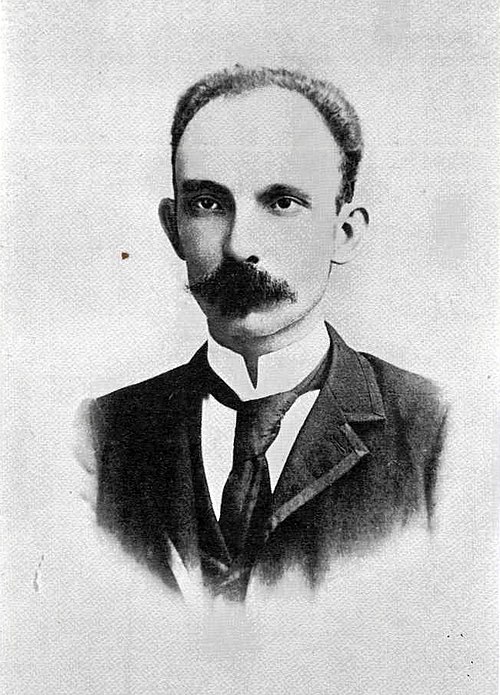
José Julián Martí Pérez stands as one of the foundational political thinkers and literary modernizers of the nineteenth-century Atlantic world. A Cuban poet, journalist, theorist of anti-imperialism, and architect of independence, Martí combined a radical democratic imagination with an ethical humanism that gave his revolutionary nationalism unusual philosophical depth. His writings—spanning poetry, political manifestos, speeches, and vast journalism—constitute not merely the record of a liberation movement, but a sustained attempt to theorize modernity from the standpoint of the colonized Americas. At once a Cuban patriot and a hemispheric intellectual, Martí’s work remains central to debates on nationalism, race, republicanism, empire, and the genealogy of Latin American modernism.
Early Life and Colonial Formation (1853–1869)
Martí was born in Havana on January 28, 1853, to Mariano Martí Navarro and Leonor Pérez Cabrera, Spanish immigrants of modest means. His childhood unfolded in a Cuba shaped by plantation capitalism, slavery, and the tightening contradictions of Spanish colonial rule. The Ten Years’ War (1868–1878), the first major Cuban war of independence, erupted when Martí was fifteen and formed the crucible of his political awakening. His early intellectual development was deeply influenced by Rafael María de Mendive, a liberal educator and poet who mentored Martí and introduced him to the moral tradition of romantic nationalism and anti-colonial critique.
Martí’s first political publications were marked by remarkable precocity. In 1869, he wrote and published militant nationalist texts and theatrical pieces that directly criticized Spanish authority. That same year he was arrested after being accused of disloyalty to the colonial regime. His subsequent sentencing—to hard labor—became a foundational experience: it shaped his ethical understanding of domination, punishment, and the psychic violence of colonialism. This trauma would later be memorialized in El presidio político en Cuba (1871), one of the earliest and most influential testimonies of Spanish colonial repression.
Exile, Education, and Transnational Apprenticeship (1871–1880)
Deported to Spain in 1871, Martí entered a formative period of exile that would define the rest of his life. In Madrid and Zaragoza he pursued higher education in law and philosophy, while also immersing himself in European liberalism and republican thought. Yet Martí’s engagement with European political culture remained sharply critical: his exposure to metropolitan liberalism convinced him that Spain’s reformist rhetoric could not resolve the structural violence of colonial rule in Cuba. The tension between universalist ideals and imperial practice became a recurring theme of Martí’s later writings, especially in his critique of U.S. and European models of modernity.
Martí’s early exile writings already display an emerging synthesis: he sought independence not merely as national emancipation but as moral regeneration—a republican project grounded in justice, civic virtue, and popular sovereignty. His political essays began to fuse romantic ethical language with institutional reasoning, anticipating his later insistence that independence required not only separation from Spain but the creation of a new political culture capable of resisting oligarchy and foreign domination.
Following Spain, Martí moved through Mexico and Guatemala, participating in intellectual circles and journalism while observing postcolonial state-building struggles firsthand. These experiences broadened Martí’s understanding of the Americas. He became increasingly convinced that Latin American nations faced a dual task: overcoming internal forms of hierarchy (racial caste, land monopolies, caudillismo) while also guarding against the expanding reach of capitalist empire.
New York and the Making of a Revolutionary Strategist (1880–1892)
Martí’s relocation to the United States—principally New York City—proved decisive. From 1880 onward he lived for long periods among Cuban and Puerto Rican émigré communities, writing prodigiously for Latin American newspapers. His New York years produced a vast corpus of political journalism that made him one of the most informed observers of nineteenth-century U.S. society. Martí admired U.S. civic energy, public education, and technological dynamism, but he also discerned in U.S. capitalism a growing imperial drive. This dual vision underpins his enduring relevance as a theorist of anti-imperial republicanism.
In New York, Martí transformed from a radical writer into a disciplined revolutionary organizer. He served as a diplomatic representative (consul) for several Latin American states and used these roles to build networks. Simultaneously, he devoted himself to unifying the fragmented Cuban exile movement. Martí rejected the politics of elite conspiracies and personalistic leadership that had weakened earlier efforts. For Martí, independence required an organized and ethically legitimate revolutionary movement that could represent the Cuban people as a whole—including workers, rural peasants, and Afro-Cubans.
Two interrelated political commitments crystallized in these years:
1. Revolution as civic foundation: independence must produce a democratic republic, not a mere transfer of power.
2. Anti-imperial vigilance: Cuba’s liberation was necessary not only to end Spanish rule but to block U.S. annexationist ambitions.
Martí’s political genius lay in his ability to cast Cuba’s struggle as a hemispheric necessity. He framed Cuban independence as the protective barrier that would prevent the United States from extending domination across the Caribbean and into Latin America—a claim that would become central to later nationalist and leftist traditions.
“Nuestra América” and the Political Philosophy of the Americas (1891)
Martí’s essay “Nuestra América” (1891) is widely regarded as one of the defining political texts of Latin America. It is both program and prophecy: Martí argues that Latin American republics must be governed according to their own historical realities rather than imported European or North American templates. He critiques the “letrados” (lettered elites) who govern with borrowed categories and urges political forms rooted in indigenous, mestizo, and local social conditions.
The essay also clarifies Martí’s conception of race and national unity. Martí rejected scientific racism and colonial racial hierarchies, insisting that the republic must be founded on equality. Yet his anti-racist vision was not merely moral: he believed racial division would provide openings for imperial manipulation and internal oligarchy. Thus unity (“con todos y para el bien de todos”) becomes a political weapon against both internal fragmentation and external conquest.
In this period Martí also wrote Versos sencillos (1891), a poetry collection that condensed his ethical and political worldview into lyrical form. The poems reinforce his belief that political struggle is inseparable from moral discipline—an almost stoic commitment to truth, sacrifice, and human dignity.
The Cuban Revolutionary Party and the “Necessary War” (1892–1895)
In 1892 Martí founded the Partido Revolucionario Cubano (PRC), explicitly designed to organize and finance the final independence struggle. His organizing letters and speeches show extraordinary administrative energy and ideological clarity. Martí sought to unite exiled factions, reconcile civilian and military authority, and guarantee that independence would not devolve into caudillo dictatorship.
Martí collaborated closely with key veteran generals, including Máximo Gómez and Antonio Maceo, but he also maintained that military necessity must be subordinated to civic purpose. This balance—between revolutionary pragmatism and democratic principle—marks Martí as distinct among nineteenth-century insurgent leaders. He consistently argued that the republic must not reproduce colonial structures of privilege.
Martí referred to the coming conflict as “la guerra necesaria” (“the necessary war”), not as romantic spectacle but as unavoidable historical responsibility. He portrayed war as an instrument to make politics possible: the final means to secure sovereignty and prevent annexation.
Death, Martyrdom, and Afterlife (1895 and Beyond)
Martí landed in Cuba in April 1895 and joined the insurgent struggle directly. Barely a month later, on May 19, 1895, he was killed at the Battle of Dos Ríos. His death immediately elevated him to martyrdom, ensuring that his symbolic power would exceed his brief military participation.
Yet Martí’s legacy has never been static. His writings have been invoked by liberal nationalists, social democrats, radical anti-imperialists, and Marxist revolutionaries. In the twentieth century, Cuban nationalism increasingly defined itself through Martí; after 1959, the Cuban Revolution claimed Martí as an ideological ancestor, interpreting him as a precursor to anti-imperialist socialism. Scholars continue to debate the relationship between Martí’s ethical republicanism and later revolutionary projects that spoke in his name.
Martí’s Intellectual Significance
Martí’s enduring importance rests on three achievements:
1. Political theory of anti-imperial republicanism: Martí articulated sovereignty as both national autonomy and social justice, warning early against U.S. hemispheric domination.
2. Hemispheric vision: he conceptualized the Americas as a contested space shaped by empire, racial hierarchy, and uneven development.
3. Literary modernity: as a stylist and journalist, Martí helped shape Spanish-language modernism, creating a prose that fused political urgency with aesthetic precision.
Martí remains a paradigmatic figure of the “public intellectual” in the Latin American tradition: a thinker who treated writing as an instrument of liberation, and liberation as a moral imperative.
Select Bibliography (Primary and Secondary)
Primary Works (Martí)
• Martí, José. El presidio político en Cuba. Madrid, 1871.
• Martí, José. Nuestra América. 1891. (Collected in many editions; see recommended critical editions below.)
• Martí, José. Versos sencillos. New York, 1891.
• Martí, José. Obras completas. 28 vols. Havana: Editorial de Ciencias Sociales, 1975–.
• Martí, José. Selected Writings. Translated by Esther Allen. New York: Penguin Classics, 2002.
• Martí, José. José Martí Reader: Writings on the Americas. Edited by Deborah Shnookal and Mirta Muñiz. Melbourne: Ocean Press, 2007.
Recommended Critical Editions / Collections
• Martí, José. Obras. Edición crítica. Havana: Centro de Estudios Martianos, ongoing.
• Martí, José. The America of José Martí: Selected Writings. Edited and translated by Juan de Onís. Princeton: Princeton University Press, 1953.
Major Secondary Scholarship
• Anderson, Benedict. Imagined Communities: Reflections on the Origin and Spread of Nationalism. Rev. ed. London: Verso, 2006. (For nationalist context; useful for reading Martí comparatively.)
• Mignolo, Walter. The Idea of Latin America. Malden, MA: Blackwell, 2005. (Postcolonial frame; useful for “Nuestra América.”)
• Ramos, Julio. Divergent Modernities: Culture and Politics in Nineteenth-Century Latin America. Translated by John D. Blanco. Durham: Duke University Press, 2001.
• Retamar, Roberto Fernández. Calibán and Other Essays. Minneapolis: University of Minnesota Press, 1989. (Martí as anti-imperialist cultural theorist.)
• Schulman, Ivan A. José Martí: Revolutionary Writing. (Key literary-critical approach; editions vary.)
• Sklodowska, Elzbieta. Inventing a Nation: José Martí and the Rhetoric of Cuban Identity. (Scholarly monograph; editions vary.)
• Vitier, Cintio. Ese sol del mundo moral: José Martí. Mexico City: Siglo XXI, 1975.


Leave a comment