During this chaotic era of vile rhetoric and manipulative tactics from our so-called bourgeois leaders, I am invigorated by the opportunity to reflect on Socialists, Revolutionaries, Philosophers, Guerrilla Leaders, Partisans, and Critical Theory titans, champions, and martyrs who paved the way for us—my own audacious “Socialism’s Hall of Fame.” These are my heroes and fore-bearers. Not all are perfect, or even fully admirable, but all contributed in some way to our future–either as icons to emulate, or as warnings to avoid in the future.
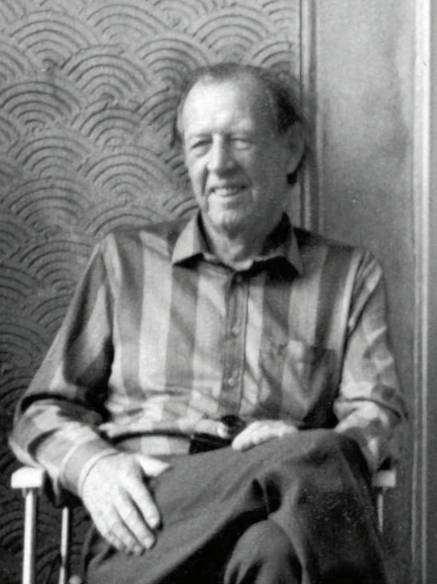
Raymond Henry Williams was one of the most influential Marxist cultural theorists of the twentieth century, whose work fundamentally reshaped the study of culture, literature, media, and social change. Emerging from a working-class Welsh background and shaped by the political crises of mid-century Britain, Williams developed a distinctive form of historical materialism that challenged both orthodox Marxism and elitist literary criticism. His conceptions of culture as a whole way of life, structures of feeling, and cultural materialism remain foundational to contemporary cultural studies.
Early Life and Education
Williams was born on 31 August 1921 in Pandy, near Abergavenny, Monmouthshire, Wales. His father was a railway signalman, a fact that profoundly shaped Williams’s lifelong commitment to working-class experience and democratic culture. Educated at Abergavenny Grammar School, Williams won a scholarship to Trinity College, Cambridge, in 1939, where he began studying English literature.
His studies were interrupted by the Second World War, during which he served as an officer in the British Army and participated in the Allied advance through Europe following the D-Day landings. The war experience left a lasting mark on Williams’s political thinking, reinforcing his opposition to authoritarianism and sharpening his skepticism toward abstract ideological dogma detached from lived social realities.
After the war, Williams returned to Cambridge, completing his degree and later becoming involved in adult education, particularly through the Workers’ Educational Association (WEA). His years teaching working-class students were crucial in shaping his conception of culture as lived practice rather than elite artistic production.
Early Intellectual Formation
Williams’s early work developed in dialogue—and often in tension—with both Leavisite literary criticism and orthodox Marxism. While influenced by F. R. Leavis’s emphasis on moral seriousness and cultural evaluation, Williams rejected Leavis’s elitism and nostalgia for an imagined cultural past. At the same time, he resisted reductive Marxist models that treated culture as a mere ideological reflection of economic base.
His first major book, Culture and Society (1958), traced the emergence of the concept of “culture” in British thought from the Industrial Revolution onward. Williams demonstrated that modern ideas of culture arose as responses to capitalist industrialization, social dislocation, and class conflict. This historical analysis positioned culture as a site of struggle rather than consensus, firmly embedding it within material social processes.
Major Works and Theoretical Contributions
Williams’s The Long Revolution (1961) expanded these arguments by situating cultural change alongside democratic and industrial transformations. Here he articulated his famous definition of culture as “a whole way of life,” emphasizing everyday practices, language, institutions, and communication systems. This work laid the groundwork for British cultural studies and anticipated later interdisciplinary approaches to media, sociology, and political theory.
Perhaps Williams’s most influential theoretical intervention was his concept of structures of feeling—a term used to describe shared social experiences and affective dispositions that exist in tension with formal ideologies and institutions. These structures, Williams argued, are often most visible in literature and art, where emergent social meanings can be registered before they become fully articulated political forms.
In Marxism and Literature (1977), Williams elaborated his mature theoretical position, offering a powerful critique of mechanical base/superstructure models and introducing cultural materialism. Unlike structuralist Marxism, Williams’s cultural materialism emphasized historical specificity, human agency, and the dynamic interplay between dominant, residual, and emergent cultural forms. Culture, for Williams, was neither autonomous nor epiphenomenal but actively constitutive of social relations.
Williams also made significant contributions to media studies, particularly in Television: Technology and Cultural Form (1974), where he rejected technological determinism and introduced the concept of “flow” to describe broadcast television’s sequencing of programs, advertisements, and announcements. His analysis remains a touchstone for critical media theory.
Fiction and Political Commitment
Alongside his theoretical work, Williams wrote several novels—including Border Country (1960), Second Generation (1964), and People of the Black Mountains (published posthumously)—which explore class mobility, Welsh identity, and historical continuity. These novels should not be regarded as secondary to his theory; rather, they function as parallel investigations into lived experience, memory, and social transformation.
Politically, Williams was a democratic socialist who remained independent of party orthodoxy. He was associated with the British New Left and contributed to New Left Review, though he often maintained critical distance from its more structuralist or Althusserian tendencies. His later work, including Towards 2000 (1983), addressed ecological crisis, communications technology, and the future of socialist democracy.
Legacy and Influence
Raymond Williams died on 26 January 1988. His legacy is vast and interdisciplinary. He is widely regarded as a founding figure of cultural studies, alongside Richard Hoggart and E. P. Thompson, though his work remains distinct in its theoretical depth and historical sensitivity.
Williams’s insistence on culture as a material social process, his rejection of reductionism, and his commitment to democratic intellectual practice continue to influence literary criticism, media studies, sociology, and political theory. His work offers a model of Marxist analysis grounded in history, language, and lived experience—one that remains vital in an era of renewed attention to culture, ideology, and power.
Select Bibliography
Primary Works by Raymond Williams
Williams, Raymond. Culture and Society: 1780–1950. Columbia University Press, 1958.
Williams, Raymond. The Long Revolution. Broadview Press, 2001. Originally published 1961.


Leave a Reply