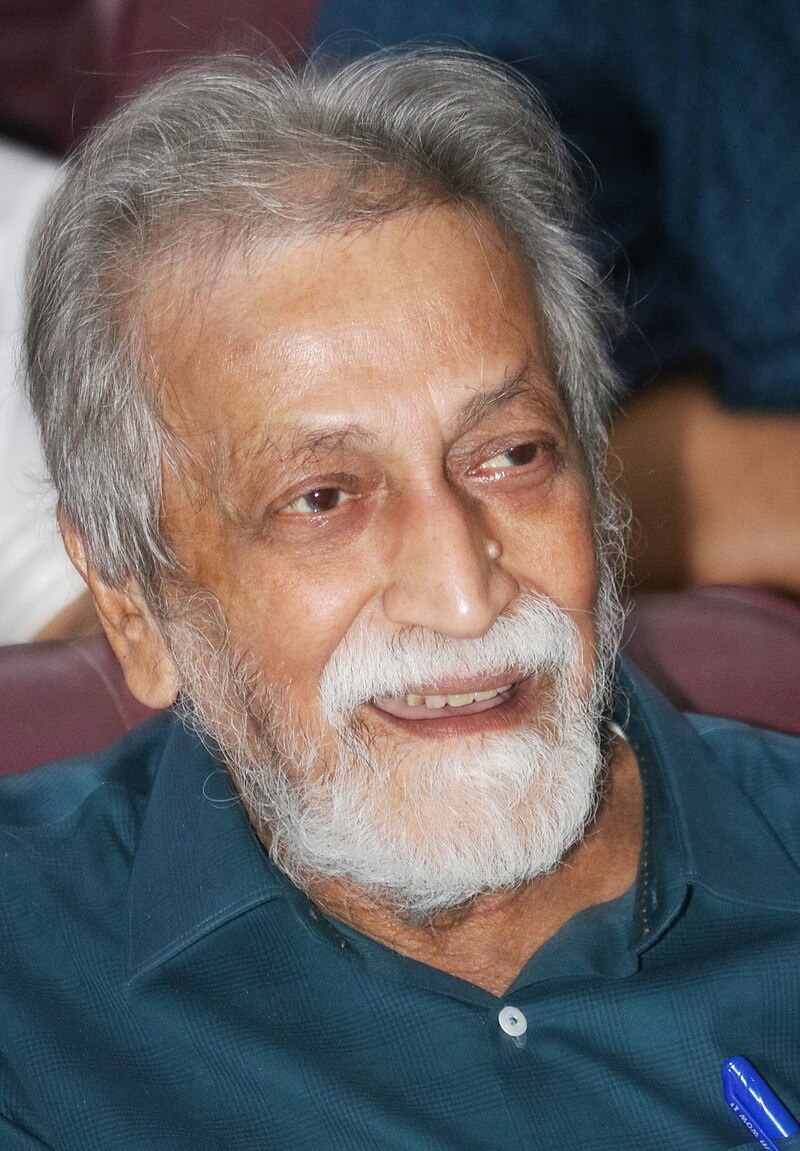
Prabhat Patnaik (b. 1945) is one of the most prominent Marxist economists of the postcolonial world, distinguished for his extensive theoretical contributions to political economy, critiques of neoliberal globalization, and analyses of imperialism, inflation, and the state in peripheral capitalist formations. Across five decades of scholarship, Patnaik has produced a body of work that brings together classical Marxist value theory, Keynesian macroeconomics, and a historically grounded account of capitalism’s global dynamics. His influence extends beyond academia into public policy debates, left-wing political movements, and the intellectual life of the Global South.
Early Life, Education, and Intellectual Formation
Born in Odisha, India, Patnaik entered the study of economics during a period when developmentalism, decolonization, and the Cold War framed scholarly inquiry. He completed his undergraduate education at Presidency College, Kolkata, and subsequently earned his doctorate at Oxford University, where he was exposed to both the Keynesian and post-Keynesian traditions that would later infuse his Marxist analyses. His early training under the shadow of Britain’s declining welfare state and the global crisis of the 1970s sharpened his interest in the contradictions of accumulation and the structural fragility of peripheral economies.
Academic Career and Institutional Contributions
In 1974, Patnaik joined the faculty at Jawaharlal Nehru University (JNU), where he became one of the principal architects of the Centre for Economic Studies and Planning (CESP)—a globally recognized hub for Marxist and heterodox economic research. His pedagogy emphasized the unity of theory and history, the need for class analysis in macroeconomics, and a commitment to the critique of capitalism grounded in real-world social struggles.
Over his long career at JNU, Patnaik taught generations of economists who went on to shape academic and political institutions worldwide. He also served as Vice-Chairman of the Kerala State Planning Board (2006–2011), a position from which he advanced redistributive and welfare-oriented policies against the pressures of national and global market forces. His dual identity as both theorist and practitioner situates him within the tradition of Marxist economists who view scholarship as inseparable from political struggle.
Major Theoretical Contributions
Imperialism and the Global Monetary System
Patnaik’s work on imperialism—especially in collaboration with his partner, economist Utsa Patnaik—extends Lenin’s thesis by locating modern imperialism within the international monetary and financial architecture. In A Theory of Imperialism (2016), the Patnaiks argue that capitalism requires an “income deflation” imposed on the periphery to maintain access to cheap primary commodities. This structural need is enforced not only through military or political domination but through the global dollar system, international institutions, and the disciplining mechanisms of global finance.
Their theory reframes imperialism as a necessary structural condition for the survival of advanced capitalism, rather than a contingent policy choice.
Inflation, Class Conflict, and the State
Patnaik’s landmark text Economics and Egalitarianism (1990) and his earlier work on inflation (Inflation and Growth, 1987) articulate a class-analytic approach to macroeconomic instability. Rejecting bourgeois monetarism, he argues that inflation in peripheral economies is rooted in structural bottlenecks and class struggles over distribution, not in excessive money supply. His analyses place the state at the center of capitalist reproduction, mediating class conflict while simultaneously acting as the custodian of bourgeois macroeconomic stability.
The Critique of Neoliberalism
Patnaik is among the most articulate critics of neoliberal globalization in the Indian context. In works such as The Value of Money (2008), he demonstrates how neoliberal policies restrict state autonomy, depress labor incomes, and heighten vulnerability to global financial shocks. For Patnaik, the neoliberal era marks not a departure from capitalism’s historical tendencies but an intensified return to primitive accumulation and global polarization.
Marxist Value Theory and Money
Throughout his oeuvre, Patnaik consistently defends the centrality of Marx’s value theory against both neoclassical and certain heterodox critiques. His interpretation of money as a historically specific social relation, rooted in the conditions of capitalist circulation and surplus appropriation, remains one of the most rigorous contemporary Marxist interventions on the subject. He rejects commodity-theoretic accounts of money, emphasizing instead its institutional and class-mediated nature.
Marxist Public Intellectualism
Beyond scholarship, Patnaik is an influential public intellectual whose regular essays in The People’s Democracy and Frontline have shaped left discourse in India. His analysis of agrarian distress, financial liberalization, and the erosion of democratic institutions provides a critical counterpoint to dominant neoliberal narratives. A consistent voice for working-class and peasant struggles, his political writings exemplify the Marxist commitment to praxis.
Legacy and Influence
Prabhat Patnaik’s work is foundational for contemporary Marxist political economy, particularly in the Global South. His synthesis of Marx, Keynes, and dependency theory offers a powerful framework for analyzing the contradictions of contemporary capitalism. In a global context marked by recurring crises, widening inequality, and neocolonial extraction, Patnaik’s analyses remain essential for scholars, activists, and policymakers seeking alternatives to the neoliberal order.
His intellectual legacy lies not only in his written contributions but in the generations of students and activists who continue to carry forward his vision of a democratic, egalitarian, and socialist future.
Selected Bibliography
Primary Works by Prabhat Patnaik
• Patnaik, Prabhat. Inflation and Growth. New Delhi: LeftWord Books, 1987.
• ——. Economics and Egalitarianism. New Delhi: Oxford University Press, 1990.
• ——. The Retreat to Unfreedom: Essays on the Emerging World Order. New Delhi: Tulika, 2003.
• ——. The Value of Money. New York: Columbia University Press, 2008.
• Patnaik, Utsa, and Prabhat Patnaik. A Theory of Imperialism. New York: Columbia University Press, 2016.
• ——. Capital and Imperialism: Theory, History, and the Present. New York: Monthly Review Press, 2021.
Selected Articles and Essays
• Patnaik, Prabhat. “The International Monetary System and the Prospects of Socialism.” Social Scientist 11, no. 9 (1983): 3–24.
• ——. “Neoliberalism and India’s Economic Crisis.” Monthly Review 67, no. 11 (2016): 20–37.
• ——. “The State Under Neoliberalism.” Economic and Political Weekly 37, no. 42 (2002): 4156–4161.
Secondary Literature
• Desai, Meghnad. Marxian Economics. Cambridge: Cambridge University Press, 2002. (Contextualizes Patnaik within late-20th-century Marxist macroeconomics.)
• Kohli, Atul. Poverty Amid Plenty in the New India. Cambridge: Cambridge University Press, 2012. (Discusses neoliberal reforms that Patnaik critiques.)
• Bose, Prasenjit. “Imperialism and the Global Order: The Patnaiks’ Contribution.” Social Scientist 45, no. 3–4 (2017): 7–27.
• Chattopadhyay, Paresh. The Marxian Concept of Capital and the Soviet Experience. Westport: Praeger, 1994. (Provides theoretical context for Patnaik’s value-theoretic commitments.)
 Letters from Tomis
Leave a comment