Book Review
Harrison, Tony. The Trackers of Oxyrhynchus. London: Faber and Faber, 1990.
Introduction
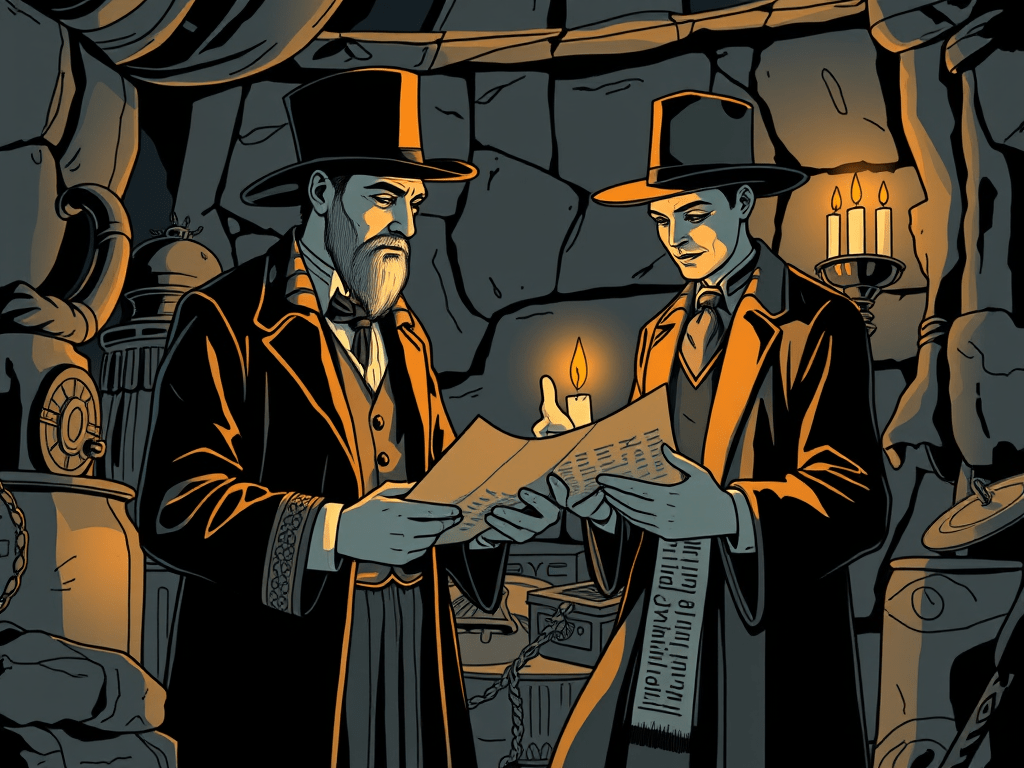
The Trackers of Oxyrhynchus is one of Tony Harrison’s most daring and complex theatrical experiments. It takes as its structural premise the fragments of the lost satyr‐play Ichneutae by Sophocles, discovered in papyri at the ancient Egyptian site of Oxyrhynchus, and fuses them with a modern scenario of two Edwardian papyrologists (Grenfell and Hunt) who uncover the manuscript. The play thus lives simultaneously in three registers: classical mythic drama, archaeological discovery, and sharp social commentary on art, culture and class.
This review will approach the work from three interlocking angles: (1) form and poetics; (2) thematic architecture (especially the high/low art dialectic and class politics); (3) its contemporary resonances and limitations for a graduate‐level audience.
Form and Poetics
Harrison writes the play entirely in rhyming couplets (or near‐couplets) and well‐tempered verse. Critics praise its “bold rhymes and muscular rhythms”. The verse style is both a nod to classical poetic tradition and a self‐conscious modern poetic experiment.
Fragmentation and formal echo of papyri
Because the source play is fragmentary (circa 400 lines survive) , Harrison adapts the structural ethos of loss, interpolation and reconstruction. The play begins with the archaeologists at Oxyrhynchus, shifts into the satyr‐play scenario, and later echoes modern social dislocation (homelessness, popular culture). Thus form mirrors content: missing text, reconstructed myth, and cultural debris. One reviewer notes that the play “juggles temporal concepts and the possibilities inherent in a fragmented text” in order to make political commentary.
Satyr‐play as form and genre
The use of the satyr‐play form is crucial. In ancient Greek theatre, satyr plays followed tragic trilogies; they combined low comedy, ribald satire, and mythic elements, subverting the tragic seriousness with Dionysian excess. Harrison sees this as key: the “whole picture of the Greek imagination” demands both Apollonian and Dionysian elements. By reviving that form Harrison gives a meta‐theatrical commentary on our cultural split between “high” (tragic/classical) and “low” (popular, bawdy) art.
Vocabulary, rhythm, dialect
Harrison delights in linguistic interplay: classical allusions, Yorkshire/working‐class inflections, bawdy humour, lyric solemnity. However, some critics argue that the dense classical lexicon and font of verse make the work less accessible:
“While an interesting exploration of the class structures … it was inaccessible to anyone without thorough classical training.”
Thus the poetic strategy is both its strength and a potential barrier.
Thematic Architecture
High vs Low Art
The central dialectic: the Oxford dons (Grenfell and Hunt) excavate ancient fragments—high art. They unfold into gods and satyrs—the Dionysian, subversive, low art. Apollo demands recognition of his cattle and the lyre, while the satyrs get boomboxes and “low” culture. Harrison critiques the cultural gatekeeping that divides refined art from popular expression. As one review puts it:
“Harrison’s argument that we lack the wholeness of the Greek imagination … still has weight.”
Class, accessibility, cultural elitism
Beyond high/low art, the play foregrounds class. The working‐class satyrs, the Oxford dons, the homeless petitioners in Egypt—all indicate social stratification around culture. The papyrologist Hunt finds petitions from the homeless among the papyri, but Grenfell ignores them. In this way, Harrison indicts the academy and cultural institutions for excluding popular voices and for divorcing art from social reality.
Time, materiality and modernity
The layering of time (ancient myth, Edwardian excavation, contemporary culture) shows that the cultural divides Harrison criticises are longstanding. The materiality of papyrus, crates, boomboxes converts mythic cattle‐theft into a metaphor for cultural theft and neglect. The satyrs’ revolt, set 2,500 years later, suggests the consequences of exclusion.
Violence, satire and carnival
The satyr‐play form allows Harrison to mix brutal mythic violence (the flaying of Marsyas) with grotesque comedy. The movement from farce to trauma marks the play’s moral underpinning: the refusal to take the Dionysian seriously results in alienation. One review notes that the “sparkling comedy turns painfully tragic”.
Contemporary Resonances & Critical Limitations
Resonances
The work resonates with current debates on cultural capital, institutional prestige, and the exclusion of working‐class voices.
The metaphoric figure of papyri fragments and homeless petitions remains timely in a world of digital detritus and dispossession.
Harrison’s fusion of classical form and modern vernacular aligns with postcolonial, cultural‐materialist scholarship that mines the classical for social critique.
Limitations & Critical Caveats
While the ambition is high, the density of language and classical reference may alienate non‐specialist audiences. One critic found the progression “lost in lines laden with classical lexicon”.
The satyr‐play mode is rare and thus unfamiliar to many contemporary theatre‐goers; the ribald, phallic imagery (satyrs wearing enormous prosthetic penises in original productions) may distract from thematic seriousness.
The piece sometimes threatens to become self‐referential (a play about classical texts and modern art) without fully integrating its social arguments into dramatic action. One review cautions that a production “failed to investigate the depths and fissures of Harrison’s text to quite the extent it deserves”.
It is worth interrogating whether Harrison’s binary of high/low art remains operative in the twenty‐first century, or whether the collapse of those boundaries (via digital culture, mash‐up genres) makes his critique feel slightly dated.
Conclusion
The Trackers of Oxyrhynchus is a bold theatrical manifesto: it insists that we cannot separate our highest cultural aspirations (Apollo, the lyre, classical poetry) from our basest human energies (satyrs, clog dance, hooting laughter). Harrison insists that a culture that neglects its Dionysian flank undermines its own Apollonian claims. The play stands as a challenge to elitism in the arts, to the compartmentalisation of culture, and to the historical erasures enacted in favour of “refined” taste.
For a graduate student of theatre, classics or cultural studies, the play offers rich terrain: formal experimentation, classical reception, class critique, and performance studies. Yet it also demands critical vigilance: the complexity of its language and references, and the historical specificity of its cultural critique, require unpacking and contextualisation.
In short: The Trackers is not a comfortable piece of theatrical nostalgia, but a provocative call to reclaim the fullness of cultural imagination. Its strengths lie in its poetic muscularity and ideological urgency; its limitations lie in its accessibility and the shifting landscape of art‐culture that may render its binaries less stable than they once seemed.
 Letters from Tomis
Leave a comment