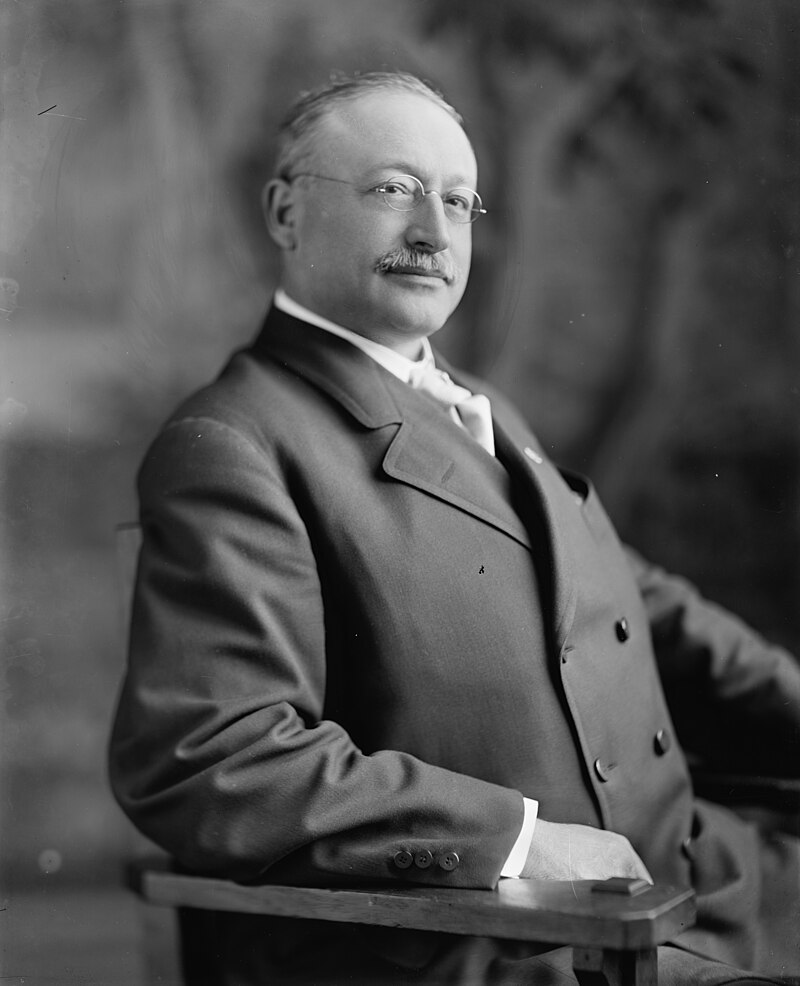
My Socialist Hall of Fame
During this chaotic era of vile rhetoric and manipulative tactics from our so-called bourgeois leaders, I am invigorated by the opportunity to reflect on Socialists, Revolutionaries, Philosophers, Guerrilla Leaders, Partisans, and Critical Theory titans, champions, and martyrs who paved the way for us—my own audacious “Socialism’s Hall of Fame.” These are my heroes and fore-bearers. Not all are perfect, or even fully admirable, but all contributed in some way to our future–either as icons to emulate, or as warnings to avoid in the future.
Victor Louis Berger (1860–1929) stands as one of the most consequential figures in the history of American socialism, labor politics, and the institutionalization of socialist thought within the U.S. political sphere. Born on February 28, 1860, in Nieder-Rehbach, Transylvania (then part of the Austro-Hungarian Empire), Berger immigrated to the United States in 1878, settling in Milwaukee, Wisconsin—a city whose political culture would become synonymous with his legacy.
Intellectual Formation and Early Political Life
Educated in Vienna, Berger was steeped in German liberal and socialist intellectual traditions before arriving in the United States. His intellectual influences included Karl Marx, Ferdinand Lassalle, and the German Social Democratic Party (SPD). However, Berger’s interpretation of Marxism often displayed a pragmatic, reformist bent rather than revolutionary orthodoxy. Through the 1880s and 1890s, he emerged as a journalist and teacher, using the German-language press to articulate a distinct brand of “sewer socialism,” emphasizing public ownership of utilities, municipal reform, and gradualist social democratic policies rather than insurrectionary tactics.
Founding the Socialist Party of America
Berger’s most enduring institutional legacy was his role in founding the Socialist Party of America (SPA) in 1901. Serving as a bridge between immigrant labor radicalism and Midwestern progressivism, Berger helped orient the SPA toward electoral politics. Unlike the Industrial Workers of the World (IWW), which embraced direct action and syndicalism, Berger insisted on constitutional, democratic means to achieve socialism in the United States. His leadership helped craft a vision of socialism compatible with American democratic traditions, though critics labeled it reformist and insufficiently militant.
Congressional Career and Legislative Efforts
In 1910, Berger became the first Socialist elected to the United States Congress, representing Wisconsin’s 5th District. His tenure (1911–1913) was marked by advocacy for unemployment insurance, old-age pensions, and labor rights—anticipating elements of the New Deal decades later. Despite his single term, Berger demonstrated that socialism could command electoral legitimacy within a capitalist democracy, challenging the notion that American exceptionalism rendered Marxist politics untenable in the U.S. context.
World War I, Repression, and Constitutional Battles
Berger’s outspoken opposition to U.S. entry into World War I brought him into direct conflict with the Wilson administration. Indicted under the Espionage Act of 1917, he was convicted and sentenced to twenty years in prison in 1919. Nevertheless, Wisconsin voters re-elected him to Congress that same year, triggering a constitutional standoff: the House refused to seat him due to his conviction. In 1921, the U.S. Supreme Court overturned his conviction on procedural grounds (Berger v. United States), vindicating both his political stance and constitutional rights.
Later Career and Legacy
Berger returned to Congress in 1923 and served three consecutive terms until 1929, focusing on progressive taxation, public housing, and labor legislation. He died in a streetcar accident on August 7, 1929. His career marked a paradox in American socialism: he achieved significant local and national influence yet presided over a movement increasingly marginalized by internal factionalism, the Red Scare, and the rising power of liberal reformism under Franklin D. Roosevelt.
Historiographically, Berger embodies the tension between revolutionary Marxism and reformist socialism in the American context. Scholars debate whether his “sewer socialism” represented a betrayal of Marxist principles or a pragmatic adaptation to U.S. political realities. Nonetheless, his insistence on democratic socialism prefigured later debates within the American left over electoralism, radicalism, and the role of socialism within liberal democracy.
Bibliography
• Avrich, Paul. Anarchist Voices: An Oral History of Anarchism in America. Princeton University Press, 1996.
• Buenker, John D. Urban Liberalism and Progressive Reform. Charles Scribner’s Sons, 1973.
• Foner, Philip S. History of the Labor Movement in the United States. Vol. 4. International Publishers, 1965.
• Kipnis, Ira. The American Socialist Movement, 1897–1912. Columbia University Press, 1952.
• Salvatore, Nick. Eugene V. Debs: Citizen and Socialist. University of Illinois Press, 1982.
• Weinstein, James. The Decline of Socialism in America, 1912–1925. Monthly Review Press, 1967.
• Work, Monroe. “Victor L. Berger: Pioneer Socialist.” The Journal of Negro History, vol. 14, no. 1, 1929, pp. 1–25.
 Letters from Tomis
Leave a comment