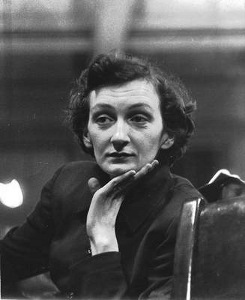
My Socialist Hall of Fame
During this chaotic era of vile rhetoric and manipulative tactics from our so-called bourgeois leaders, I am invigorated by the opportunity to reflect on Socialists, Revolutionaries, Philosophers, Guerrilla Leaders, Partisans, and Critical Theory titans, champions, and martyrs who paved the way for us—my own audacious “Socialism’s Hall of Fame.” These are my heroes and fore-bearers. Not all are perfect, or even fully admirable, but all contributed in some way to our future–either as icons to emulate, or as warnings to avoid in the future.
Early Life and Formative Years
Anne McCarty Braden (1924–2006) was born in Louisville, Kentucky, into a white, middle-class, and staunchly segregationist Southern family. Raised within a culture that naturalized Jim Crow ideology, she was steeped in conservative traditions of white Southern respectability. Braden’s eventual radical transformation into one of the most courageous white allies in the Black freedom struggle was not preordained but emerged through a dialectical confrontation with the contradictions of her upbringing. Her early years working as a journalist in Birmingham, Alabama, sharpened her critical eye toward Southern politics, as she witnessed the violent enforcement of racial hierarchies and the deep silences around dissent.
The Turner Case and Political Radicalization
Braden’s trajectory shifted decisively after marrying Carl Braden, a union organizer and journalist. In 1954, the Bradens purchased a house in Louisville’s Shively neighborhood on behalf of a Black couple, Andrew and Charlotte Wade, who were barred from buying property in segregated areas. When white supremacists dynamited the house, Kentucky prosecutors charged the Bradens—not the perpetrators of racial terror—with sedition, claiming they were Communist conspirators intent on fomenting racial conflict. Carl was sentenced to 15 years in prison (though later released), and Anne was vilified as a “race traitor.” The Turner case not only cemented her break with Southern white respectability but also bound her to a life of principled dissent against racism, capitalism, and Cold War repression.
Civil Rights Struggles and Movement Building
In the decades that followed, Braden became an unwavering participant in and chronicler of the civil rights movement. She worked with the Southern Conference Educational Fund (SCEF), producing newsletters and essays that articulated a radical vision of interracial democracy. Braden’s intellectual contribution lay in reframing racism as a structural phenomenon—an organizing principle of U.S. capitalism—rather than a mere matter of individual prejudice. Her analysis anticipated later critical race theory and intersectional frameworks, arguing that white supremacy not only oppressed African Americans but also corrupted white workers’ political consciousness.
Her 1958 memoir, The Wall Between, combined autobiography with searing critique, mapping her own disavowal of white Southern identity onto the broader struggle to dismantle Jim Crow. Braden thus positioned herself as both participant and witness, crafting a political narrative that challenged hegemonic accounts of “Southern tradition.”
Later Activism and Intellectual Legacy
Braden remained active long after the height of the civil rights era, connecting the Black freedom struggle to broader left movements, including antiwar activism, women’s liberation, and labor organizing. In the 1980s and 1990s, she mentored younger generations of activists, particularly in the South, emphasizing the necessity of white anti-racist organizing. She worked with organizations such as the Center for Democracy in the South and was a frequent speaker at grassroots gatherings, always returning to the core principle that liberation for Black people was inseparable from genuine democracy for all.
Theoretical Significance
From a Marxist perspective, Braden’s activism illuminates the interdependence of race and class struggle in the U.S. South. She identified racism as a ruling-class strategy of “divide and rule,” preventing interracial working-class solidarity. Her analysis resonates with W.E.B. Du Bois’s concept of the “wages of whiteness,” situating white supremacy as both material and ideological compensation for structural exploitation. Unlike many white liberals, Braden embraced a revolutionary rather than reformist stance, linking civil rights to anti-capitalist transformation.
Her intellectual legacy thus lies in modeling what it meant for white Southerners to betray their classed and racialized privileges, to “cross the wall” of segregation, and to commit to a life of solidarity. She embodied Gramsci’s notion of the “organic intellectual,” fusing lived experience, political praxis, and theoretical clarity.
Conclusion
Anne Braden’s life was a sustained act of dissent against the intertwined systems of racism, capitalism, and state repression. Marginalized within both white Southern society and Cold War liberalism, she nonetheless carved out a radical legacy that endures in contemporary struggles for racial and economic justice. Her work demonstrates how biography can illuminate not just the personal but also the structural, revealing the contradictions of whiteness, the costs of resistance, and the transformative possibilities of solidarity.
Bibliography
Primary Sources
• Braden, Anne. The Wall Between. New York: Monthly Review Press, 1958.
• Braden, Anne. Memoirs and Speeches, archival collection, University of Louisville, Anne Braden Institute for Social Justice Research.
• Carl and Anne Braden Papers, Wisconsin Historical Society Archives.
Secondary Sources
• Fosl, Catherine. Subversive Southerner: Anne Braden and the Struggle for Racial Justice in the Cold War South. Lexington: University Press of Kentucky, 2002.
• Honey, Michael K. Southern Labor and Black Civil Rights: Organizing Memphis Workers. Urbana: University of Illinois Press, 1993.
• Korstad, Robert. Civil Rights Unionism: Tobacco Workers and the Struggle for Democracy in the Mid-Twentieth-Century South. Chapel Hill: University of North Carolina Press, 2003.
• McWhorter, Diane. Carry Me Home: Birmingham, Alabama, the Climactic Battle of the Civil Rights Revolution. New York: Simon & Schuster, 2001.
• Payne, Charles M. I’ve Got the Light of Freedom: The Organizing Tradition and the Mississippi Freedom Struggle. Berkeley: University of California Press, 1995.
• Tyson, Timothy B. Radio Free Dixie: Robert F. Williams and the Roots of Black Power. Chapel Hill: University of North Carolina Press, 1999.
 Letters from Tomis
Leave a comment