Introduction
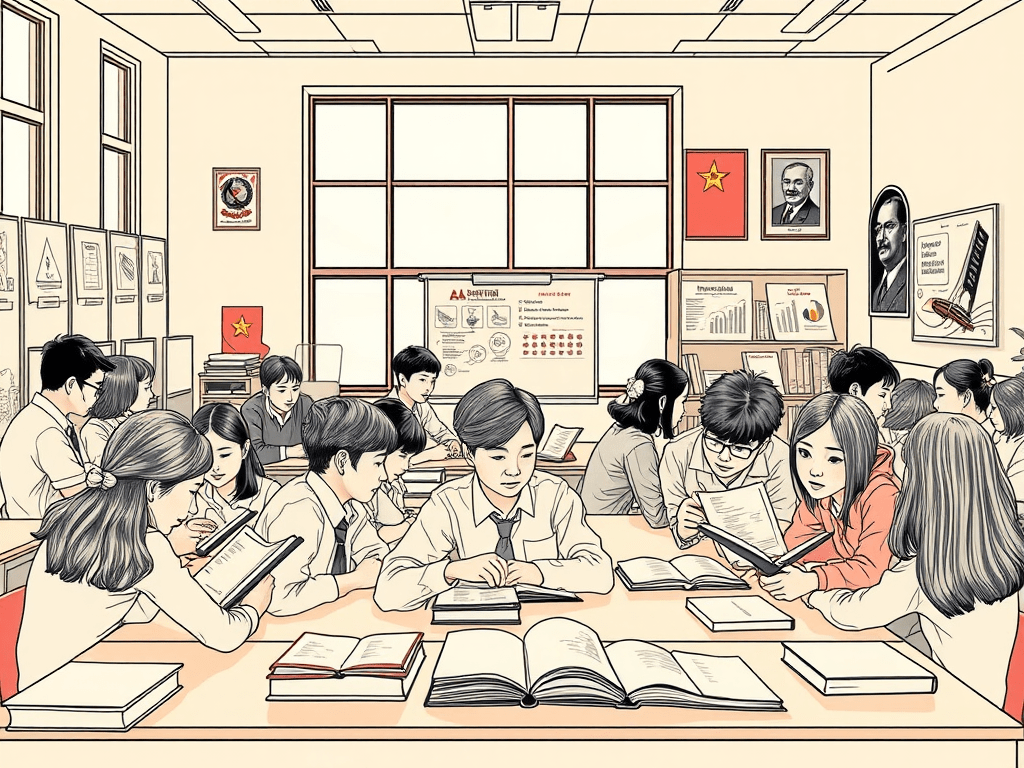
Public education has long been a centerpiece of socialist policy, seen as both a tool for social transformation and a fundamental human right. Socialist states, guided by Marxist ideology, have historically pursued ambitious education programs aiming at universal access, egalitarian outcomes, and the molding of collectivist values. From the Soviet Union’s massive literacy campaigns to Cuba’s world-class schooling achievements, socialist education models have sought to eliminate class privilege in learning and create a “new” socialist citizenry. This essay provides a comprehensive review of public education in socialist contexts – past and present. It examines how Marxist theory shaped educational goals, analyzes case studies (USSR, China, Cuba, Vietnam), emphasizes the aims of egalitarianism, collective development, and ideological formation, and contrasts these approaches with capitalist education models. The evolution of these systems after the Cold War and into the 21st century is also considered, highlighting continuities and changes in socialist educational thought and practice.
Marxist Theory and the Role of Education in Socialist Society
Marxist theory assigns education a critical role in building an egalitarian and collective society. In The Communist Manifesto (1848), Marx and Engels explicitly called for “Free education for all children in public schools” and the “combination of education with industrial production.” This reflects two core principles: first, education should be a universal public good, not a privilege of the wealthy; second, schooling should be integrated with productive labor to break down class distinctions between mental and manual work. Marxists view education as part of the superstructure that both reflects and reinforces the economic base of society. Under capitalism, education tends to reproduce class inequality and instill ruling-class ideology. Karl Marx famously noted that “the ideas of the ruling class are in every epoch the ruling ideas,” underlining how schooling in bourgeois society often serves to perpetuate the dominant class’s values. A socialist revolution, therefore, requires not only seizing the means of production but also transforming the educational system to serve the working class and future communist society.
Lenin and other Marxist-Leninist thinkers expanded on these ideas, seeing education as essential to developing a conscious socialist populace. After the 1917 Bolshevik Revolution, Lenin’s government stressed the need to eradicate illiteracy and create a new socialist intelligentsia drawn from workers and peasants. Soviet educators spoke of “communist training” – schooling aimed at the “all-round development” of each individual and at inculcating Marxist-Leninist ideology. Education was to produce citizens who were both “red and expert” – politically conscious and technically skilled. Similarly, in Maoist China the regime declared that a “new society [called] for people with new loyalties, new motivations, and new concepts of individual and group life”, and that education had a strategic role in achieving this revolutionary transformation. Schools were expected to create “zealous revolutionaries ready to rebel against the old society” while also training skilled workers and engineers to build the economy. In short, Marxist educational theory merges the goals of egalitarian social uplift, collective development, and ideological formation. By contrast with the liberal notion of value-neutral education, socialist theorists openly treat education as a means to shape values and collective consciousness. In the People’s Republic of China, for example, no strict line is drawn between education and propaganda – both are seen as serving the “common task of changing man” in the direction of socialist ideals. All of society (schools, youth organizations, mass media, political study sessions, etc.) becomes an educational arena to forge a new socialist person.
Equally central to socialist educational thought is the commitment to egalitarianism. Marxists argue that under capitalism, education opportunities correspond to class status – the wealthy obtain elite schooling while workers receive minimal training, perpetuating class divisions. Socialist models seek to democratize education, making it free and accessible to all, thereby “transform[ing] the school from an instrument of bourgeois class domination into an instrument for the complete abolition of the division of society into classes.” In theory, a socialist education system strives to level the playing field across class, gender, ethnicity, and region. As will be seen in the case studies, this meant massive state investment in expanding schools to even the poorest areas, promoting adult education and literacy, and removing barriers that had kept laboring classes from advanced learning. Education in a socialist context thus serves a dual purpose: it is a public goodaimed at human development and equality, and a political vehicle for embedding socialist values like cooperation, collectivism, and commitment to the common good.
The Soviet Union: Pioneering a Socialist Education Model
“Literacy Is the Path to Communism” – A 1920 Soviet poster emphasizing the link between education and the communist future. The early USSR launched unprecedented campaigns to eradicate illiteracy and bring culture to the masses.
The Soviet Union was the first state to implement Marxist educational ideas on a national scale. After the Bolsheviks came to power in 1917, they inherited a country with appalling educational inequality: under the Tsar, only a minority of children (mostly from noble or bourgeois families) received education beyond the elementary level, and the vast majority of workers’ and peasants’ children had little or no schooling. In 1887, Tsarist authorities had even issued an edict barring children of servants, peasants, and other laborers from secondary schools, on the rationale that such people had “no need” for higher learning. This situation was typical of capitalist and feudal systems, where elites viewed an ignorant underclass as easier to dominate. The Soviet regime set out to utterly refashion this system in line with socialist principles. As an official Soviet source described, the “basic difference” of the new system was that it was truly public and accessible to the whole people, serving the interests of workers and peasants rather than a privileged few. Education became a constitutional right guaranteed to all Soviet citizens, provided free of charge through state schools and universities. The government saw an educated populace as the foundation for building socialism, and it prioritized fields like engineering, science, and medicine alongside general education.
One of the Soviet Union’s proudest accomplishments was the eradication of illiteracy in a remarkably short time. When Lenin assumed power, an estimated 75% of the population was illiterate (only about 25% could read and write). The new government declared a “Liquidation of Illiteracy” campaign in 1919, mobilizing thousands of teachers and Red Army soldiers to teach basic literacy across the country. Despite the turmoil of civil war, these efforts paid off spectacularly. By 1927, roughly 70% of the population was literate; by 1939, literacy had risen to 94% of the population. In a little over two decades, a largely illiterate peasant nation had been transformed into one where practically every young adult could read and write – an achievement with “no parallel in human history”, as Soviet publications boasted. This literacy revolution was foundational for further educational and economic progress: it enabled the USSR to train millions of skilled workers, scientists, doctors, and engineers drawn from humble backgrounds. Indeed, by the mid-20th century the USSR was graduating far more engineers annually than most capitalist countries, reflecting the regime’s emphasis on technical education for development. Universal schooling became a reality: by the 1960s, the state had implemented compulsory eight-year education for all children, later extending it to a full secondary education in the late 1960s.
Crucially, Soviet education was not only mass and free; it was also ideologically guided. Schools were instruments for what the regime called the “communist education of youth”, charged with “training a new, people’s socialist intelligentsia” and millions of “active builders of communist society.” This meant that the curriculum was imbued with Marxist-Leninist content from top to bottom. History classes, for example, taught a Marxist interpretation of society – emphasizing class struggle and the ultimate inevitability of socialism. At all levels, students were instructed in the official ideology: courses on the “Foundations of Marxism-Leninism” were compulsory in higher education, and even teacher training colleges taught the works of Marx, Engels, Lenin, and Stalin as the “methodological foundation of Soviet pedagogical science.” The goal was to ensure that graduates not only had knowledge and job skills, but also a firm communist worldview and loyalty to the socialist state. By the 1970s and 1980s, Soviet schools uniformly required classes in political economy (Marxist economics), scientific atheism, and Soviet civics. Youth organizations like the Young Pioneers and Komsomol served as auxiliary educational institutions, instilling collectivist values through activities and civic projects.
The egalitarian ethos of Soviet education was reflected in policies to open up elite levels of education to workers and peasants. Quotas and preparatory programs were established in the 1920s and 1930s to help students from laboring backgrounds enter universities and technical institutes. Tuition was abolished and stipends provided, so that higher education was not limited by one’s ability to pay – a stark contrast to capitalist countries where, as Soviet critics pointed out, only well-to-do parents could afford extensive schooling for their children. By the 1970s, the USSR had achieved near-universal secondary education and boasted a large class of professionals (teachers, engineers, physicians, etc.) from peasant or working-class origins, a social mobility success attributed to the socialist model. The official aim – as articulated in Communist Party programs – was nothing less than to “abolish the division of society into classes” through education, by giving everyone cultural opportunity and thus eroding the basis for class distinction. In practice, some inequalities and elite privileges did persist (children of Party officials often had better access to top schools, for instance ), yet the overall distribution of educational access was far more even than in most capitalist societies of comparable development. For example, by the late Soviet period, rural schools and urban schools followed the same curriculum and nearly all youth, male and female, completed at least high school – a level of educational homogeneity unheard of in poorer capitalist countries.
At the same time, the Soviet model did subordinate certain liberal educational values – such as academic freedom – to political goals. Ideological conformity was expected: curricula avoided or censored perspectives critical of Marxism-Leninism, and teachers were effectively agents of the state expected to monitor political attitudes in their classrooms. Creative or independent inquiry in the humanities and social sciences was constrained by the boundaries of official doctrine. During the Stalin era, and again during political crackdowns, intellectuals who diverged from the party line could be purged from academic positions. In later years, especially after Stalin, there was some relaxation – by the 1980s, for instance, Soviet teachers no longer had to frame every lesson in Marxist terms. But the Party’s guiding hand in education remained ever-present. Political instruction (often under titles like “social studies” or “civics”) was part of every student’s education, instilling patriotism and communist ideology. This tight integration of education and ideology was a defining feature of socialist education models that followed the Soviet example.
In sum, the Soviet Union demonstrated both the immense achievements and the trade-offs of a socialist approach to education. On one hand, it achieved “universal, free, and compulsory education for the whole people” – something unprecedented in scope. It lifted literacy from under 30% before the revolution to nearly 100% by the mid-20th century, and produced a highly educated workforce and citizenry. These accomplishments reflected the Marxist-Leninist commitment to egalitarian uplift and the belief that communism could only be built by “highly cultured people who have mastered the achievements of science and art.” On the other hand, the system unabashedly used schools as instruments of ideological socialization, often at the expense of intellectual pluralism. The “communist regeneration of society” was prioritized over individual intellectual freedom. This meant that, unlike in liberal models, the success of education was measured not only by academic or economic outcomes, but by the degree to which it forged socialist values in the young generation.
Education in Maoist and Post-Mao China
China’s experience offers another vivid example of socialist education evolving through different phases. From the establishment of the People’s Republic of China (PRC) in 1949, the Chinese Communist Party (CCP) treated education as a pillar of nation-building and ideological remolding. The early PRC closely followed the Soviet model: with assistance from Soviet advisors, Chinese schools and universities were “Sovietized” in the 1950s. The education system was rapidly expanded to serve the masses. The new government identified three major educational tasks: (1) wipe out illiteracy among the populace; (2) train the technical and administrative personnel needed for socialist economic development; and (3)“remold the behavior, emotions, attitudes, and outlook of the people.” In other words, schooling was simultaneously about teaching basic skills, imparting technical knowledge, and ideologically transforming a semi-feudal, semi-colonial society into a socialist one.
One hallmark of Chinese socialist education was the integration of learning with labor and life experience. Chairman Mao Zedong and the CCP promoted the Marxist maxim of “combining work and study.” Schools were expected not to be ivory towers but to engage students in productive labor and social practice. Through the 1950s, campaigns sent urban educated youth to rural villages to learn from peasants, and curricula included manual work to break down the mental/manual labor divide. Political study meetings were common, and textbooks were rewritten to emphasize China’s revolutionary history and class struggle. Mao’s belief was that education should serve proletarian politics and the masses; he warned against the emergence of a privileged “scholarly” elite divorced from labor. This radical vision culminated in the Cultural Revolution (1966–1976), a decade of upheaval that profoundly affected education. During the Cultural Revolution, Mao and his radical followers attacked the education establishment as bastions of elitism and “bourgeois” values. Schools and universities were closed for varying periods, millions of students joined Red Guard groups to struggle against teachers and intellectuals, and the college entrance examinations were suspended. Academic merit was temporarily supplanted by political criteria – admission to colleges was often based on class background and revolutionary zeal rather than test scores. Elite “key schools” in cities were denounced as “little treasure pagodas” that had unfairly favored children of the urban bourgeoisie and Party officials. The entire curriculum was simplified and ideologized; for example, science courses were taught with emphasis on practical projects serving the people, and humanities courses were stripped down to Marxist-Leninist-Maoist basics. While the Cultural Revolution’s educational radicalism did succeed in further breaking down old elitist structures and involving youth in social activism, it also caused a sharp decline in academic quality and disrupted the education of a whole generation. Many youths received little formal schooling in those years aside from political indoctrination and labor experience, leading to what is sometimes called China’s “lost generation” in terms of education.
After Mao’s death, China’s socialist education model underwent significant reforms and modernization under Deng Xiaoping and subsequent leaders. From the late 1970s onward, there was a deliberate pivot back toward academic standards and expertise – a shift from a sole emphasis on ideological fervor to a balance that again valued knowledge and skills. Deng famously stated in 1977 that the “main task of students was to study, to learn book knowledge” and that schools should make “strict demands” on students to master their subjects. The post-Mao government reinstated competitive examinations (most notably the nationwide college entrance exam, or gaokao, in 1977) as the basis for advancement. Full-time, formal schooling was restored as the norm, replacing the ad-hoc revolutionary “half-work, half-study” schools of the Mao era. The curriculum was upgraded, new textbooks were written with more scientific and technical content, and key schools (selective schools with extra resources) were revived to drive up standards. In short, China recalibrated its education system to support the “Four Modernizations” (in agriculture, industry, defense, and science/technology) that Deng’s regime pursued. The focus was on producing skilled professionals and researchers to modernize the economy – a task in which education was central.
Despite these changes, China’s education system remained under firm socialist control. The Communist Party ensured that political education continued as a core component. Every school and university has party officials and Communist Youth League organizations embedded in it, monitoring ideological conformity. As Britannica notes, even though schools have principals and academic deans, “the real educational policy maker [in China] was the Communist Party organization in each school.” Important decisions often required Party committee approval, and party secretaries in institutions could override administrators on matters of ideological importance. Courses on Marxism-Leninism (later including Mao Zedong Thought, and in recent years Xi Jinping Thought) are mandatory in higher education. Students still take classes in political ideology and moral education at all levels – though the tone and intensity has fluctuated with the political climate. In the relatively liberal 1980s, ideological control in campuses loosened somewhat; but after events like the 1989 Tiananmen Square protests, the Party reasserted tighter ideological education to prevent “bourgeois liberal” ideas from spreading among youth. Most recently, under President Xi Jinping, ideological education has been intensified again – with new directives to strengthen patriotic and Party-loyal content in textbooks, and even elementary schools introducing “Xi Jinping Thought” in their curriculum (a development beyond our immediate scope but reflecting continuity in using education for political socialization).
In terms of egalitarianism and collective orientation, the Chinese socialist education model had mixed outcomes. On one hand, China made impressive strides in expanding basic education. In 1949, the country’s literacy rate was estimated below 20%; today, PRC literacy is nearly universal. The state built schools in remote villages and made 9-year basic education compulsory, significantly narrowing the urban-rural education gap that existed pre-1949 (though not eliminating it entirely). The principle that education should serve the people meant heavy investment in mass education. China also promoted gender equality in schooling – by the 1970s, the gender gap in primary education had largely closed, a noteworthy achievement given deeply entrenched traditional biases. On the other hand, as China moved into the reform era, new inequalities emerged or re-emerged: urban schools, especially in prosperous coastal areas, now often outperform rural and inland schools; wealthier families increasingly supplement state education with private tutoring to help their children excel in the intense exam competition. While these inequalities are not prescribed by policy (indeed, the government frequently initiates campaigns to reduce disparities), they show the tension between socialist egalitarian ideals and the pressures of a market-influenced environment. Throughout, however, the collective ethos is still present in many aspects: Chinese schools emphasize group activities, communist youth leagues, and collective responsibility. For example, until recently it was common for Chinese students to do daily group exercises and take turns cleaning their classrooms – practices instilling discipline and communal duty. The Maoist legacy of respecting manual labor continues in subtler forms; schools and universities often have mandatory “labor weeks” or community service requirements echoing the earlier ideal of linking mental and manual work (a policy similar to Vietnam’s that we will see below).
In summary, China’s case illustrates how a socialist education system can evolve: from revolutionary zeal (Mao’s era) to a more pragmatic model focused on both development and ideological stability (Deng and beyond). Education remained a state monopoly and a vehicle of socialist ideology, but the balance between ideology and expertise shifted over time. The Chinese model today is a hybrid – academically competitive and outwardly similar to other East Asian systems in rigor, yet still fundamentally governed by a socialist state that uses education for nation-building and Party legitimacy. Crucially, the CCP’s control ensures that while capitalist market elements have entered China’s economy, the education sphere continues to stress socialist values like patriotism, collectivism, and service to the country’s development. This is a distinguishing mark from fully capitalist systems: even as Chinese students strive for individual success, they are officially taught to view that success in terms of contributing to the collective national project, under the guidance of the Communist Party.
Cuba: Education for Equality and Revolution
Cuba offers a compelling example of a socialist education model in a developing country context. Since the Cuban Revolution in 1959, the island nation has consistently prioritized education as a means to promote social justice, national development, and revolutionary consciousness. Fidel Castro famously asserted that “the work of education is perhaps the most important thing the country should do.” Under his leadership, Cuba transformed its education system in ways that drew admiration even from international observers typically skeptical of socialism.
One of the Cuban Revolution’s earliest and most celebrated initiatives was the 1961 National Literacy Campaign. In 1950s Cuba, access to education was sharply unequal: nearly 23% of Cubans were illiterate (with rural illiteracy over 50%), and less than half of children aged 6–14 were in school before 1959. Education under the Batista regime reflected class and racial disparities – affluent families sent children to private or better-quality urban schools, while many poor, especially Afro-Cuban and rural, children received little schooling. The revolutionary government attacked this problem head-on. In 1961 (declared the “Year of Education”), Cuba mobilized over 250,000 volunteers – many of them teenage students – to go into the countryside and teach reading and writing to peasants. This mass mobilization was both an educational endeavor and a revolutionary crusade, imbued with idealism. Brigades of young “literacy teachers” lived with farm families, often teaching by day and studying by kerosene lamplight at night. The campaign was hugely successful: within one year, Cuba reduced its illiteracy rate from roughly 23% to effectively near zero, virtually “abolishing” illiteracy. By late 1961, UNESCO observers confirmed that Cuba’s literacy rate was one of the highest in Latin America. This achievement – bringing an entire population to literacy in a matter of months – became a point of pride and a hallmark of Cuba’s commitment to egalitarian development. It demonstrated the power of a socialist approach to rapidly uplift the most marginalized groups through collective effort and state direction.
Following the literacy campaign, Cuba established a completely free and public education system, banning private schools and religious schools by the early 1960s. Education was declared a right of all citizens, with the socialist state assuming full responsibility for funding and administration. In practice, this meant a massive expansion of schools into rural and previously underserved areas. The government built schools in remote mountain zones, sent tens of thousands of new teachers (often hastily trained) across the country, and set up boarding schools and mobile schools where needed. By the end of the 1960s, Cuba’s investments – aided by Soviet financial support at the time – yielded dramatic growth: enrollment in technical schools jumped from just 6,000 students in 1958 to over 30,000 a decade later, and university enrollment grew twenty-fold. In line with Marxist principles, education at all levels was free, and Cuban policy explicitly linked education with productive work. Students, from a young age, were required to spend time in agricultural or manual tasks as part of their curriculum, embodying the Marxist idea of “polytechnical” education (combining theory with practice). For instance, secondary students often went to the countryside for weeks to work in harvests or community projects, a practice designed to build solidarity and eliminate any stigma toward manual labor.
Cuba’s socialist education model is strongly characterized by its egalitarian outcomes. By the 1970s and 1980s, Cuba had achieved universal primary and secondary education coverage and one of the highest literacy rates in the world (nearly 100%). The system has been particularly lauded for its inclusiveness and equity: “Cuba’s schools have been remarkably successful in achieving gender equity, reaching rural and disadvantaged populations, and fostering community participation,” notes one UNESCO-affiliated analysis. Female students participate at all levels up to higher education in proportions equal to males, and in some fields (like medicine) women in Cuba have even outnumbered men. Racial disparities in educational attainment, sharp in the pre-revolution era, were largely erased as education became universally accessible. A World Bank education specialist, Lavinia Gasperini, famously observed that “Education in Cuba is entirely public, centrally planned, and free, [yet] Cuba’s schools have been able to sustain high quality…flouting the conventional wisdom” that developing countries need privatization to improve education. Indeed, in international comparisons, Cuba has punched far above its weight: in a UNESCO study of Latin American primary education, Cuban students ranked first in math and science achievement across the region. The country also cultivated a “world-class cadre” of professionals – especially doctors and scientists – through its strong emphasis on science education and universal access to higher learning. These outcomes are particularly striking given Cuba’s limited economic resources and the crippling U.S. embargo. Cuba consistently invested heavily in education (spending 10–13% of its GDP on education in some years, far above the regional average) to maintain small class sizes, well-trained teachers, and free educational materials for all.
From an ideological standpoint, Cuban education has explicitly aimed at cultivating socialist values and loyalty to the revolution. The revolutionary government made it clear that universal education came with an expectation of political support. Fidel Castro stated early on that anyone receiving the benefits of the new education “would have to actively promote government policies” and take only those courses that upheld socialism, with no tolerance for anti-government critique in the classroom. Schools in Cuba integrate civic education that extols the revolution’s heroes (Martí, Che Guevara, Fidel, etc.), teaches Marxist-Leninist principles, and encourages collective spirit. Throughout the 1970s and 1980s, Cuban middle and high school students were commonly sent for a period to boarding schools in the countryside, partly to ensure their full immersion in revolutionary ethos (away from any potentially “counter-revolutionary” home influences) and to perform productive labor. The education system is thus not ideologically neutral: it has functioned as what scholars call an apparatus of “ideological transfer”, transmitting the socialist worldview to each new generation. The Cuban state openly considers “ideas [as] weapons in the class struggle against capitalism and Western-style democracy,” and views control of education as crucial to defending the revolution. For example, private or religious schooling – which could introduce contrary ideologies – was entirely eliminated; only in recent years have tiny openings for private tutoring or schools appeared, and even those operate at the margins.
Despite its ideological bent, Cuba’s education approach has been largely celebrated for advancing social justice. Education has been used to break down traditional inequities: special programs ensure that Afro-Cuban and rural children (who historically lagged) get extra support; Cuban schools are integrated and neighborhood-based, avoiding the stratification seen in many countries. The system also emphasizes collective development over individual competition. In Cuba, grades and exams exist, but the ethos in classrooms encourages cooperation and mutual help rather than fierce competition. The late Fidel Castro at times even downplayed formal university study in favor of practical work, envisioning a future where “every factory, every farm, every hospital will be a university” – essentially blurring lines between working and learning for the collective good. While that extreme vision was never fully realized, it underscores the philosophical divergence from capitalist models that prize individual achievement and private credentials. In Cuban schools, teachers often emphasize moral education – teaching students revolutionary virtues like solidarity, discipline, and love of homeland – alongside academic content.
Cuba’s educational evolution post-Cold War faced severe challenges but also resilience. The collapse of the Soviet Union in 1991 plunged Cuba into an economic crisis (the “Special Period”) that strained school resources. Textbook and equipment shortages, declining teacher salaries, and rising hardship led to some erosion of the system’s performance in the 1990s. For instance, many teachers left for better-paying jobs, and there was an uptick in unofficial private tutoring as families sought to supplement schooling. The government responded by protecting the education budget as much as possible (Cuba still spends one of the world’s highest shares of national budget on education) and by innovating new programs such as televised lectures to cope with teacher shortages. By the 2000s, Cuba stabilized its education sector, and even launched programs to assist other countries – setting up the Latin American Medical School in Havana that has trained tens of thousands of foreign doctors for free, and sending Cuban literacy experts abroad on solidarity missions. These efforts reflect the continued socialist commitment to education as a global good. However, Cuban authorities have also acknowledged the need for updates: President Raúl Castro in the 2010s called for education reform to improve efficiency and adapt to new economic conditions (while explicitly not abandoning socialist principles). The core socialist tenet that education is a human right and a pillar of social equality remains unshaken in Cuba. Public opinion on the island, interestingly, shows broad support for the free education system – even among those critical of other aspects of the government. This suggests that the population values the tangible gains of socialist education (universal access, high literacy, etc.), which have become part of the Cuban social fabric.
In conclusion, Cuba’s socialist education model stands as a success story in many respects: it achieved first-world literacy and educational attainment statistics in a developing nation, eliminated many inequalities in schooling, and created a populace deeply literate and civic-minded. It did so by marrying Marxist egalitarian ideals with substantial state investment and centralized planning. The cost has been a tightly controlled intellectual environment – Cuban schools do not teach political pluralism or encourage dissenting historical interpretations. Yet for a pro-communist perspective, Cuba exemplifies the possibilities of education as an instrument of liberation: taking a society once divided by class and race and uniting it under a shared base of knowledge and values, embodied in the oft-cited slogan “¡Ser culto es ser libre!” (to be educated is to be free). The Cuban case thus reinforces the Marxist view that education can be a great equalizer and a foundation for genuine human emancipation, especially when guided by socialist principles of justice and community.
Vietnam: Education and the Socialist Transformation of Society
Vietnam’s approach to public education, especially after the mid-20th century, offers another instructive example of socialist principles applied under challenging conditions. Emerging from colonial rule and prolonged war, Vietnam treated education as both a means of national liberation and a way to construct socialism in an underdeveloped country. Vietnam’s revolutionary leader Ho Chi Minh placed enormous emphasis on education in nation-building. He famously stated, “An ignorant nation is a weak one,” identifying education as vital to Vietnam’s strength and independence. Ho Chi Minh’s educational philosophy blended Marxist-Leninist ideals with Vietnam’s own needs: he argued that education must “train the students to be useful citizens for Vietnam”, fully develop each person’s capacities, and at the same time instill socialist virtues – love of the people, patriotism, self-reliance, and collective spirit. Immediately after Vietnam’s August 1945 Revolution, Ho Chi Minh’s government in the North launched literacy campaigns to teach basic reading to the peasantry, much as the USSR and China had done. This was seen as a first step in empowering the formerly oppressed population.
During the Vietnam War era (1950s–1975), there were two separate education systems: the socialist Democratic Republic of Vietnam (North Vietnam) and the U.S.-backed Republic of Vietnam (South Vietnam). Both sides expanded schooling, but with different orientations. In the North, despite wartime strains, the government broadened educational access and infused the curriculum with communist ideology and Vietnamese revolutionary history. After the country’s reunification in 1975, the socialist system was extended to the entire nation. All private and parochial schools in the former South were taken over by the state, and education was unified under a central socialist curriculum. Thousands of northern teachers and cadres moved south to restructure schools and retrain southern teachers in socialist pedagogy. Teachers who had served under the old Saigon regime were required to attend “special courses” to expose and correct the “ideological and cultural poisoning” of capitalist influence. In short, a thorough re-ideologization of education was undertaken to align it with Marxist-Leninist principles and the goals of the Communist Party of Vietnam (CPV).
From the late 1970s onward, Vietnam systematically reformed its education to meet socialist development objectives. A major reform in 1979 aimed to make education more relevant to economic and social needs, reflecting a philosophy of linking theory with practice. This reform emphasized vocational and technical training, as Vietnam recognized it needed a skilled workforce to rebuild after decades of war. Schools were encouraged to teach practical skills and scientific knowledge that would help “build socialism [and] a strong Vietnam.” The curriculum gave more weight to mathematics, science, and technical subjects, and there was an explicit goal to raise Vietnam’s scientific and technological level to international standards. At the same time, the reforms stressed Marxist-Leninist education – including the teaching of “revolutionary ethics” and political ideology – to ensure that technical progress would not come at the expense of socialist consciousness. The unified curriculum included subjects like Marxist philosophy and “civic morality,” and textbooks in history and literature highlighted class struggle, anti-colonial resistance, and Party leadership.
As a result of these efforts, by the 1980s Vietnam had established a fairly cohesive national education system. The government extended compulsory general education to 9 years (roughly age 6 to 15). Despite shortages of funds and teachers, by 1985 the once-separate northern and southern systems were fully integrated, using the same textbooks and syllabus nationwide. The emphasis on egalitarianism was evident – education was declared “the first national policy,” taking priority even in difficult times. Efforts were made to bring schooling to all classes, all regions, and both genders. Ho Chi Minh’s dictum that education should “not care [about] class [or] age…everyone needs to be educated” was a guiding principle. For instance, special programs targeted ethnic minority areas in Vietnam’s highlands to set up schools and bilingual education, reducing what had been a significant gap. Female education was also promoted: by the late 1980s, literacy rates for women had climbed dramatically and girls’ enrollment approached parity with boys’ at the primary level. Ho Chi Minh had personally stressed women’s education, urging that women “need to learn even more” after being held back under feudalism, so they can be equal citizens and mothers of a new generation.
A unique feature of Vietnam’s socialist education was the incorporation of manual labor and production work into the school program, much like in China and Cuba. To cultivate respect for labor and avoid elitism, students at both primary and secondary levels spent a portion of their time (often one day a week) engaged in productive activities such as school gardening, handicrafts, or helping local farms. Official policy held that this would foster “love and respect for manual work” and close the gap between intellectual and manual labor. Such practices were rooted in Marxist educational theory and echoed the broader socialist ethos that all honest labor is dignified. They also had practical benefits in a resource-strapped country – for example, school gardens contributed to school lunches, and vocational tasks gave students useful skills.
Of course, Vietnam faced significant challenges in its education sector, especially in the 1980s when the country was impoverished and diplomatically isolated (after the war and under U.S. embargo). Class sizes were large, facilities often poor, and teachers were badly underpaid, hurting morale. The socialist state tried creative solutions: communities were mobilized to support local schools through cooperatives and “people’s educational councils” that brought together parents, mass organizations, and local officials to improve school infrastructure and resources. This community-based approach is notable – it reflected the socialist principle of mass participation. Even when the state budget was tight, the Party encouraged collective local efforts so that education would not be solely top-down but involved society at large (in a sense, a form of educational self-reliance in line with socialist self-help ethics).
In 1986, Vietnam launched the Đổi Mới (Renovation) economic reforms, introducing market-oriented changes while maintaining the one-party socialist state. This had implications for education as well. Over the 1990s and 2000s, Vietnam continued to uphold a predominantly public education system, but it cautiously allowed some private tutoring and fee-based higher education programs to emerge to meet demand. Importantly, however, the core curriculum still includes Marxist-Leninist subjects for all students in upper secondary and university. The Party’s Department of Propaganda and Training oversees ideological content. By the 21st century, Vietnam achieved near-universal literacy (over 95%) and very high school enrollment rates for a country at its income level. In fact, Vietnam gained international attention when its 15-year-olds scored unexpectedly high on the PISA global assessments in the 2010s – outperforming many wealthier countries in math, reading, and science. Analysts have partly credited this to Vietnam’s strong foundational education system and culture of valuing study, which are in turn products of its socialist emphasis on education for all. While some debate exists on the exact interpretation of these scores, there is broad agreement that Vietnam’s education system – heavily shaped by socialist policy – has produced solid learning outcomes compared to its peers.
In terms of ideological-social goals, Vietnam today still considers education vital to “build socialism [and] build a strong Vietnam.” Schools teach a course on “Ho Chi Minh Thought” and the history of the Communist Party, ensuring that younger generations learn the narrative of national liberation and socialist construction. The goal, as stated in Vietnamese policy, is for education to create “comprehensively developed people” who are not only skilled but also morally socialist. A recent CPV document echoes Ho Chi Minh’s earlier teachings: the purpose of schooling is to produce citizens who can contribute to society and the collective, rather than just advance individual careers. That said, Vietnam faces the modern challenge of balancing this ideological mission with the needs of a globally integrated economy. There is pressure to teach more English, computer science, and critical thinking to compete internationally, which can sometimes clash with traditional rote learning or ideological content. The Vietnamese government, like China’s, has generally responded by attempting to have the best of both worlds: modernize the curriculum and improve quality, but keep the socialist orientation intact.
In summary, Vietnam’s socialist education model – though less famous than the Soviet or Cuban cases – exemplifies the adaptability of Marxist-Leninist educational principles in a different cultural context. It turned education from a colonial privilege into a national right, vastly expanded schooling under difficult conditions, and used education as a means to forge national unity and socialist identity out of a war-torn society. The results have been positive in many respects: high literacy, broad-based basic education, and a populace that is skilled and increasingly innovative. From a pro-communist perspective, Vietnam’s experience reaffirms that egalitarian mass education and ideological training can go hand in handwith economic progress. Even as Vietnam incorporates market mechanisms, its continued commitment to public education and social values in schooling highlights a core tenet of socialism – that human development and equality, not profit, should drive education policy.
Socialist vs. Capitalist Education: Key Distinctions
Contrasting socialist education models with those prevalent in capitalist countries brings their unique features into sharp relief. In capitalist societies, education systems have often reflected and reproduced existing social inequalities, despite formal claims of equal opportunity. As the Soviet critique cited earlier noted, capitalist education tends to truly benefit those who can pay or who belong to higher classes, while working-class children receive an inferior, limited education that suits the labor needs of capital. For example, expensive private schools, well-funded suburban schools, and elite universities in capitalist countries remain accessible mainly to the affluent, leading to a cycle where education reinforces class stratification. Socialist systems, by contrast, explicitly aimed to break that cycle. In the USSR, Cuba, Vietnam and China, policies were implemented to ensure that a child of a farmer or factory worker could access the same quality of education as a child of a party official. The abolition of private schools in many socialist states (Cuba, North Vietnam, and the early USSR all took this step) was a radical measure to enforce social equality in education – something virtually never seen in capitalist settings where private education persists as a parallel (and often superior) track for the wealthy.
Another distinction lies in the goals of education. Capitalist education, especially in liberal democracies, is often officially “value-neutral” and focused on individual achievement, career readiness, and economic competitiveness. The curriculum is usually determined by market demands (skills needed by employers) and a pluralistic mix of values, and there is a reluctance to endorse a single ideology in public schools (aside from broad civic values like patriotism or democracy). In practice, however, socialist critics argue that capitalist education does perpetuate an ideology – the ideology of capitalism itself, inculcating competition, private ambition, and acceptance of social hierarchies. What sets socialist models apart is that they overtly acknowledge and plan for the ideological function of education. Socialist education does not claim to be politically neutral; it embraces education’s role in shaping citizens’ worldviews. As described, the PRC treated schools as one of many “agencies of education, indoctrination, and propaganda” working in concert to mold socialist citizens. Similarly, Cuban schools explicitly link education with producing committed revolutionaries who will defend the socialist state. While a liberal critic might see this as “indoctrination,” a pro-communist perspective contends that all systems impart ideology – the difference is that socialist systems do so in the interest of the working majority and social good, whereas capitalist ones do so subtly in the interest of maintaining an unequal status quo.
The structure of socialist education also tends to be more centralized and planned than in capitalist countries. A hallmark of the socialist approach is a national curriculum guided by the state’s goals (whether economic plans or ideological content). For instance, the Soviet curriculum was uniform across the Union, ensuring that a child in a Kazakh village and one in Moscow covered the same material – a level of central coordination that also allowed the state to inject its priorities (like more math and science during industrialization drives, or more politics during ideological campaigns). In capitalist countries, there is often more decentralization (e.g., local school boards, private school choices) and responsiveness to market forces (such as schools teaching skills that are currently lucrative, or universities competing for paying students by offering trendy courses). The downside in capitalist contexts can be inequality in quality (rich districts have better schools) and curricular incoherence or susceptibility to fads. Socialist systems, at their best, achieve a kind of cohesion and coherence – every student receives a similar high-quality education aimed at collective goals. The trade-off is less local autonomy and less room for alternative perspectives in curriculum.
Discipline and collective vs. individual ethos in schools also diverge. In socialist settings, schools often emphasize collectivism: students wearing uniforms, participating in group activities, engaging in community service, and seeing themselves as part of a larger social project. Competition for top grades or university slots certainly exists (especially in China and Vietnam today), but it is often tempered by messages of “serving the people” and not leaving anyone behind. In capitalist education, competition is frequently more naked – high-stakes testing, college admissions arms races, and stratification by “merit” (which can correlate with socioeconomic status). That said, some socialist systems also developed competitive aspects (the USSR’s elite schools or China’s exam pressure are examples) when pursuing excellence – which shows socialist systems are not monolithic and have internal debates on how much competition is healthy.
Perhaps the most profound difference is in the philosophical purpose of education. Socialist ideology envisions education as a means to human liberation – freeing people from ignorance so they can collectively run society and develop themselves fully. Marx spoke of education as integral to ending alienation and creating well-rounded individuals in a classless society. Capitalist ideology, on the other hand, often treats education as a means to private success and productivity – a way to get a job, invent the next product, or climb the social ladder. This leads to what one might call a more utilitarian and individualistic view of education’s purpose. The pro-communist critique is that capitalist education, by encouraging individual advancement in an unequal society, inevitably leaves many behind and justifies that as the outcome of “merit,” whereas socialist education strives (at least in theory) that all should advance together. Empirically, socialist countries like Cuba have virtually no illiteracy or out-of-school children, whereas many capitalist developing countries still struggle with those basic issues – suggesting the socialist commitment to universal education often delivered better results for the poorest. Even in advanced capitalist countries, large achievement gaps between rich and poor or between different social groups persist, something socialist planners aimed to minimize through conscious policy (such as extra supports for disadvantaged groups, as seen in Vietnam’s and Cuba’s efforts to educate rural minorities or women to the same level as others ).
In sum, while both capitalist and socialist systems encompass a range of variations, socialist education models distinctively prioritize equity, collective social purposes, and ideological consistency in a way capitalist models typically do not. They view education not as a commodity or a personal investment, but as a societal project to raise the collective human potential and solidarity. This does not mean socialist education is free of problems – resources can be scarce, political indoctrination can stifle creativity, and bureaucracy can be rigid. But the fundamental orientation differs: one trains builders of a new society, the other largely adapts individuals to an existing society. As we look to the contemporary era, these differences continue to inform debates on education reform and the enduring question: should education be an instrument of social change or simply a reflection of the socioeconomic order?
Post-Cold War Evolutions and 21st-Century Socialist Education
The end of the Cold War in 1991 had enormous repercussions for countries with socialist education systems. The dissolution of the Soviet Union and the socialist bloc in Eastern Europe led to an era of educational transition in those regions – essentially a shift from Marxist-Leninist models to more Western-style ones. In Russia and Eastern European states like Poland, Hungary, and East Germany, the 1990s saw curricula overhauled to remove Marxist-Leninist content, new civic education introduced to support liberal democratic values, and the reintroduction (or expansion) of private and religious schooling. As one analysis noted, post-communist citizens understood that “a new curriculum for their schools is as important as a revised constitution for their government” in moving away from the old system. This process was often tumultuous: teachers had to be retrained or replaced, textbooks rewritten, and in some cases the status of educators declined sharply as state funding plummeted during economic transitions. For instance, in Russia in the 1990s, public education funding was cut severely, leading to teacher strikes and the emergence of inequality (wealthy families turning to new private schools or tutoring). The previously uniform Soviet education system began fragmenting. Over time, many of these countries integrated into global education trends (standardized testing, decentralized management, etc.), but not without growing pains. The collapse of the authoritarian framework also meant the loss of certain positives – for example, in some Central Asian post-Soviet states, literacy and enrollment rates actually fell in the 1990s compared to the late Soviet era, due to economic hardship and reduced state capacity. This serves as a reminder that the socialist systems, for all their faults, had achieved baseline educational guarantees that could be taken for granted, and removing the system without an immediate effective replacement led to gaps.
Meanwhile, the socialist countries that remained – notably China, Vietnam, Cuba, and North Korea – had to adapt to a world where socialism was no longer a growing global camp but rather a set of isolated states under pressure. Cuba faced the loss of Soviet subsidies and tightened U.S. embargo, which forced it to innovate within its socialist framework, as discussed earlier. Education in Cuba continued to emphasize ideological commitment, but the government also began quietly tolerating some private tutoring and even foreign partnerships for higher education in the 2000s, purely to garner resources. The core model, however, remained intact: Cuba did not privatize or introduce tuition at any level, holding fast to its principle of free and public education for all. One change in the 21st century Cuba is the awareness that the younger generation (born after the Soviet collapse) is less automatically accepting of Marxist ideology. Cuban educators have had to grapple with students who, thanks to the internet and contact with foreign media, are more exposed to global (including capitalist) ideas. This has led to calls within Cuba for updated civic education that can persuade and engage youth, rather than simply expecting indoctrination to “stick” as it might have in earlier decades. Nonetheless, Cuba’s literacy and educational attainment remain extremely high, and the government frequently attributes social stability and various human development successes (like low infant mortality) in part to the broad educational base established by socialism.
China and Vietnam, having adopted market reforms, put great emphasis on upgrading education to drive economic growth – investing heavily in science and technology education, expanding universities, and participating in international educational assessment – but without relinquishing state control or socialist ideological education. In China, the government launched programs to universalize nine-year compulsory education by the early 2000s, and more recently three-year preschool and 12-year education are goals. At the same time, the CCP under Xi Jinping has strengthened ideological requirements: universities have been instructed to reject Western liberal textbooks, primary schools have new “morality and law” classes that include patriotism and Party history, and ideological monitoring of teachers has intensified. The coexistence of cutting-edge scientific research in Chinese universities with mandatory Marxism courses is an interesting feature of China’s 21st-century model – it speaks to confidence that the country can be modern and competitive while still officially socialist in its guiding ideology. Some cynicism exists among students (who may see political classes as mere hoops to jump through), but the Party clearly believes that long-term legitimacy requires educating youth in its narrative and values.
Vietnam has followed a similar path: huge improvements in access and quality (as evidenced by high youth literacy and good performance in regional assessments), coupled with retention of socialist content in education. Vietnam’s ongoing education reforms aim to foster more “creative and independent thinking” to meet new economic needs, yet the Party’s leadership of education is unquestioned. A recent slogan in Vietnamese education policy is to build “a learning society” for the 21st century, which intriguingly resonates with socialist ideals of continuous, collective learning. Both China and Vietnam are also dealing with new inequalities – for example, rural vs urban school quality – which they acknowledge and try to address through targeted programs (like sending quality teachers to rural areas, offering scholarships to poor students, etc.), reflecting that the socialist commitment to equity still influences policy even as some inequality inevitably grows in market economies.
A brief note on North Korea: though not a focus of this essay, it represents an extreme of socialist education in the 21st century. Education there is universal and state-controlled, with heavy indoctrination in the state ideology (Juche and the Kim family cult of personality) from kindergarten onward. It shows the lengths of ideological control a regime can exert through schooling – but also illustrates that without economic development, an educated populace can still face hardships (many North Korean teachers reportedly lack basic supplies, and periods of famine disrupted schooling in the 1990s). Thus, socialism alone is no guarantee of educational quality; material conditions and governance matter greatly.
One of the paradoxes in the post-Cold War era is that some socialist-inspired policies gained traction even in capitalist contexts. For instance, the ideal of Education for All (EFA) as promoted by UNESCO and others – universalizing primary education globally – echoes what socialist countries like the USSR and Cuba achieved early on. Progressive educators in the West also increasingly emphasize equity, inclusion, and the idea that schools should produce good citizens, not just good workers, which are themes long present in socialist pedagogy. Meanwhile, the stark competitiveness and privatization in some capitalist education systems have fueled inequality that even critics within those systems decry. In this light, the socialist record – achieving broad literacy, a strong public sector ethos in education, and a sense of communal responsibility for educating all – offers lessons that remain relevant.
In conclusion, socialist education models have shown a remarkable adaptability and resilience. They have evolved from revolutionary campaigns for basic literacy to sophisticated systems aiming to balance ideology with modernization. The core pro-communist perspective holds that education under socialism is not merely about schooling; it is about social transformation – creating an egalitarian society of conscious, competent citizens. Despite changes and challenges, countries like Cuba, China, and Vietnam continue to use education as a strategic tool to foster social cohesion, national identity, and development on their own terms. As the 21st century progresses, these systems face new demands – digital economies, globalization of knowledge, and the aspirations of new generations – but they do so carrying forward a legacy radically different from capitalist education paradigms: one that unabashedly centers the public good, collective progress, and ideological clarity in the mission of education.
Conclusion
Public education in socialist contexts, as seen through the global and historical survey above, is characterized by an unwavering commitment to universal access, social equality, and ideological purpose. From the Soviet Union’s pioneering efforts to “lift the broad masses” from ignorance and train “builders of communist society,” to Cuba’s transformation from a semi-literate nation into one boasting universal literacy and top regional academic results, socialist states have demonstrated how education can be marshaled to rapidly advance human development and redress entrenched inequalities. Case studies of the USSR, China, Cuba, and Vietnam reveal common threads: all launched aggressive literacy and schooling campaigns, all made education free and a right of the people, and all utilized curriculum and schools to instill socialist values of cooperation, patriotism, and labor. In doing so, they often achieved outcomes in health, scientific prowess, and social cohesion that outpaced capitalist countries at similar levels of economic development.
A pro-communist analysis acknowledges these successes while understanding the ideological framework that drove them. Marxist theory provided the backbone: viewing education as a tool to create a classless society and a “new human” liberated from capitalist exploitation. The essay illustrated how that theory translated into practice – whether through the Soviet aim to use schools as “instruments for the communist regeneration of society,” Maoist China’s fusion of schooling with mass political campaigns, or Cuba’s view of ideas and education as “weapons” in its struggle against imperialism. The deliberate shaping of curriculum to favor collective over individualist values, and to prioritize social need over profit, marks the moral horizon that socialist education strives for. In contrast with capitalist models, which often accept educational inequality and a hidden curriculum of compliance with the status quo, socialist education posits that a different world can be taught – one where solidarity, equality, and critical consciousness are the ruling ideas.
The post-Cold War trajectory of socialist education systems shows both resilience and the need for renewal. As the world entered the 21st century, socialist countries had to adjust to new realities. China and Vietnam embraced economic reform but retained Marxist-Leninist educational tenets, now coupling them with a push for world-class academic standards – an experiment in whether “red” and “expert” can fully coexist at scale. Cuba maintained its educational achievements despite economic siege, illustrating a profound social consensus on the value of free education. These examples suggest that even in a more complex, globalized environment, the foundational goals of socialist education – egalitarianism, collective development, ideological clarity – remain relevant and attainable. Indeed, global discussions about educational quality and equity increasingly echo concerns that socialist educators voiced decades ago: how to ensure that a child’s socioeconomic background does not determine their educational horizon, how to imbue education with values of citizenship and humanity, and how to reconcile technical progress with moral progress.
In closing, public education under socialism stands out as one of the grand social experiments of the modern era. It has shown that a poor country can eliminate illiteracy in a year, that girls and boys can be educated as equals in traditionally patriarchal societies, that peasants’ children can become doctors and engineers en masse, and that education can be more than exam scores – it can be about identity, empowerment, and envisioning a just society. The challenges and imperfections have been real: political indoctrination at times stifled intellectual pluralism, central planning occasionally bred inefficiencies, and the collapse of some socialist states revealed fragilities. Yet, the legacy of socialist education models is a rich and instructive one. It invites us to imagine education not as a commodity or a privilege, but as a grand, inclusive, and purpose-driven project – one that, in the words of Ho Chi Minh, “largely contributes” to whether a nation “can step up to the stage of glory” in equality with others. For proponents of communism, this legacy is a proof-of-concept that an alternative to capitalist education – one that truly leaves no one behind and fosters a conscious, cooperative citizenry – is not only imaginable but has been achieved in significant measure. The task ahead is to learn from these experiences, address their shortcomings, and continue striving for an education system that nurtures the full development of human beings and the societies they compose.
 Letters from Tomis
Leave a comment