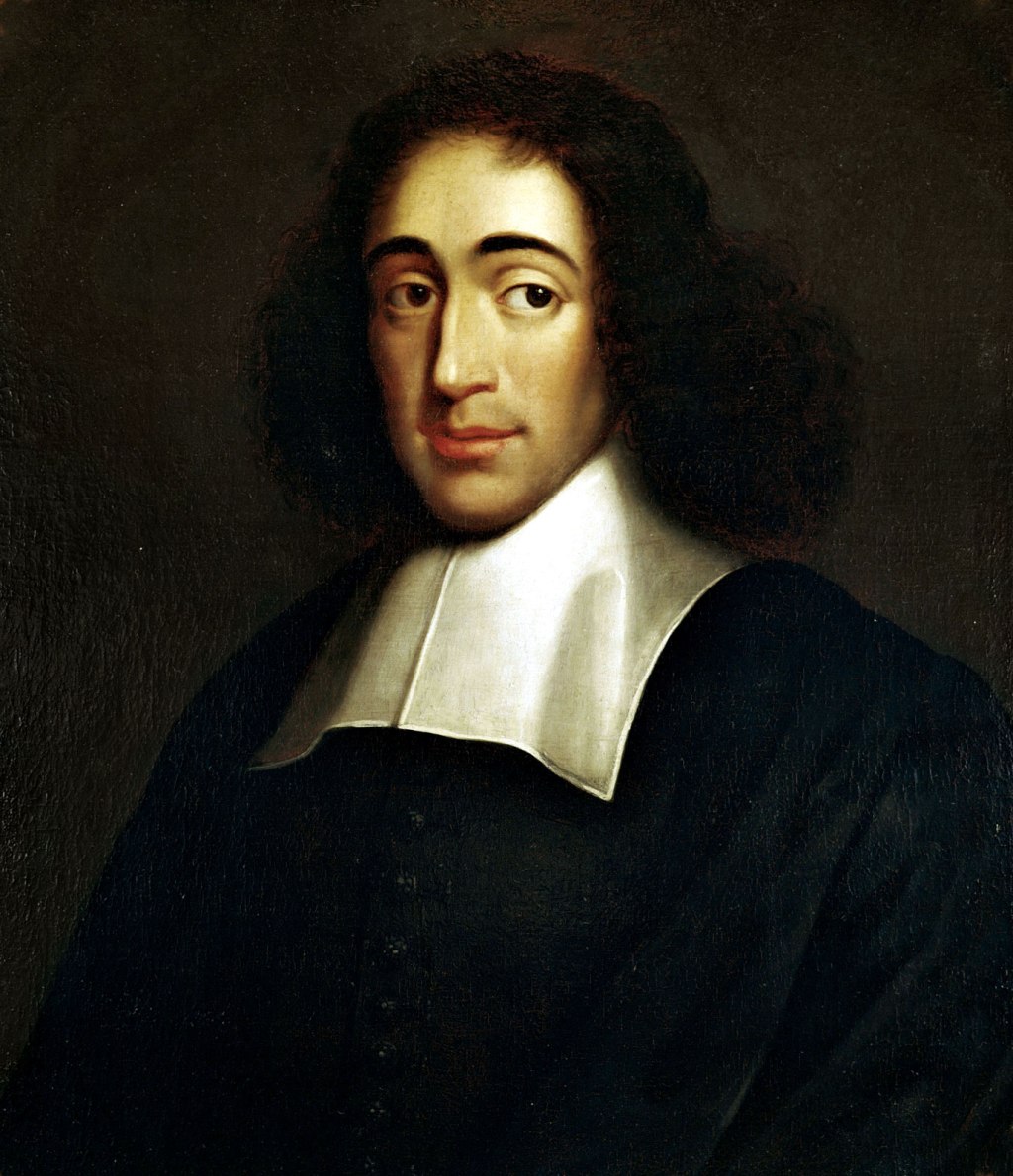
My Socialist Hall of Fame
During this chaotic era of vile rhetoric and manipulative tactics from our so-called bourgeois leaders, I am invigorated by the opportunity to reflect on Socialists, Revolutionaries, Philosophers, Guerrilla Leaders, Partisans, and Critical Theory titans, champions, and martyrs who paved the way for us—my own audacious “Socialism’s Hall of Fame.” These are my heroes and fore-bearers. Not all are perfect, or even fully admirable, but all contributed in some way to our future–either as icons to emulate, or as warnings to avoid in the future.
Introduction
Baruch (Benedictus de) Spinoza (1632–1677) stands among the most original and challenging figures in Western philosophy. His radical rationalism, monistic metaphysics, and religious heterodoxy not only positioned him at the center of 17th-century intellectual tumult but also set the stage for modern secular, scientific, and democratic thought. Often labeled both a heretic and a prophet, Spinoza’s intellectual legacy continues to provoke debate regarding the nature of substance, mind, freedom, and the very possibility of a rational ethics.
Early Life and Historical Context
Spinoza was born on November 24, 1632, into a Portuguese-Jewish community in Amsterdam. His family, originally from Spain and Portugal, were Marranos—Jews who had been compelled to convert to Christianity during the Inquisition and had later fled to the more tolerant Dutch Republic. The Amsterdam Sephardic community was affluent, cosmopolitan, and committed to rabbinic tradition, yet it was also exposed to the ferment of Renaissance humanism and the emergent scientific revolution.
Spinoza received a thorough education in Hebrew, Jewish law, and scholastic philosophy at the Talmud Torah school. However, his intellectual curiosity soon led him to study Latin, Cartesian philosophy, the new physics, and heterodox currents, including works by Machiavelli, Hobbes, and Bruno. By the early 1650s, Spinoza’s radical ideas—particularly his critique of revealed religion and scriptural literalism—alienated him from communal orthodoxy. In 1656, at the age of 23, he was excommunicated (herem) by the Amsterdam synagogue, a rare and severe measure whose text denounced his “abominable heresies” and forbade any social contact.
Intellectual Development and Major Works
Theological-Political Treatise
Spinoza’s break with Judaism did not lead him to Christianity or any conventional faith. Instead, he adopted a rigorously naturalistic and rational approach to both religion and philosophy. This perspective reached its first mature expression in the Tractatus Theologico-Politicus (1670), a defense of free thought and the secular state. Here, Spinoza interprets the Bible as a collection of historical texts shaped by human agency, not divine dictation. He argues that religious authority should be subordinated to civil power, anticipating Enlightenment arguments for toleration and the separation of church and state.
Ethics
Spinoza’s magnum opus, the Ethica, ordine geometrico demonstrata (Ethics Demonstrated in Geometrical Order, published posthumously in 1677), is both a philosophical system and a spiritual meditation. Written in the deductive style of Euclid, the Ethics presents a monistic metaphysics: there is only one substance—God or Nature (Deus sive Natura)—of which everything else is a mode or attribute. Human beings, like all finite things, are expressions of this infinite substance.
Spinoza denies the existence of a personal God and rejects Cartesian dualism, affirming instead the identity of mind and body as different expressions of the same reality. His psychological and ethical analyses are based on a deterministic understanding of the passions, yet Spinoza holds that true freedom is possible through rational understanding and self-mastery. The highest good, for Spinoza, is the “intellectual love of God”—a form of rational beatitude rooted in knowledge of the unity of all things.
Other Works
• Tractatus de Intellectus Emendatione (Treatise on the Emendation of the Intellect): An incomplete methodological treatise.
• Principia Philosophiae Cartesianae (Principles of Cartesian Philosophy): A systematic exposition and critique of Descartes.
• Numerous letters, which provide insight into his philosophical development and debates with contemporaries.
Reception, Influence, and Legacy
Spinoza’s thought provoked intense controversy during his lifetime and for more than a century after his death. He was denounced as an atheist, a blasphemer, and even a political subversive. Yet his works also found secret admirers among the “Radical Enlightenment”—thinkers such as Pierre Bayle, Denis Diderot, and later Goethe and Hegel.
In the 19th and 20th centuries, Spinoza’s ideas profoundly influenced German Idealism (especially Schelling and Hegel), Romanticism, Marxism (Marx and Engels regarded him as a materialist forerunner), and psychoanalysis (Freud acknowledged his psychological insights). In contemporary philosophy, Spinoza’s metaphysics, epistemology, and political theory have been reinterpreted by figures as diverse as Gilles Deleuze, Antonio Negri, and Étienne Balibar.
Spinoza’s critique of religious superstition, his commitment to intellectual freedom, and his holistic vision of nature remain central to debates in philosophy, political theory, and even environmental ethics.
Conclusion
Baruch Spinoza’s life and philosophy encapsulate the paradoxes of the modern era: rationalism and heresy, determinism and freedom, substance and individuality. In his insistence on the unity of nature, the autonomy of reason, and the possibility of human flourishing within a deterministic universe, Spinoza remains not just a historical figure but a living challenge to every attempt to reconcile faith, science, and politics. His legacy is visible in both the emancipatory projects and the metaphysical perplexities of our own time.
Select Bibliography
Primary Works (in English Translation)
• Spinoza, Baruch. The Collected Works of Spinoza. Vol. 1, edited and translated by Edwin Curley. Princeton University Press, 1985.
• Spinoza, Baruch. Ethics. Translated by Edwin Curley. Penguin Classics, 1996.
• Spinoza, Baruch. Theological-Political Treatise. Translated by Samuel Shirley, edited by Jonathan Israel. Cambridge University Press, 2007.
• Spinoza, Baruch. The Letters. In The Collected Works of Spinoza, Vol. 2, edited by Edwin Curley. Princeton University Press, 2016.
Secondary Works
• Bennett, Jonathan. A Study of Spinoza’s Ethics. Hackett, 1984.
• Deleuze, Gilles. Expressionism in Philosophy: Spinoza. Translated by Martin Joughin. Zone Books, 1990.
• Israel, Jonathan I. Radical Enlightenment: Philosophy and the Making of Modernity, 1650–1750. Oxford University Press, 2001.
• Nadler, Steven. Spinoza: A Life. Cambridge University Press, 1999.
• Nadler, Steven. A Book Forged in Hell: Spinoza’s Scandalous Treatise and the Birth of the Secular Age. Princeton University Press, 2011.
• Wolfson, Harry Austryn. The Philosophy of Spinoza: Unfolding the Latent Processes of His Reasoning. Harvard University Press, 1934.
Articles and Reference
• Garrett, Don, ed. The Cambridge Companion to Spinoza. Cambridge University Press, 1996.
• Koistinen, Olli, ed. The Cambridge Companion to Spinoza’s Ethics. Cambridge University Press, 2009.
 Letters from Tomis
Leave a comment