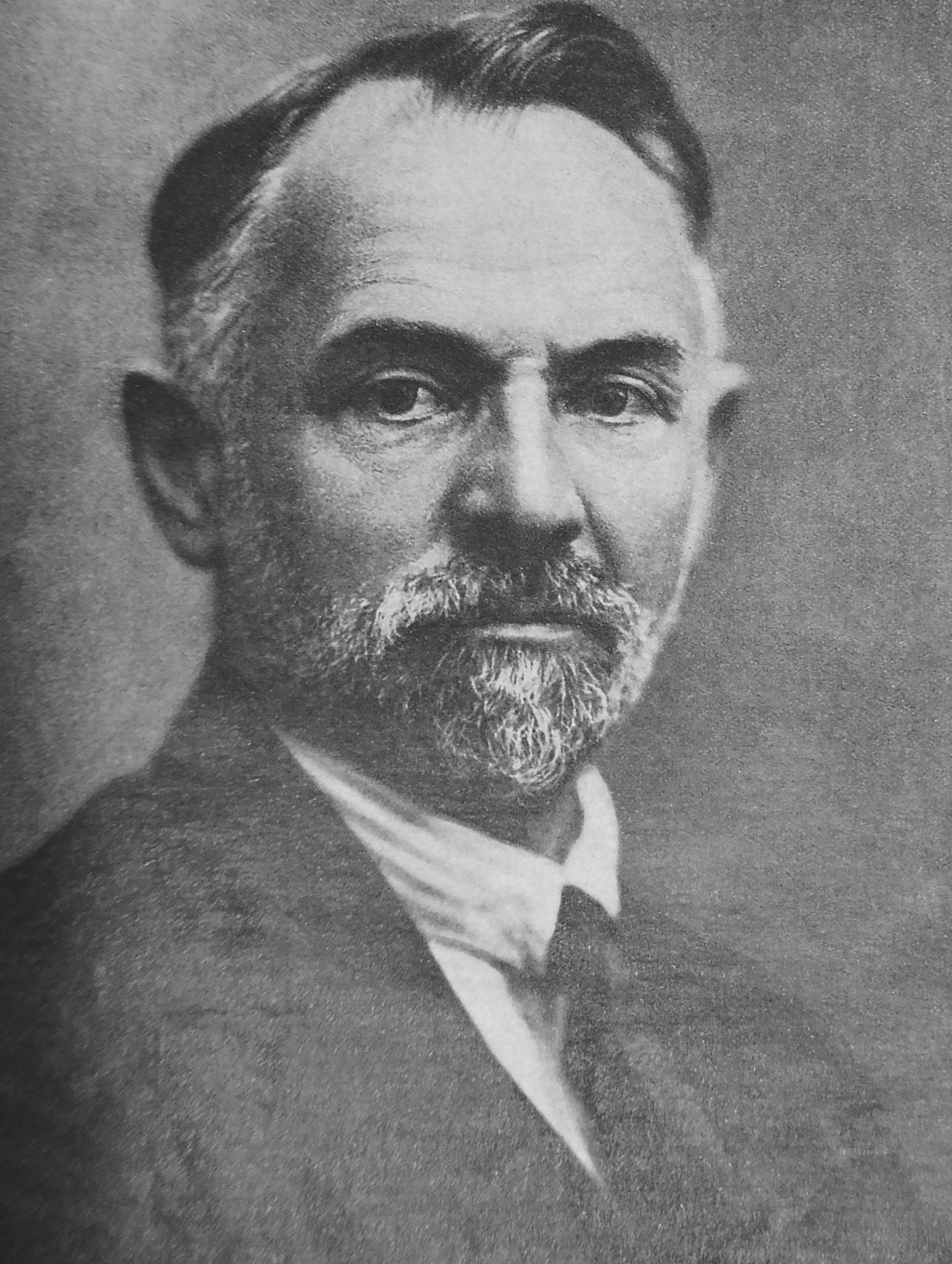
My Socialist Hall of Fame
During this chaotic era of vile rhetoric and manipulative tactics from our so-called bourgeois leaders, I am invigorated by the opportunity to reflect on Socialists, Revolutionaries, Philosophers, Guerrilla Leaders, Partisans, and Critical Theory titans, champions, and martyrs who paved the way for us—my own audacious “Socialism’s Hall of Fame.” These are my heroes and fore-bearers. Not all are perfect, or even fully admirable, but all contributed in some way to our future–either as icons to emulate, or as warnings to avoid in the future.
Leonid Borisovich Krasin (1870–1926) was a prominent Russian revolutionary, engineer, and Soviet diplomat whose multifaceted career significantly influenced the early Soviet state.
Early Life and Education
Born on July 27, 1870, in Kurgan, Russian Empire, Krasin was the son of Boris Ivanovich Krasin, a local police chief. He pursued technical education in Tyumen and later at the Petersburg Technological Institute, where his involvement in student demonstrations led to expulsions and arrests. Despite these setbacks, he completed his engineering studies at the Kharkov Technological Institute in 1901.
Revolutionary Activities
Krasin joined the Russian Social Democratic Labour Party (RSDLP) in the early 1890s and aligned with the Bolshevik faction after the party’s split in 1903. He played a crucial role in organizing clandestine printing operations and was instrumental in funding revolutionary activities, including expropriations. His engineering expertise made him valuable in producing explosives and other technical aspects of the revolutionary struggle.
Industrial and Diplomatic Career
After a period of exile and work with Siemens-Schuckert in Germany, Krasin returned to Russia following the 1917 Revolution. He held several key positions in the Soviet government, including People’s Commissar for Trade and Industry (1918–1920), People’s Commissar for Transport (1919–1920), and People’s Commissar for Foreign Trade (1923–1925). Krasin was instrumental in negotiating the Anglo-Soviet Trade Agreement of 1921 and served as the first Soviet ambassador to France in 1924 and to the United Kingdom in 1925.
Death and Legacy
Krasin died on November 24, 1926, in London due to a blood disease. His funeral in London was attended by thousands, and his remains were later interred at the Kremlin Wall Necropolis in Moscow. Despite being sidelined during the Stalin era, his contributions were later recognized, and two Soviet icebreakers were named in his honor.
Krasin’s unique blend of technical expertise and revolutionary zeal positioned him as a key figure in the Bolshevik movement and the early Soviet state. His contributions to industrial development, foreign trade, and diplomacy were instrumental in shaping Soviet policy during a formative period.
Selected Bibliography
Primary Works by Leonid Krasin
• Krasin, L. B. (1922). “Our Trade Policy.” Labour Monthly, 2(1), January 1922.
• Krasin, L. B. (1923). Die Aussichten für die russische Ausfuhr. Kniga Verlag, Berlin.
• Krasin, L. B. (1928). Voprosy vnešnej torgovli [Problems of Foreign Trade]. Gos. Izd., Moscow/Leningrad.
Biographical and Analytical Works
• Krassin, Lubov. (1929). Leonid Krassin: His Life and Work. Skeffington & Son, London.
• Glenny, M. (1970). “Leonid Krasin: The Years before 1917. An Outline.” Soviet Studies, 22(2), 223–245.
• Haupt, G., & Marie, J.-J. (1974). Makers of the Russian Revolution: Biographies of Bolshevik Leaders. George Allen & Unwin.
• Smith, E. E. (1984). The Engineer of Revolution: L. B. Krasin and the Bolsheviks, 1870–1926. Westview Press.
 Letters from Tomis
Leave a comment