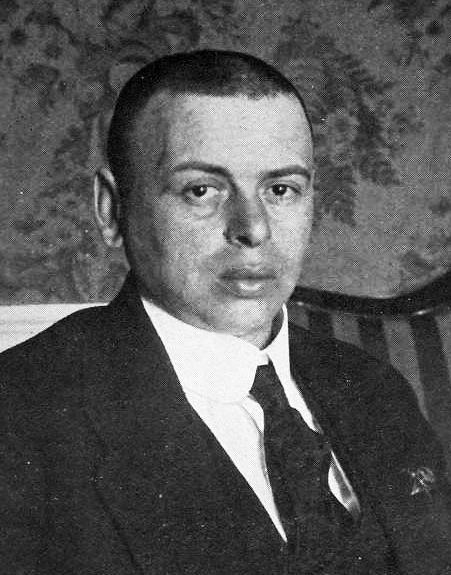
My Socialist Hall of Fame
During this chaotic era of vile rhetoric and manipulative tactics from our so-called bourgeois leaders, I am invigorated by the opportunity to reflect on Socialists, Revolutionaries, Philosophers, Guerrilla Leaders, Partisans, and Critical Theory titans, champions, and martyrs who paved the way for us—my own audacious “Socialism’s Hall of Fame.” These are my heroes and fore-bearers. Not all are perfect, or even fully admirable, but all contributed in some way to our future–either as icons to emulate, or as warnings to avoid in the future.
Béla Kun (1886–1938) was a Hungarian communist revolutionary and politician, best known for leading the Hungarian Soviet Republic in 1919. Born Béla Kohn in Lele, Hungary, Kun emerged as one of Europe’s earliest and most prominent communist leaders, influenced significantly by the Russian Revolution and Bolshevik ideology.
Kun became politically active early in life, joining the Hungarian Social Democratic Party and later the Hungarian Communist Party. His political activities led to his arrest during World War I, during which he was imprisoned by Russian forces. It was during his captivity that he witnessed the Russian Revolution firsthand, deeply influencing his political ideology.
Upon his return to Hungary after the war, Kun quickly rose to prominence, helping to establish the Hungarian Soviet Republic in March 1919. As the leader of this short-lived communist state, he implemented radical reforms modeled after Soviet Russia, including land redistribution and nationalization of industry. However, his government faced significant internal opposition and external pressure, ultimately collapsing after just 133 days.
Following the fall of the Hungarian Soviet Republic, Kun fled to Austria and later moved permanently to Soviet Russia. There, he became involved with the Communist International (Comintern), actively promoting global communist revolution. However, during Joseph Stalin’s purges in the late 1930s, Kun fell victim to political repression. Arrested on charges of “Trotskyist” and “counterrevolutionary” activities, he was executed in the Soviet Union in 1938.
Bibliography
• Borsányi, György. The Life of a Communist Revolutionary: Béla Kun. Translated by Mario D. Fenyo. Boulder, CO: Social Science Monographs, 1993.
• Janos, Andrew C. The Politics of Backwardness in Hungary, 1825-1945. Princeton, NJ: Princeton University Press, 1982.
• Kenez, Peter. Hungary from the Nazis to the Soviets: The Establishment of the Communist Regime in Hungary, 1944-1948. Cambridge: Cambridge University Press, 2006.
• Tökés, Rudolf L. Béla Kun and the Hungarian Soviet Republic: The Origins and Role of the Communist Party of Hungary in the Revolutions of 1918-1919. Stanford, CA: Hoover Institution Press, 1967.
• Romsics, Ignác. Hungary in the Twentieth Century. Budapest: Corvina Books, 1999.
 Letters from Tomis
Leave a comment