My Socialist Hall of Fame
During this chaotic era of vile rhetoric and manipulative tactics from our so-called bourgeois leaders, I am invigorated by the opportunity to reflect on Socialists, Revolutionaries, Philosophers, Guerrilla Leaders, Partisans, and Critical Theory titans, champions, and martyrs who paved the way for us—my own audacious “Socialism’s Hall of Fame.” These are my heroes and fore-bearers. Not all are perfect, or even fully admirable, but all contributed in some way to our future–either as icons to emulate, or as warnings to avoid in the future.
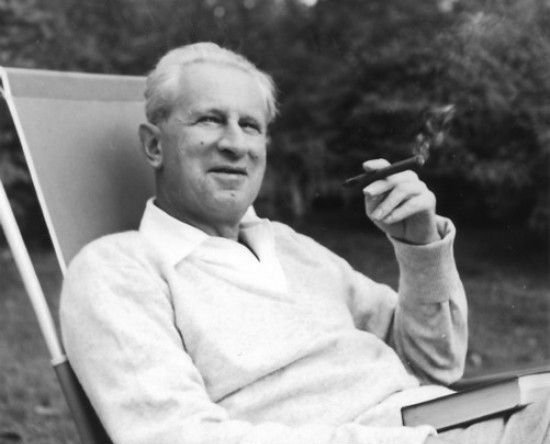
Herbert Marcuse was a German-American philosopher, political theorist, and sociologist best known for his association with the Frankfurt School of Critical Theory. Born on July 19, 1898, in Berlin, Germany, Marcuse studied literature and philosophy at the universities of Berlin and Freiburg. He was deeply influenced by the work of Martin Heidegger, under whom he studied, and later by Marxist theory, which he integrated into his critique of modern capitalist societies.
In the early 1930s, Marcuse joined the Institute for Social Research (the Frankfurt School), where he collaborated with leading critical theorists such as Max Horkheimer, Theodor Adorno, and Erich Fromm. With the rise of Nazism, he fled Germany and eventually settled in the United States, where he worked for the Office of Strategic Services (OSS) during World War II and later held academic posts at institutions such as Columbia University, Brandeis University, and the University of California, San Diego.
Marcuse gained international recognition in the 1960s with the publication of One-Dimensional Man (1964), a searing critique of advanced industrial society and its capacity to absorb dissent. His work resonated with the student movements and countercultural protests of the 1960s, particularly in Europe and the U.S., earning him a reputation as the “father of the New Left.” His thought combined elements of Marxist analysis, psychoanalytic theory (especially Freudian), and a utopian vision of liberation and human potential.
Marcuse’s work interrogated the mechanisms of ideological control and social conformity, emphasizing the role of culture, technology, and repression in sustaining systems of domination. He remained a passionate advocate for radical social change until his death in Starnberg, Germany, on July 29, 1979.
Selected Bibliography
• Marcuse, Herbert. Reason and Revolution: Hegel and the Rise of Social Theory. Oxford University Press, 1941.
— An early work that explores the revolutionary dimensions of Hegelian philosophy in relation to Marxism.
• Marcuse, Herbert. Eros and Civilization: A Philosophical Inquiry into Freud. Beacon Press, 1955.
— Integrates Freudian psychoanalysis with Marxist theory, proposing a non-repressive society where human instincts could be liberated.
• Marcuse, Herbert. One-Dimensional Man: Studies in the Ideology of Advanced Industrial Society. Beacon Press, 1964.
— His most influential book, critiquing the conformist and repressive nature of consumer capitalism.
• Marcuse, Herbert. An Essay on Liberation. Beacon Press, 1969.
— Expands on the themes of One-Dimensional Man with an optimistic view of the revolutionary potential of marginalized groups.
• Marcuse, Herbert. Counterrevolution and Revolt. Beacon Press, 1972.
— A reflection on the backlash against the 1960s radical movements and the persistence of revolutionary possibilities.
• Marcuse, Herbert. The Aesthetic Dimension: Toward a Critique of Marxist Aesthetics. Beacon Press, 1978.
— Explores the role of art in challenging ideological domination and imagining alternatives to the status quo.
 Letters from Tomis
Leave a comment