My Socialist Hall of Fame
During this chaotic era of vile rhetoric and manipulative tactics from our so-called bourgeois leaders, I am invigorated by the opportunity to reflect on Socialists, Revolutionaries, Philosophers, Guerrilla Leaders, Partisans, and Critical Theory titans, champions, and martyrs who paved the way for us—my own audacious “Socialism’s Hall of Fame.” These are my heroes and fore-bearers. Not all are perfect, or even fully admirable, but all contributed in some way to our future–either as icons to emulate, or as warnings to avoid in the future.
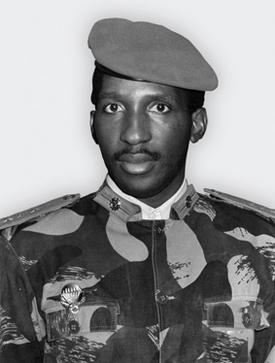
Thomas Sankara (1949–1987) was a Burkinabé revolutionary, Marxist-Leninist theorist, Pan-Africanist, and the President of Burkina Faso from 1983 until his assassination in 1987. Often referred to as “Africa’s Che Guevara,” Sankara embodied radical change and uncompromising integrity in an era where African leaders were increasingly mired in neocolonial complicity.
Early Life and Military Career
Born on December 21, 1949, in Yako, Upper Volta (modern-day Burkina Faso), Sankara hailed from a modest family of mixed ethnic background—Mossi and Peul—within a country deeply entrenched in colonial structures. Educated by Catholic missionaries, Sankara initially aspired to become a priest but pivoted towards a military career, enrolling in the military academy of Kadiogo at the age of 19.
During his time as an officer, Sankara became a voracious reader, immersing himself in revolutionary texts ranging from Marx and Lenin to Frantz Fanon. He witnessed firsthand the contradictions between the elites and the common people in post-independence Africa, shaping his political consciousness. Training stints in Madagascar in the 1970s further radicalized him, especially after observing the 1972 popular uprising there.
Rise to Power
Sankara’s charisma and commitment to anti-imperialism earned him respect among young military officers. By 1981, he was appointed Secretary of State for Information but resigned in protest against the government’s betrayal of revolutionary ideals. In 1983, following a coup d’état supported by popular and military backing, Sankara became President at the age of 33.
The Burkinabé Revolution
Upon assuming power, Sankara wasted no time. He renamed the country from the colonial Upper Volta to Burkina Faso, meaning “Land of Upright People,” a direct challenge to the legacy of colonial humiliation. Sankara’s revolution was multifaceted:
• Anti-Imperialism: Sankara was a fierce critic of neocolonialism and international financial institutions like the IMF and World Bank, which he accused of keeping African nations in perpetual debt and dependency.
• Women’s Liberation: Sankara promoted gender equality, outlawed forced marriages, encouraged women to serve in government and military, and famously declared, “The revolution and women’s liberation go together. We do not talk of women’s emancipation as an act of charity or because of a surge of human compassion.”
• Self-Sufficiency: His administration focused on food security, launching ambitious agrarian reforms that boosted grain production and sought to make Burkina Faso self-reliant.
• Public Health & Education: Sankara’s government carried out a mass vaccination campaign, constructing schools, clinics, and water wells across rural regions.
• Austerity and Integrity: He cut ministerial salaries (including his own), sold off luxury vehicles in favor of simple Renault 5s, and shunned corruption with almost puritanical zeal.
Internationalism and Critique of Global Power
Sankara’s speeches on the world stage, notably at the Organization of African Unity (OAU) and the United Nations, were searing indictments of Western imperialism and African complicity. He opposed the payment of foreign debt, arguing that it was a mechanism of modern slavery. His fearless rhetoric made him a hero to the disenfranchised, but a threat to entrenched elites, both domestically and abroad.
Assassination and Legacy
On October 15, 1987, Thomas Sankara was assassinated in a coup orchestrated by his former ally, Blaise Compaoré, who reversed many of Sankara’s reforms and realigned Burkina Faso with Western financial institutions. The killing was widely believed to have tacit approval from foreign interests unnerved by Sankara’s defiant policies.
Despite his short time in office, Sankara’s legacy endures. He remains an icon of anti-imperialism, revolutionary integrity, and African self-determination. Murals of Sankara adorn walls in Ouagadougou and beyond, and his writings continue to inspire movements across the Global South.
Sure, here’s a notable interview you can include, along with a short context around it:
Interview with Thomas Sankara, Ouagadougou, 1985
Conducted by Sennen Andriamirado for Jeune Afrique
One of the most referenced interviews with Thomas Sankara was conducted in 1985 by journalist Sennen Andriamirado and published in Jeune Afrique, a prominent Pan-African magazine. In this wide-ranging conversation, Sankara outlined his political philosophy, defended Burkina Faso’s revolutionary path, and elaborated on the moral and ideological stakes of confronting neocolonialism.
In the interview, Sankara reaffirmed his anti-imperialist stance:
“We refuse to pay a debt that was not contracted by our people. We will not kneel before the IMF. Burkina Faso will be free through work and dignity.”
He also addressed the criticism from other African heads of state who viewed his policies as too radical or destabilizing:
“They want Africa to remain a beggar continent. We will show that we can develop with the sweat of our people, not through the crumbs tossed to us by the former colonial powers.”
On gender equality, a hallmark of his government’s reforms, Sankara stated:
“A revolution that ignores the liberation of women cannot be called a revolution. We cannot develop with half the population shackled.”
This interview is significant because it captures Sankara’s unfiltered tone—intellectually sharp, morally uncompromising, and passionate about Pan-Africanism. Andriamirado, who would later write one of the earliest biographies of Sankara, revealed in follow-ups that the young president spoke with a mixture of humor and defiance, even when addressing the specter of coups or assassination:
“While they plot against me, I am already plotting for the happiness of my people.”
Citation for the Interview:
Andriamirado, Sennen. Jeune Afrique, No. 1261, 1985. Interview with Thomas Sankara, Ouagadougou.
Bibliography
1. Sankara, Thomas. Thomas Sankara Speaks: The Burkina Faso Revolution 1983–1987. Pathfinder Press, 2007.
2. Harsch, Ernest. Thomas Sankara: An African Revolutionary. Ohio University Press, 2014.
3. Zeilig, Leo. Thomas Sankara: A Revolutionary in Cold War Africa. Zed Books, 2020.
4. Skinner, Elliott P. The Mossi of Burkina Faso: Chiefs, Politicians, and Soldiers. Waveland Press, 1989.
5. Martin, Guy. “Africa and the Ideology of the African Revolution,” The Journal of Modern African Studies, Vol. 26, No. 2, 1988.
6. Guevara, Che. The African Dream: The Diaries of the Revolutionary War in the Congo. Grove Press, 2001 (for comparative context on revolutionary ideals in Africa).
7. Fanon, Frantz. The Wretched of the Earth. Grove Press, 1963 (influential in Sankara’s ideological formation).
 Letters from Tomis
Leave a comment