My Socialist Hall of Fame
During this chaotic era of vile rhetoric and manipulative tactics from our so-called bourgeois leaders, I am invigorated by the opportunity to reflect on Socialists, Revolutionaries, Philosophers, Guerrilla Leaders, Partisans, and Critical Theory titans, champions, and martyrs who paved the way for us—my own audacious “Socialism’s Hall of Fame.” These are my heroes and fore-bearers. Not all are perfect, or even fully admirable, but all contributed in some way to our future–either as icons to emulate, or as warnings to avoid in the future.
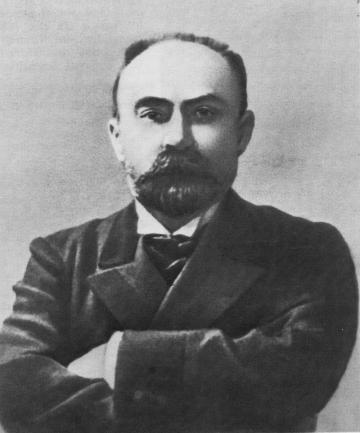
Though Lenin had extensive disagreements with Georgi Plekanov, particularly regarding the interpretation and application of Marxist theory within the Russian context, he never failed to credit him as the “Father of Russian Marxism,” though often with a “disreputable” label. Plekanov’s pioneering efforts laid the groundwork for the socialist movement in Russia, and his writings significantly influenced Lenin’s own views, even amidst their ideological rifts. Lenin recognized that Plekanov’s early contributions were instrumental in popularizing Marxist ideas among the Russian intelligentsia and working class, ultimately shaping the landscape of revolutionary thought that would culminate in the 1917 October Revolution.
Early Life and Education
Georgi Plekhanov was born into a minor noble family in the Tambov region of the Russian Empire. He initially studied at a military academy before shifting his focus to revolutionary politics, driven by a strong sense of social justice. He became involved with populist revolutionary groups in his youth, joining the Zemlya i Volya (Land and Liberty) organization in the 1870s.
Revolutionary Career
Plekhanov was a key figure in the Russian revolutionary movement and is often referred to as the “father of Russian Marxism.” Dissatisfied with the populist strategy of targeting the peasantry for revolution, he turned to Marxism, emphasizing the role of the industrial working class. In 1883, he co-founded the first Marxist organization in Russia, the Emancipation of Labor Group. This group introduced Marxist ideas to the Russian revolutionary movement, translating and disseminating key works by Karl Marx and Friedrich Engels.
Plekhanov was also a prolific writer and philosopher, known for blending Marxist theory with an analysis of Russian socio-economic conditions. His works provided a theoretical foundation for the later development of the Russian Social Democratic Labor Party (RSDLP), which would eventually split into the Bolsheviks and Mensheviks.
Key Contributions
1. Theoretical Foundations: Plekhanov’s writings laid the groundwork for the adoption of Marxist ideology in Russia. His works such as “Socialism and Political Struggle” (1883) and “The Development of the Monist View of History” (1895) are seminal texts in Russian Marxist thought.
2. Critique of Populism: He argued against the Narodniks (Russian populists), advocating for a proletarian revolution as opposed to the populist ideal of a peasant-led uprising.
3. Philosophy: Plekhanov made significant contributions to the philosophy of Marxism, particularly in the areas of materialism and historical development.
4. Role in the RSDLP: He played a major role in the early development of the RSDLP but later sided with the Menshevik faction after the 1903 split. His opposition to Lenin’s centralist and authoritarian approach led to his marginalization in the revolutionary movement.
Later Years and Death
Plekhanov was a staunch opponent of Lenin’s Bolsheviks and criticized their tactics, which he viewed as dictatorial. During the 1917 Russian Revolution, he supported the Provisional Government and opposed the October Revolution. Isolated and in declining health, he spent his final years in relative obscurity, passing away in 1918.
Legacy
While overshadowed by figures like Lenin and Trotsky, Plekhanov remains an important figure in Russian and international Marxist history. His emphasis on Marxist theory influenced the development of socialism in Russia, though his vision of a democratic and proletarian revolution was ultimately overshadowed by the rise of Bolshevism.
Selected Bibliography
1. Plekhanov, Georgi. Socialism and Political Struggle. 1883.
• This essay marks one of Plekhanov’s first major works advocating Marxist ideology in opposition to populism.
2. Plekhanov, Georgi. The Development of the Monist View of History. 1895.
• A seminal philosophical treatise on Marxism, focusing on the materialist conception of history.
3. Plekhanov, Georgi. Fundamental Problems of Marxism. 1908.
• This work addresses key philosophical questions within Marxism, emphasizing dialectical materialism.
4. Plekhanov, Georgi. Anarchism and Socialism. 1895.
• A critique of anarchist theory from a Marxist perspective.
5. Plekhanov, Georgi. In Defense of Materialism. 1909.
• A response to philosophical idealism, reaffirming the principles of materialism in Marxist thought.
6. Plekhanov, Georgi. Letters Without Address. 1917.
• A collection of essays critiquing Lenin and the Bolshevik approach during the Russian Revolution.
References
• Harding, Neil. Georgi Plekhanov: The Father of Russian Marxism. Clarendon Press, 1979.
• Deutscher, Isaac. The Prophet Armed: Trotsky 1879–1921. Oxford University Press, 1954.
• Lenin, Vladimir. Collected Works. Volume 4, Progress Publishers, 1972.
• Service, Robert. The Last of the Tsars: Nicholas II and the Russian Revolution. Macmillan, 2017.
 Letters from Tomis
Leave a comment