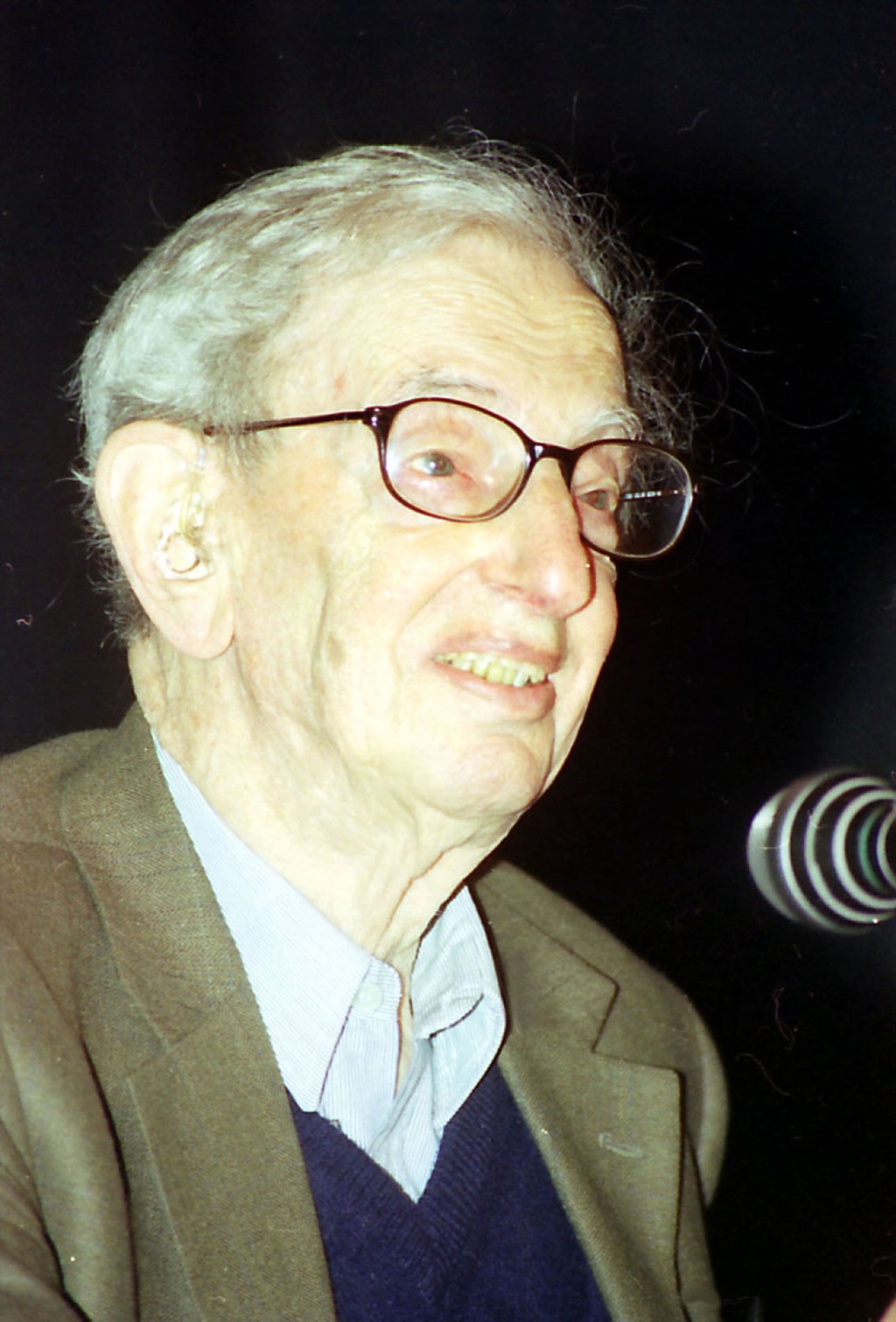
My Socialist Hall of Fame
During this chaotic era of vile rhetoric and manipulative tactics from our so-called bourgeois leaders, I am invigorated by the opportunity to reflect on Socialists, Revolutionaries, Philosophers, Guerrilla Leaders, Partisans, and Critical Theory titans, champions, and martyrs who paved the way for us—my own audacious “Socialism’s Hall of Fame.” These are my heroes and fore-bearers. Not all are perfect, or even fully admirable, but all contributed in some way to our future–either as icons to emulate, or as warnings to avoid in the future.
I stumbled on Eric Hobsbawm’s Age of Revolution a few years back, and since then, the book has profoundly shaped my understanding of the political and social upheavals that characterized the late 18th and early 19th centuries. Hobsbawm’s insightful analysis of the period not only delves into the revolutionary movements in France and Haiti but also explores the broader implications on industrialization and its effects on various societal structures. His eloquent narrative weaves together historical facts with vivid storytelling, making it an enlightening read that connects the past with contemporary issues we still grapple with today. The way he captures the essence of the revolutions and their influence on modern civilization has left me both informed and inspired to further explore this pivotal era in history.
Early Life:
Eric Hobsbawm was born into a middle-class Jewish family in Alexandria, Egypt. His father, Leopold Percy Hobsbaum, was British, and his mother, Nelly Grün, was Austrian. Following his father’s death in 1929, Hobsbawm’s family moved to Berlin, Germany. His exposure to the political turmoil of interwar Europe, particularly the rise of fascism, significantly shaped his intellectual and political development. In 1933, after Hitler came to power, his family relocated to London.
Education:
Hobsbawm attended St Marylebone Grammar School and later won a scholarship to King’s College, Cambridge, where he studied history. At Cambridge, he became involved in the Communist Party and joined the Cambridge University Socialist Society, marking the start of his lifelong commitment to leftist ideologies.
Academic Career:
Hobsbawm is widely regarded as one of the most influential historians of the 20th century. His academic career spanned over seven decades, and his work is distinguished by its focus on social and economic history, particularly concerning the development of capitalism, industrialization, and nationalism.
He taught at Birkbeck, University of London, from 1947 until his retirement in 1982 and was later appointed President of the institution. Hobsbawm’s scholarship combined a Marxist approach with a deep understanding of global historical processes.
Political Involvement:
A lifelong Marxist, Hobsbawm was a member of the Communist Party of Great Britain until its dissolution in 1991. Despite his criticism of certain aspects of the Soviet Union, he remained committed to Marxist principles, advocating for a critical and nuanced understanding of historical materialism.
Personal Life:
Hobsbawm married Marlene Schwartz in 1962, with whom he had two children. He was also a jazz enthusiast and published works on the subject, including The Jazz Scene (1959).
Death:
Eric Hobsbawm passed away on October 1, 2012, at the age of 95. He left behind a profound legacy as a historian, intellectual, and public thinker.
Bibliography
Major Works:
1. The Age of Revolution: Europe 1789–1848 (1962)
• The first in Hobsbawm’s series on modern history, exploring the transformative effects of the French and Industrial Revolutions.
2. The Age of Capital: 1848–1875 (1975)
• Examines the global expansion of capitalism and the socio-economic changes of the mid-19th century.
3. The Age of Empire: 1875–1914 (1987)
• Focuses on the rise of imperialism and global power struggles leading up to World War I.
4. The Age of Extremes: The Short Twentieth Century, 1914–1991 (1994)
• A comprehensive analysis of the 20th century, from World War I to the collapse of the Soviet Union.
5. Primitive Rebels: Studies in Archaic Forms of Social Movement in the 19th and 20th Centuries (1959)
• An exploration of non-revolutionary, pre-political protest movements.
6. Bandits (1969)
• A study of banditry as a form of social resistance in history.
7. The Invention of Tradition (1983, with Terence Ranger)
• Examines how traditions are constructed to serve political and social purposes.
8. How to Change the World: Tales of Marx and Marxism (2011)
• Reflects on the enduring relevance of Marxist theory in the modern world.
9. Fractured Times: Culture and Society in the Twentieth Century (2013, posthumous)
• Explores the cultural and societal transformations of the 20th century.
Other Notable Works:
• Labouring Men: Studies in the History of Labour (1964)
• Industry and Empire: From 1750 to the Present Day (1968)
• Worlds of Labour: Further Studies in the History of Labour (1984)
Hobsbawm’s works continue to be widely read and studied, reflecting his unparalleled ability to synthesize complex historical processes into coherent and insightful narratives. His intellectual legacy endures as a touchstone for understanding the modern world.
 Letters from Tomis
Leave a comment