My Socialist Hall of Fame
During this chaotic era of vile rhetoric and manipulative tactics from our so-called bourgeois leaders, I am invigorated by the opportunity to reflect on Socialists, Revolutionaries, Philosophers, Guerrilla Leaders, Partisans, and Critical Theory titans, champions, and martyrs who paved the way for us—my own audacious “Socialism’s Hall of Fame.” These are my heroes and fore-bearers. Not all are perfect, or even fully admirable, but all contributed in some way to our future–either as icons to emulate, or as warnings to avoid in the future.
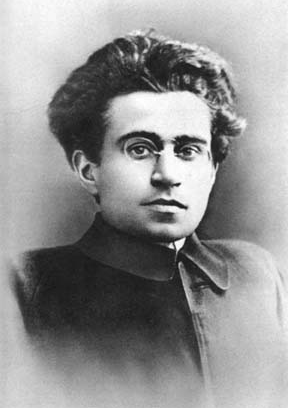
Antonio Gramsci was a unique contributor to Western Marxism, not only because of his theoretical insights into the nature of power and ideology, but also due to his focus on the role of culture in the development of a revolutionary consciousness. His concept of cultural hegemony emphasized how dominant classes maintain control not just through coercion but also through the manipulation of cultural institutions and ideologies that shape the perceptions and beliefs of the masses. Gramsci’s writings, penned during his imprisonment under the fascist regime in Italy, reflect his deep commitment to understanding the complexities of social change and the necessity of intellectual and cultural engagement in the struggle for justice and equality.
Antonio Gramsci (1891–1937) was an Italian Marxist philosopher, political theorist, journalist, and revolutionary, best known for his theories on cultural hegemony, which have profoundly influenced contemporary political and cultural thought. His work remains vital in the fields of political theory, sociology, and critical theory.
Early Life and Education
Gramsci was born on January 22, 1891, in Ales, a small village on the island of Sardinia, into a poor family. His father, Francesco Gramsci, was a clerk who suffered financial and legal troubles, leaving the family in poverty. As a child, Antonio suffered from a debilitating spinal condition, likely Pott’s disease, which left him physically deformed and of short stature. Despite these challenges, Gramsci excelled academically and won a scholarship to the University of Turin in 1911, where he studied literature, philosophy, and linguistics.
In Turin, Gramsci was exposed to Marxist theory, labor struggles, and socialist ideas, particularly through his interactions with factory workers and intellectuals. He joined the Italian Socialist Party (PSI) in 1913, beginning his political career.
Political Career and Founding of the Communist Party
Gramsci gained prominence as a journalist and editor for socialist newspapers such as Avanti! and later L’Ordine Nuovo (“The New Order”), where he advocated for workers’ councils as the foundation for a socialist state. During the Biennio Rosso (1919–1920), a period of widespread worker unrest in Italy, Gramsci emerged as a leading voice for revolutionary socialism.
In 1921, Gramsci co-founded the Italian Communist Party (PCI) and became one of its leading theorists. He traveled to the Soviet Union in 1922 and was inspired by the Bolshevik Revolution, though he also maintained a critical stance toward some aspects of Soviet policy.
Imprisonment and Writings
In 1926, Benito Mussolini’s fascist regime arrested Gramsci as part of a broader crackdown on political dissent. He was sentenced to 20 years in prison, where his health deteriorated due to poor conditions and lack of medical care. Despite these hardships, Gramsci continued to write prolifically, producing his most famous work, the Prison Notebooks (Quaderni del Carcere), during his incarceration.
The Prison Notebooks cover a wide range of topics, including history, culture, philosophy, and politics. Gramsci’s concept of cultural hegemony—the idea that dominant classes maintain power not merely through force but by securing consent via cultural and ideological means—has had a profound influence on modern critical theory and cultural studies. He also wrote extensively on education, intellectuals, and the role of civil society in shaping political power.
Death and Legacy
Gramsci was released from prison in 1934 due to his failing health but remained under police surveillance. He died on April 27, 1937, at the age of 46, in a clinic in Rome. Despite his early death, his ideas gained posthumous recognition and have been widely disseminated through translations of his writings.
Gramsci’s work has influenced a broad spectrum of thinkers and movements, from postcolonial theorists and cultural studies scholars to labor organizers and political activists. His emphasis on culture, education, and ideology as sites of struggle continues to shape debates on power and resistance.
Selected Bibliography
Primary Works by Gramsci
• Gramsci, Antonio. Prison Notebooks. Translated and edited by Quintin Hoare and Geoffrey Nowell Smith. New York: International Publishers, 1971.
• Gramsci, Antonio. Selections from Cultural Writings. Edited by David Forgacs and Geoffrey Nowell Smith. London: Lawrence & Wishart, 1985.
• Gramsci, Antonio. Letters from Prison. Edited by Frank Rosengarten, translated by Raymond Rosenthal. New York: Columbia University Press, 1994.
Secondary Sources
• Boggs, Carl. The Two Revolutions: Antonio Gramsci and the Dilemmas of Western Marxism. Boston: South End Press, 1984.
• Crehan, Kate. Gramsci, Culture and Anthropology. Berkeley: University of California Press, 2002.
• Fiori, Giuseppe. Antonio Gramsci: Life of a Revolutionary. Translated by Tom Nairn. London: New Left Books, 1970.
• Hoare, Quintin, and Geoffrey Nowell Smith, eds. Selections from the Prison Notebooks of Antonio Gramsci. New York: International Publishers, 1971.
• Mouffe, Chantal. Gramsci and Marxist Theory. London: Routledge, 1979.
This bibliography provides a starting point for exploring Gramsci’s life, works, and enduring influence. His vision of cultural and ideological struggle remains a touchstone for those committed to understanding and challenging systems of power.


Leave a comment