My Socialist Hall of Fame
During this chaotic era of vile rhetoric and manipulative tactics from our so-called bourgeois leaders, I am invigorated by the opportunity to reflect on Socialists, Revolutionaries, Philosophers, Guerrilla Leaders, Partisans, and Critical Theory titans, champions, and martyrs who paved the way for us—my own audacious “Socialism’s Hall of Fame.” These are my heroes and fore-bearers. Not all are perfect, or even admirable, but all contributed in some way to our future–either as icons to emulate, or as warnings to avoid in the future.
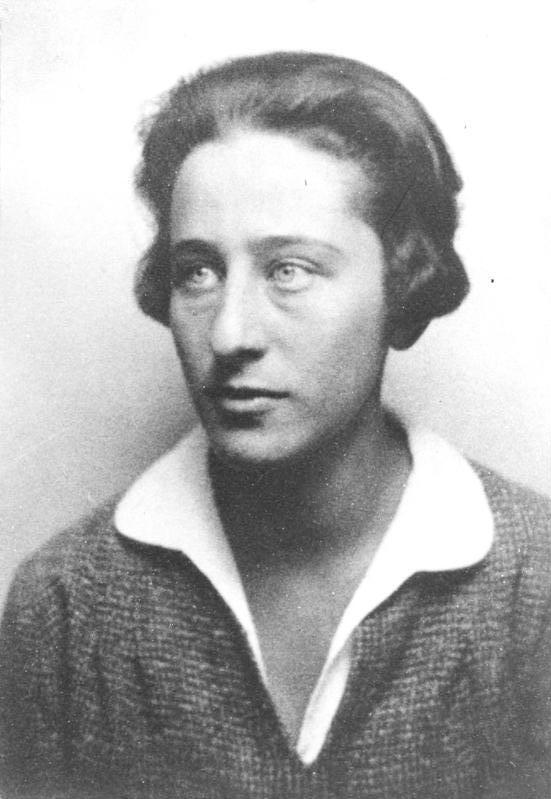
Olga Benário Prestes was a unique and dedicated revolutionary and martyr who played a vital role in the struggle against oppression in Brazil during the 20th century. Her unwavering commitment to socialism and human rights not only inspired countless others to join the cause but also solidified her legacy as a symbol of resistance against tyranny. Throughout her life, she faced immense challenges, including imprisonment and persecution, yet she remained resolute in her beliefs, demonstrating extraordinary courage and resilience in the face of adversity. Her story continues to resonate today, serving as a powerful reminder of the sacrifices made by those who fight for justice and a more equitable society.
Early Life and Political Awakening
Olga Benário was born on February 12, 1908, in Munich, Germany, into a middle-class Jewish family. Her father, Leopold Benário, was a lawyer, and her mother, Eugenie, was a homemaker. Despite their assimilation into German society, the family faced increasing antisemitism during Olga’s youth. At an early age, Olga became politically active, joining the Communist Youth Organization of Germany (KJVD) as a teenager. Her commitment to Marxist ideals was spurred by the economic hardships and political unrest that characterized Germany in the aftermath of World War I.
Revolutionary Activities in Germany
By the 1920s, Olga had emerged as a prominent member of the Communist Party of Germany (KPD). At the age of 18, she helped orchestrate the daring rescue of her then-partner, Otto Braun (a communist activist, unrelated to the Prussian politician), from police custody. This act brought her to the attention of the international communist movement, but it also forced her to flee Germany to avoid arrest. She traveled to the Soviet Union, where she received political and military training at the International Lenin School in Moscow.
Brazilian Revolution and Arrest
In 1934, Olga was assigned to accompany Luís Carlos Prestes, a prominent Brazilian communist leader, to Brazil. Posing as his wife, she worked alongside Prestes to organize the Communist uprising of 1935 against the authoritarian Vargas regime. The uprising, known as the “Intentona Comunista,” failed, leading to the arrest of many involved. Olga was captured in early 1936 by Brazilian authorities, who discovered her true identity.
At the time of her arrest, Olga was pregnant with Prestes’ child. Despite international protests, the Vargas government deported her to Nazi Germany in 1936, in violation of international law. She gave birth to her daughter, Anita Leocádia, while imprisoned in Berlin. Anita was later removed from Olga’s custody and placed with Olga’s mother-in-law.
Imprisonment and Execution
In Germany, Olga faced relentless persecution for her Jewish heritage and communist affiliations. She was imprisoned in several concentration camps, including Lichtenburg and Ravensbrück. Her unwavering defiance of her captors made her a symbol of resistance for many. In 1942, Olga was transferred to Bernburg, a euthanasia center repurposed for mass executions, where she was murdered in a gas chamber.
Legacy
Olga Benário Prestes is remembered as a symbol of courage and resistance against fascism and oppression. Her life story has inspired books, films, and memorials, particularly in Brazil and Germany. Despite the tragic end to her life, Olga’s legacy endures through her contributions to the struggle for social justice and equality.
Bibliography
1. Gertz, Miriam. Olga Benário: Eine Biographie. Berlin: Aufbau-Verlag, 2004.
2. Werneck, Fernando Morais. Olga. São Paulo: Companhia das Letras, 1985.
3. Beevor, Antony. The Second World War. New York: Little, Brown and Company, 2012.
4. Helm, Sarah. Ravensbrück: Life and Death in Hitler’s Concentration Camp for Women. London: Little, Brown, 2015.
5. Prestes, Anita Leocádia. Minha Mãe, Olga Benário. São Paulo: Editora Boitempo, 2011.
6. Benz, Wolfgang. The Holocaust: A New History. New York: Routledge, 1999.
 Letters from Tomis
Leave a comment