My Socialist Hall of Fame
During this chaotic era of vile rhetoric and manipulative tactics from our so-called bourgeois leaders, I am invigorated by the opportunity to reflect on Socialists, Revolutionaries, Philosophers, Guerrilla Leaders, Partisans, and Critical Theory titans, champions, and martyrs who paved the way for us—my own audacious “Socialism’s Hall of Fame.” These are my heroes and fore-bearers. Not all are perfect, or even admirable, but all contributed in some way to our future–either as icons to emulate, or as warnings to avoid in the future.
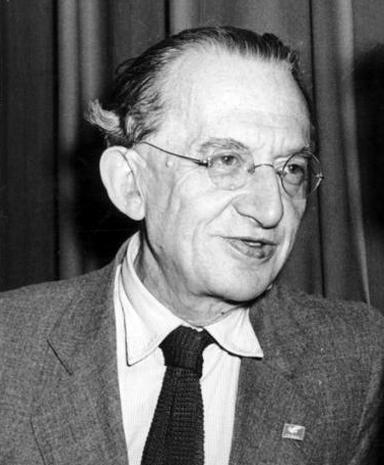
Georg Lukács was one of the first Marxist philosophers I encountered after reading Capital, and his profound insights opened up a new dimension of thought for me. His ideas on reification and the role of class consciousness completely transformed my understanding of Marxism and its intricate relationship with Western Philosophy. By connecting the socio-political context of his time to philosophical discourse, he showcased how Marxist theory could critically engage with existential inquiries and aesthetic critiques. Lukács emphasized the importance of historical materialism, which deepened my appreciation for how social conditions shape human consciousness and intellectual development. This intellectual journey led me to explore a broader spectrum of Marxist theory, ultimately enriching my philosophical perspective and inspiring me to consider the implications of class struggle in contemporary society.
Georg Lukács (1885–1971) was a Hungarian Marxist philosopher, literary critic, and one of the most influential figures in 20th-century Marxist theory. Born György Bernát Löwinger in Budapest to a wealthy Jewish family, Lukács was educated in Hungary, Germany, and Switzerland, where he studied philosophy, sociology, and literature. His intellectual trajectory moved from early Neo-Kantianism and aesthetic idealism to Marxism, a shift catalyzed by the revolutionary upheavals following World War I.
Early Career and Intellectual Development
Lukács began his academic career focusing on literary and cultural theory, publishing works like The Theory of the Novel (1916), which explored the alienation characteristic of modernity and the fragmented nature of the novel as an art form. However, the devastation of the First World War and the Russian Revolution profoundly influenced him, leading to his embrace of Marxism.
In 1918, he joined the Hungarian Communist Party and became an active participant in the short-lived Hungarian Soviet Republic (1919), serving as its Commissar for Education and Culture. After the republic’s collapse, Lukács lived in exile in Vienna and later in the Soviet Union, where he became a key figure in Marxist intellectual circles.
Marxist Philosophy and Key Works
Lukács’s seminal work, History and Class Consciousness (1923), cemented his reputation as a leading Marxist thinker. In this collection of essays, he developed the concept of reification, a process by which social relations are objectified and perceived as natural phenomena. Lukács argued that the proletariat, through revolutionary class consciousness, could overcome this alienation and achieve historical agency.
His emphasis on the dialectical nature of Marxism and the centrality of human subjectivity made him a controversial figure within the Marxist tradition, particularly during the rise of Stalinism. While he later distanced himself from some aspects of History and Class Consciousness, the work remains a cornerstone of Western Marxist thought.
Lukács also contributed significantly to aesthetics and literary criticism. In The Historical Novel (1937), he analyzed the development of the novel as a literary form, connecting its evolution to historical changes and class struggles. His later writings, such as Aesthetics and The Ontology of Social Being, explored the relationship between art, culture, and human freedom within a Marxist framework.
Political Engagement and Later Years
Lukács returned to Hungary after World War II and became a prominent intellectual in the newly established socialist regime. However, his critical stance toward Stalinist orthodoxy led to conflicts with the Hungarian Communist Party. He supported the Hungarian Revolution of 1956 and briefly served as a minister in Imre Nagy’s government. After the revolution’s suppression, Lukács was imprisoned and later placed under house arrest but continued to write and engage with Marxist theory until his death in 1971.
Legacy and Impact
Georg Lukács’s work has had a profound influence on Marxist philosophy, critical theory, and literary studies. His concepts of reification, totality, and class consciousness shaped the Frankfurt School and Western Marxism, influencing thinkers like Theodor Adorno, Herbert Marcuse, and Jürgen Habermas. His writings on literature and aesthetics remain essential reading for scholars in the humanities.
Lukács’s insistence on the importance of human subjectivity and historical agency continues to resonate in contemporary debates about the nature of capitalism, alienation, and the possibilities for revolutionary change.
Selected Bibliography
Primary Works
1. The Theory of the Novel (1916)
2. History and Class Consciousness: Studies in Marxist Dialectics (1923)
3. The Historical Novel (1937)
4. Aesthetics: Volume I-II (1963)
5. The Ontology of Social Being (1978, posthumous)
Secondary Literature
1. Arato, Andrew, and Paul Breines. The Young Lukács and the Origins of Western Marxism.
2. Feenberg, Andrew. Lukács, Marx, and the Sources of Critical Theory.
3. Marcus, Judith. Georg Lukács and Thomas Mann: A Study in the Sociology of Literature.
4. Meszaros, Istvan. Marx’s Theory of Alienation: A Reconstruction.
Georg Lukács’s work remains a pivotal reference for understanding the intersections of philosophy, culture, and politics in the 20th century. His intellectual journey reflects the challenges and possibilities of engaging with Marxist thought in a rapidly changing world.
 Letters from Tomis
Leave a comment