My Socialist Hall of Fame
During this chaotic era of vile rhetoric and manipulative tactics from our so-called bourgeois leaders, I am invigorated by the opportunity to reflect on Socialists, Revolutionaries, Philosophers, Guerrilla Leaders, Partisans, and Critical Theory titans, champions, and martyrs who paved the way for us—my own audacious “Socialism’s Hall of Fame.” These are my heroes and fore-bearers. Not all are perfect, or even fully admirable, but all contributed in some way to our future–either as icons to emulate, or as warnings to avoid in the future.
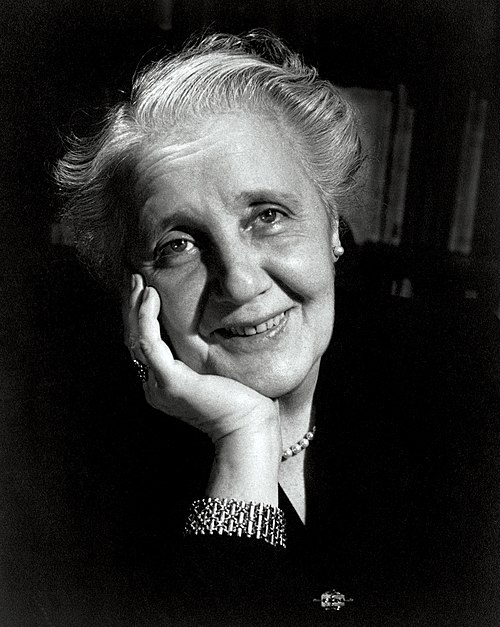
Melanie Klein (1882–1960) occupies a foundational place within the history of psychoanalysis as the principal architect of object relations theory and one of the most innovative, controversial, and philosophically resonant figures of the Freudian tradition. Her work transformed both the clinical understanding of early childhood development and the conceptual grammar through which twentieth-century psychoanalysis theorized anxiety, aggression, fantasy, and the internal world. Born Melanie Reizes in Vienna to a middle-class Jewish family, Klein’s early intellectual formation was shaped less by formal university education—which she never completed—than by a combination of personal analysis, philosophical curiosity, and maternal experience. Her trajectory from patient to analyst exemplifies the self-forming dynamic of early psychoanalytic culture, in which biographical suffering and theoretical creativity intertwined in productive, and sometimes troubling, ways.
Early Life and Formation in the Psychoanalytic Movement
Klein married Arthur Klein in 1903 and spent much of the next decade in Budapest, where she underwent a formative analysis with Sándor Ferenczi. Ferenczi encouraged Klein’s nascent interest in children’s play as an analogue to adult free association, laying the groundwork for her pioneering technique of child analysis. In 1919, she presented her first paper to the Hungarian Psychoanalytic Society, arguing that play constitutes a symbolic language of unconscious fantasy rather than a mere behavioral expression.
Following the upheavals of the First World War and the decline of the Budapest circle, Klein moved to Berlin—then a vibrant center of analytic experimentation. There she further developed her clinical method and refined her hypothesis of early superego formation, diverging significantly from Freud’s classical developmental timetable. Her Berlin period was marked by both intellectual productivity and increasing conflict with the mainstream Freudian establishment, whose senior figures viewed her theoretical innovations with skepticism.
Emigration to London and Development of Object Relations Theory
Klein’s definitive intellectual home emerged in London, where she relocated in 1926 at the invitation of Ernest Jones. The British Psychoanalytical Society, more eclectic and institutionally flexible than its Viennese and Berlin counterparts, provided fertile ground for the elaboration of her most consequential ideas.
During the 1930s and 1940s Klein advanced a radical reconceptualization of psychic life: the notion that the infant’s mind is structured from the earliest months by phantasmatic relations to internal objects—introjected and projected part-objects imagined as sources of love, persecution, nourishment, and destruction. In juxtaposition to Freud’s drive-based chronology, Klein posited the paranoid-schizoid position (characterized by splitting, projection, and persecutory anxiety) as an early, universal phase of mental organization, followed by the depressive position, wherein the infant becomes capable of ambivalence, concern, and reparation toward the loved object.
These formulations transformed psychoanalytic theory by shifting emphasis from the Oedipus complex as the primordial organizing principle of subjectivity to a deeper, pre-Oedipal field of relational and affective structures. Klein’s claims—especially the precocity she attributed to infantile phantasy—provoked sustained opposition from Anna Freud and her allies, leading to the famous “Controversial Discussions” (1942–44), a multi-year institutional struggle that effectively divided the British Society into Kleinian, Anna Freudian, and Independent factions.
Clinical Practice and Methodological Innovation
Klein’s clinical method was distinguished by her systematic use of play as an interpretive medium, the vigorous deployment of transference interpretation, and a strong emphasis on unconscious phantasy as an ever-present structuring force rather than a residue of past developmental stages. Her therapeutic focus on psychotic anxieties, even in neurotic patients, contributed to a major reorientation of psychoanalytic technique and opened the conceptual space for post-war developments in the treatment of borderline and psychotic states.
Critics have long noted the intensity of Klein’s interpretive style and its theoretical overreach; nevertheless, her attention to primitive anxieties, early internal object relations, and unconscious aggression reshaped the discipline’s understanding of psychopathology. The influence of Kleinian technique remains especially pronounced in Britain, South Africa, and Latin America, where Kleinian and Neo-Kleinian schools—represented by figures such as Wilfred Bion, Hanna Segal, Donald Meltzer, and Herbert Rosenfeld—refined her ideas into sophisticated models of thinking, symbolization, and psychosis.
Later Work and Intellectual Legacy
After World War II, Klein produced some of her most philosophically suggestive texts, including Envy and Gratitude (1957), in which she identified envy as a primary destructive force arising from the infant’s relation to the good object (most paradigmatically, the maternal breast). This late work extended her lifelong inquiry into the ambivalence of love and hate and underscored the fragility of psychic integration.
Klein’s death in 1960 did not diminish the force of her ideas. Instead, the subsequent decades witnessed a robust elaboration of object relations theory and its intersection with philosophy, cultural theory, and developmental psychology. Bion’s concept of the container-contained relationship and his theory of thinking, Segal’s work on symbolism, and the Independent Group’s synthesizing contributions demonstrate that Kleinian thought became a generative matrix rather than a closed system.
Today Klein is recognized as one of the most important psychoanalytic theorists after Freud. Her work forms a crucial bridge between classical metapsychology and later relational, intersubjective, and post-Kleinian approaches. In feminist theory, philosophy of mind, and literary criticism, Kleinian concepts of internal objects, phantasy, and reparation have become analytic tools for interrogating subjectivity, aggression, and the ethical dimensions of human relatedness. If her hypotheses remain contentious, they nonetheless constitute a major part of the conceptual scaffolding of modern psychoanalysis.
Selected Bibliography
Primary Works by Melanie Klein
• Klein, Melanie. The Psycho-Analysis of Children. London: Hogarth Press, 1932.
• ——. Contributions to Psycho-Analysis, 1921–1945. London: Hogarth Press, 1948.
• ——. Envy and Gratitude and Other Works, 1946–1963. London: Hogarth Press, 1975.
Secondary Scholarship
• Grosskurth, Phyllis. Melanie Klein: Her World and Her Work. New York: Knopf, 1986.
• Hinshelwood, R. D. A Dictionary of Kleinian Thought. London: Free Association Books, 1989.
• Segal, Hanna. Introduction to the Work of Melanie Klein. London: Hogarth Press, 1964.
• Spillius, Elizabeth B., et al. The New Dictionary of Kleinian Thought. London: Routledge, 2011.
• Steiner, John. Psychic Retreats: Pathological Organizations in Psychotic, Neurotic, and Borderline Patients. London: Routledge, 1993.
• Young-Bruehl, Elisabeth. The History of Psychoanalysis. New York: Basic Books, 1982.
 Letters from Tomis
Leave a comment