Book Review
Stephenson, Wen. Learning to Live in the Dark: Essays in a Time of Catastrophe. Haymarket Books, 2025.
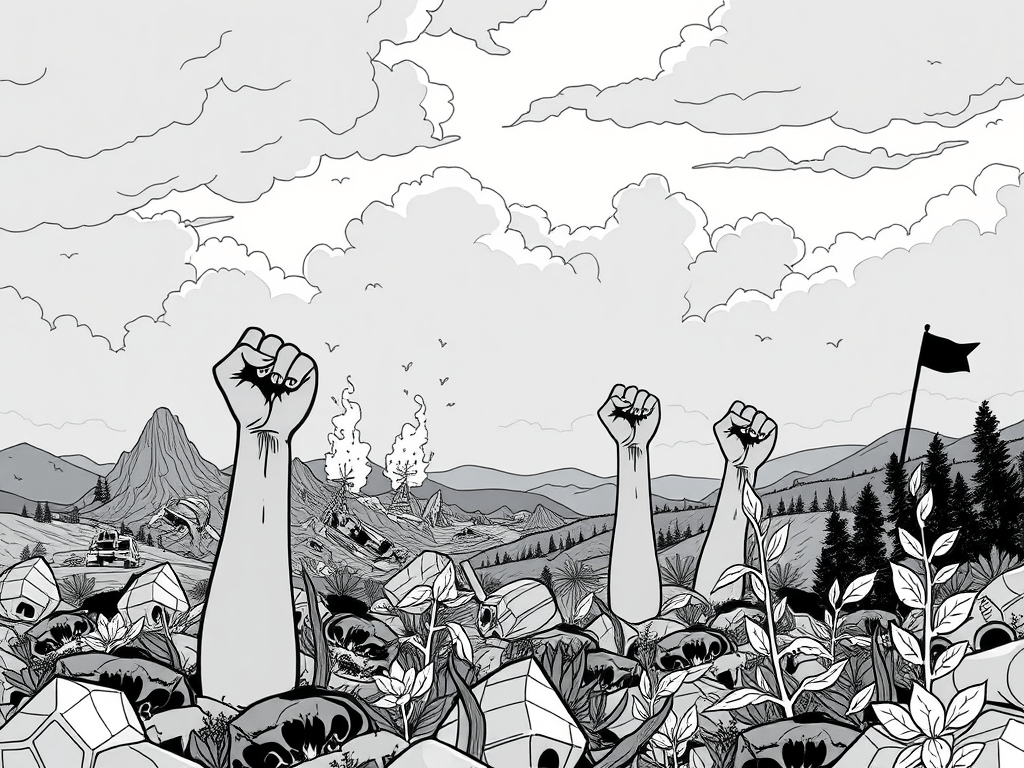
Wen Stephenson’s collection arrives out of the impasse between accelerating ecological breakdown and the disarticulation of a viable revolutionary left. Framed as “hard-hitting and deeply personal essays,” the book interrogates despair, liberal paralysis, and the lure of fatalism, seeking instead a steady ethic of solidarity “in the shadow of catastrophes that will not wait.” The publisher’s catalogue and event materials foreground this tension—ecological crisis intertwined with resurgent authoritarianism—and situate the essays as a search for “resolve,” not optimism.
From a revolutionary Marxist standpoint, the book’s most valuable contribution is its insistence that climate crisis is not a moral accident but a historically determinate outcome of capitalist social relations. Stephenson’s through-line echoes the tradition of metabolic-rift analysis: the ecological catastrophe is a product of generalized commodity production and the valorization imperative, not merely consumer vice. Where many climate essays lapse into technocratic incrementalism or green moralism, Stephenson keeps returning to organization, power, and the question of what forms of collective life can be built when time is short. This orientation places the work in productive dialogue with ecosocialist literature and uneven-and-combined development perspectives—useful for readers attempting to link atmospheric science to class rule and imperial logistics.
Politically, the essays are strongest when they renounce the therapeutic consolations of “hope” in favor of what Stephenson calls a sturdier “resolve.” That rhetorical move matters: it displaces passive expectation with praxis, a wager on struggle that resonates with Lenin’s and Luxemburg’s critiques of fatalism and with Gramsci’s insistence on building counter-hegemony even in a “war of position.” Stylistically, the book interleaves reportage, reflection, and polemic; at its best it approximates a testimonio of movement life, recalling the author’s long engagement as a journalist and activist writing for venues like The Nation.
Yet from a revolutionary perspective, two strategic limits appear.
1. Organization and the question of power. The essays articulate a politics of refusal and solidarity, but they are less concrete on the organizational forms adequate to confront a fully financialized, fossil-dependent bourgeois state. How do we get from militant networks and climate justice coalitions to durable organs of dual power capable of coercing or replacing state authority? The path from “resolve” to seizure and transformation of state power remains under-specified.
2. Surplus populations and transition. The book treats “just transition” with moral seriousness, but a Marxist account requires a material plan for labor’s recomposition: rank-and-file industrial strategy, de-commodified public ownership of energy and transport, and international mechanisms for reparations and technology transfer. Without these, the danger is a politics of exemplary sacrifice rather than a program to expropriate the expropriators.
Still, the collection’s refusal of cheap optimism, its clarity that ecological time-scales have outrun liberal governance, and its insistence on comradeship make it a bracing intervention in the U.S. climate discourse. The Progressive’s early notice rightly reads the book as wrestling with contradiction—organizing on fossil-fueled platforms, living ethically amid structures one cannot individually exit—yet refusing nihilism. That stance is not a substitute for revolutionary strategy; it is, however, a necessary precondition for it.
Verdict: For revolutionaries, Learning to Live in the Dark is not a blueprint, but it is a serious work of political and moral formation for militants confronting climate barbarism. Read it alongside Malm on fossil capital, Foster on the metabolic rift, and contemporary organizing manuals on rank-and-file power; take from Stephenson the disciplined refusal of despair and the commitment to build institutions strong enough to plan, decommodify, and decarbonize at the speed history requires.
 Letters from Tomis
Leave a comment