My Socialist Hall of Fame
During this chaotic era of vile rhetoric and manipulative tactics from our so-called bourgeois leaders, I am invigorated by the opportunity to reflect on Socialists, Revolutionaries, Philosophers, Guerrilla Leaders, Partisans, and Critical Theory titans, champions, and martyrs who paved the way for us—my own audacious “Socialism’s Hall of Fame.” These are my heroes and fore-bearers. Not all are perfect, or even fully admirable, but all contributed in some way to our future–either as icons to emulate, or as warnings to avoid in the future.
Early Life and Education
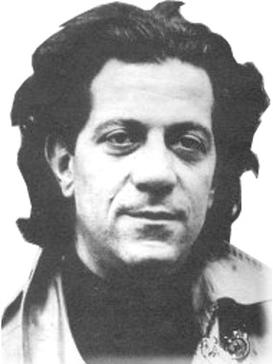
Nicos Poulantzas (1936–1979) was born in Athens, Greece, into a middle-class family during a period of profound political turbulence marked by the Metaxas dictatorship, the Axis occupation, and the subsequent civil war. His early intellectual development was shaped by this fractured political environment, where questions of democracy, authoritarianism, and class conflict were inescapable.
Poulantzas initially studied law at the University of Athens, before moving to France in the 1960s, where he pursued graduate studies in philosophy and sociology at the Sorbonne. In Paris he came into contact with the French intellectual milieu dominated by structuralism, existentialism, and Marxist renewal. He studied under Louis Althusser, whose structuralist Marxism profoundly influenced Poulantzas’s theoretical approach, though their intellectual relationship would later diverge.
Intellectual Development and Major Works
Poulantzas’s work is best understood as an attempt to provide a rigorous Marxist theory of the state and political power, distinct both from orthodox economism and reformist functionalism. His writings drew heavily on Marx, Weber, Gramsci, and Althusser, but synthesized these sources into a distinct theoretical framework.
Political Power and Social Classes (1968)
His first major work, Political Power and Social Classes (1968), advanced a structuralist theory of the capitalist state. Poulantzas rejected both liberal theories of the state as a neutral arbiter and crude Marxist reductions of the state to a mere “instrument” of the ruling class. Instead, he conceptualized the state as a “material condensation of a relationship of forces among classes”—a relatively autonomous structure that organized the long-term interests of capital as a whole. This was a key innovation, providing a theoretical solution to debates about the autonomy and function of the capitalist state.
Fascism and Dictatorship (1970)
In Fascism and Dictatorship, Poulantzas applied his theoretical framework to the historical case of European fascism. He rejected psychological and purely ideological explanations of fascism, instead analyzing it as a political outcome of crises in class alliances during the interwar period. He emphasized the role of the petty bourgeoisie and the reconfiguration of hegemonic blocs in explaining fascist regimes.
Classes in Contemporary Capitalism (1974)
Here Poulantzas addressed transformations in class structures under advanced capitalism, including the rise of new middle classes (white-collar and technical workers). He highlighted the contradictory position of these strata between capital and labor, complicating traditional dichotomies of bourgeoisie and proletariat.
State, Power, Socialism (1978)
His final and most influential work, State, Power, Socialism, marked a departure from his earlier structuralism. Responding to criticisms from Ralph Miliband and engaging in the “Miliband–Poulantzas debate,” he elaborated a more relational and strategic conception of the state. Here Poulantzas stressed the state as a strategic field of struggle, rather than a fixed structure, allowing greater theoretical room for democratic socialist transformation. He argued for the possibility of a “democratic road to socialism” through the radicalization of existing democratic institutions, positioning himself against both reformist parliamentarism and insurrectionist vanguardism.
Political Engagement
Though primarily a theorist, Poulantzas was deeply engaged with contemporary politics. He was associated with the Eurocommunist current, especially the French Communist Party and later the Greek left. His theoretical insistence on democratic paths to socialism reflected the dilemmas of the European left in the 1970s, grappling with the failures of Stalinism, the persistence of social democracy, and the decline of revolutionary insurrectionary politics.
Legacy and Influence
Poulantzas’s work remains foundational in Marxist political theory, especially debates on the capitalist state, class structure, and authoritarianism. His formulations anticipated later theories of the state as a contested arena and influenced scholars such as Stuart Hall, Bob Jessop, Erik Olin Wright, and Ellen Meiksins Wood.
The “Miliband–Poulantzas debate” remains a landmark in Marxist political theory, illustrating the tension between structuralist and instrumentalist approaches to the state. Poulantzas’s later emphasis on the strategic-relational approach helped transcend this binary, offering tools to analyze how class forces interact within institutions.
Poulantzas died by suicide in Paris in 1979 at the age of 43. His untimely death cut short a career that was actively shaping leftist strategy during a period of crisis and transition. Yet his writings continue to serve as essential reference points for contemporary Marxist analysis of neoliberalism, authoritarian statism, and democratic socialism.
Bibliography
• Jessop, Bob. Nicos Poulantzas: Marxist Theory and Political Strategy. London: Macmillan, 1985.
• Miliband, Ralph. “The Capitalist State: Reply to Nicos Poulantzas.” New Left Review 59 (1970): 53–60.
• Poulantzas, Nicos. Political Power and Social Classes. London: New Left Books, 1973 [1968].
• Poulantzas, Nicos. Fascism and Dictatorship: The Third International and the Problem of Fascism. London: New Left Books, 1974 [1970].
• Poulantzas, Nicos. Classes in Contemporary Capitalism. London: New Left Books, 1975 [1974].
• Poulantzas, Nicos. State, Power, Socialism. London: Verso, 1978.
• Poulantzas, Nicos. Pouvoir politique et classes sociales. Paris: Maspero, 1968.
• Poulantzas, Nicos. La crise des dictatures: Portugal, Grèce, Espagne. Paris: Maspero, 1975.
• Poulantzas, Nicos. L’État, le pouvoir, le socialisme. Paris: PUF, 1978.
• Wright, Erik Olin. “The Debate on Classes.” New Left Review 1/146 (1984): 15–74.
 Letters from Tomis
Leave a comment