Book Review
Jansson, Tove, and Tuulikki Pietilä. Notes from an Island. Translated by Thomas Teal, Sort Of Books, 2023.
Introduction
Notes from an Island is an intimate and aesthetically minimalist collaboration between Tove Jansson—celebrated Finnish-Swedish author and creator of the Moomin series—and her life partner, the graphic artist Tuulikki Pietilä. Blending prose, illustration, and visual diary, this book documents their decades-long sojourns to Klovharun, a remote islet in the Gulf of Finland. It is neither fully a memoir nor entirely a travelogue, but a hybrid form capturing the metaphysical texture of life lived in deliberate isolation and aesthetic simplicity.
Strengths
Evocative Minimalism and Precision
Jansson’s prose is spare, contemplative, and elegant—qualities that reflect both her broader literary style and the ascetic setting of Klovharun itself. The diary-like entries are brief but densely suggestive, suffused with the rhythms of weather, waves, and wind. Jansson’s voice is quiet but emotionally resonant, suggesting that meaning lies not in narrative drama but in the textures of daily life—watching gulls, chopping wood, fearing storms.
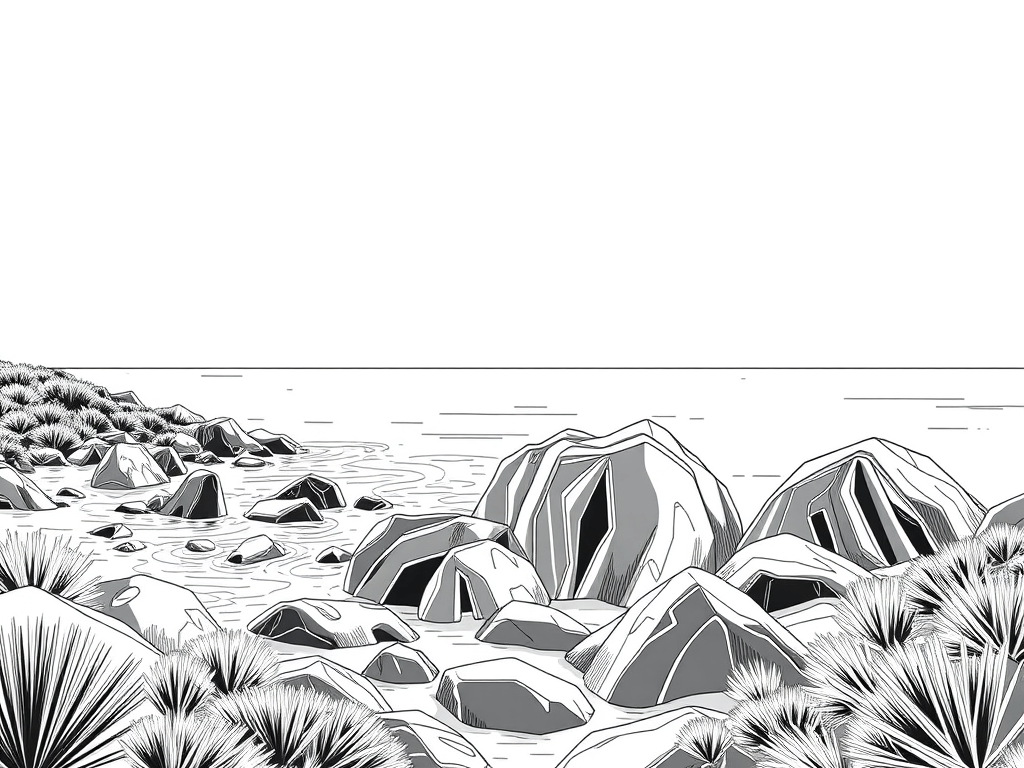
Pietilä’s contributions in the form of sketches and woodcuts offer a visual parallel to Jansson’s writing: austere, geometric, and raw. The interplay between text and image deepens the atmosphere of retreat, turning the book into a kind of aesthetic meditation.
Exploration of Creative Solitude and Companionship
The book is a testament to the productive tensions between solitude and companionship. Jansson and Pietilä’s shared life is understated but central—there is no melodrama, no grand declarations, only the quiet labor of shared meals, repairs, and creative routines. Readers are invited to witness a queer relationship rendered through the lens of artistic partnership and unspoken care.
The island itself becomes a third character: unpredictable, beautiful, and sometimes hostile. As a space, Klovharun embodies freedom and fragility—a metaphor, perhaps, for the creative act or for the negotiation of intimacy without dependency.
Environmental Sensibility and Phenomenology of Place
Jansson’s narrative is ecologically attuned, though never polemical. The attention to seasonal change, marine life, and the rituals of weathering storms make this book feel timeless, even as the authors build their house with tools and materials that imply post-war scarcity.
For readers interested in nature writing—particularly the Northern European tradition of quiet observation—Notes from an Island evokes parallels to the work of Thoreau, Dillard, or J.A. Baker, but with an added sense of modesty and diffidence.
Limitations
Fragmentation and Lack of Narrative Arc
The book’s greatest strength—its fragmentary, diaristic form—is also a potential weakness for readers expecting a sustained narrative or emotional arc. The entries resist climax or resolution. While this formal decision reflects the subject matter (life on a small island is repetitious and cyclical), it may leave some readers feeling underwhelmed or detached.
There are moments where the narrative turns reflective, hinting at personal loss or existential doubt, but these moments are fleeting. Readers seeking psychological depth or interpersonal tension may find the book’s restraint frustrating.
Selective Intimacy and Elusiveness
Jansson and Pietilä were famously private, and this text upholds that ethic. While their relationship is ever-present, it is never analyzed. We hear little about their conflicts, political views, or interior struggles. The result is a kind of emotional reserve that may feel, to some readers, overly opaque.
Moreover, the gender and queer dimensions of the book are never explicitly addressed. While the understated treatment can be seen as a form of quiet resistance, it also leaves modern readers with a desire for more contextual anchoring, especially in light of Jansson’s importance as a queer cultural figure.
Limited Scope and Geographic Specificity
The book’s insularity (literally and thematically) may limit its global appeal. While readers familiar with Nordic landscapes and seasonal rhythms will likely find the descriptions immersive, others may find the hyper-local focus less accessible or less resonant.
The absence of broader cultural commentary—on the Cold War era, Finnish nationalism, or the art world—is notable. For readers interested in placing Jansson’s private life in a more overt political context, the book leaves much to be desired.
Conclusion
Notes from an Island is a beautiful, contemplative work that rewards readers who appreciate aesthetic subtlety, naturalistic prose, and the poetry of quiet routines. It is best approached not as a memoir in the traditional sense, but as a meditative artifact of a shared life shaped by creativity, weather, and restraint.
Its fragmented style and understated emotionality will not appeal to all audiences, and those seeking confessional depth or political discourse may find it elusive. Yet its commitment to presence, ecology, and minimalist beauty make it a valuable contribution to the genre of place-based writing and a unique window into the life of one of the 20th century’s great literary and visual artists.
 Letters from Tomis
Leave a comment