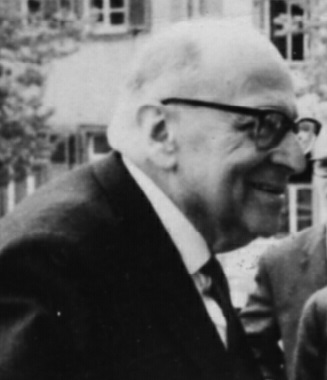
My Socialist Hall of Fame
During this chaotic era of vile rhetoric and manipulative tactics from our so-called bourgeois leaders, I am invigorated by the opportunity to reflect on Socialists, Revolutionaries, Philosophers, Guerrilla Leaders, Partisans, and Critical Theory titans, champions, and martyrs who paved the way for us—my own audacious “Socialism’s Hall of Fame.” These are my heroes and fore-bearers. Not all are perfect, or even fully admirable, but all contributed in some way to our future–either as icons to emulate, or as warnings to avoid in the future.
Max Horkheimer (1895–1973) was a German philosopher and sociologist best known as a leading figure of the Frankfurt School of critical theory. Born in Stuttgart, Germany, Horkheimer initially entered his family’s business but soon turned to academia, studying philosophy and psychology. He earned his doctorate in 1922 and his habilitation in 1925 at the University of Frankfurt.
In 1930, Horkheimer was appointed director of the Institute for Social Research at the University of Frankfurt, a position that positioned him as a central figure in the development of interdisciplinary critical theory. Under his leadership, the Institute became the intellectual hub of what would come to be known as the Frankfurt School, integrating insights from philosophy, sociology, psychoanalysis, and economics.
Horkheimer is best known for his critique of modern capitalist societies, rationality, and instrumental reason. His collaboration with Theodor W. Adorno produced Dialectic of Enlightenment (1947), a seminal text that analyzed how Enlightenment rationality could evolve into new forms of domination, rather than liberation. Horkheimer also authored important essays and books such as Eclipse of Reason (1947), in which he distinguished between objective reason and instrumental reason, arguing that the dominance of the latter under capitalism leads to moral and social decay.
The rise of Nazism forced Horkheimer and his colleagues into exile. He spent the war years in the United States, where the Institute was temporarily relocated to Columbia University. After World War II, he returned to Frankfurt and resumed his role at the Institute, helping to rebuild its presence in postwar German intellectual life.
Horkheimer retired from active academic work in 1959 but remained influential until his death in 1973. His work laid the groundwork for later developments in critical theory, cultural studies, and political philosophy.
Selected Bibliography
Primary Works by Max Horkheimer
1. Eclipse of Reason (1947) – A critique of the dominance of instrumental rationality.
2. Dialectic of Enlightenment (1947, with Theodor W. Adorno) – A foundational text in critical theory analyzing reason, culture, and domination.
3. Critique of Instrumental Reason (1967) – A collection of essays expanding on his philosophical themes.
4. Between Philosophy and Social Science (1930–1938, English ed. 1993) – Essays written during the early years of the Frankfurt School.
5. Dämmerung: Notizen in Deutschland (1934) – Aphoristic reflections during the rise of fascism.
6. Gesammelte Schriften (Collected Works, 1985–1996, 19 volumes) – Comprehensive edition of Horkheimer’s writings in German.
Secondary Literature
1. Jay, Martin. The Dialectical Imagination: A History of the Frankfurt School and the Institute of Social Research (1973).
2. Wiggershaus, Rolf. The Frankfurt School: Its History, Theories, and Political Significance (1994).
3. Held, David. Introduction to Critical Theory: Horkheimer to Habermas (1980).
4. Abromeit, John. Max Horkheimer and the Foundations of the Frankfurt School (2011).
5. Dubiel, Helmut. Theory and Politics: Studies in the Development of Critical Theory (1985).
 Letters from Tomis
Leave a comment