An ongoing series of reflections on Marxist economics after reading What is Marxism: An Introduction into Marxist Theory by Rob Sewell and Alan Woods. The thoughts, opinions, and any errors are mine alone.
It is a testament to the enduring vulgarity of our economic discourse that Karl Marx, a thinker of both enormous erudition and relentless polemical force, is often dismissed as an anachronism—at best, a quaint relic of the 19th century, and at worst, a specter haunting the delusions of modern intellectuals. And yet, despite this long and often deliberate campaign of misrepresentation, his analysis of capitalism remains unnervingly prescient. One of the most illuminating and least understood aspects of his critique is his distinction between use-value and exchange-value, a differentiation that exposes the structural contradictions of the market economy with a clarity that should shame many of its present defenders.
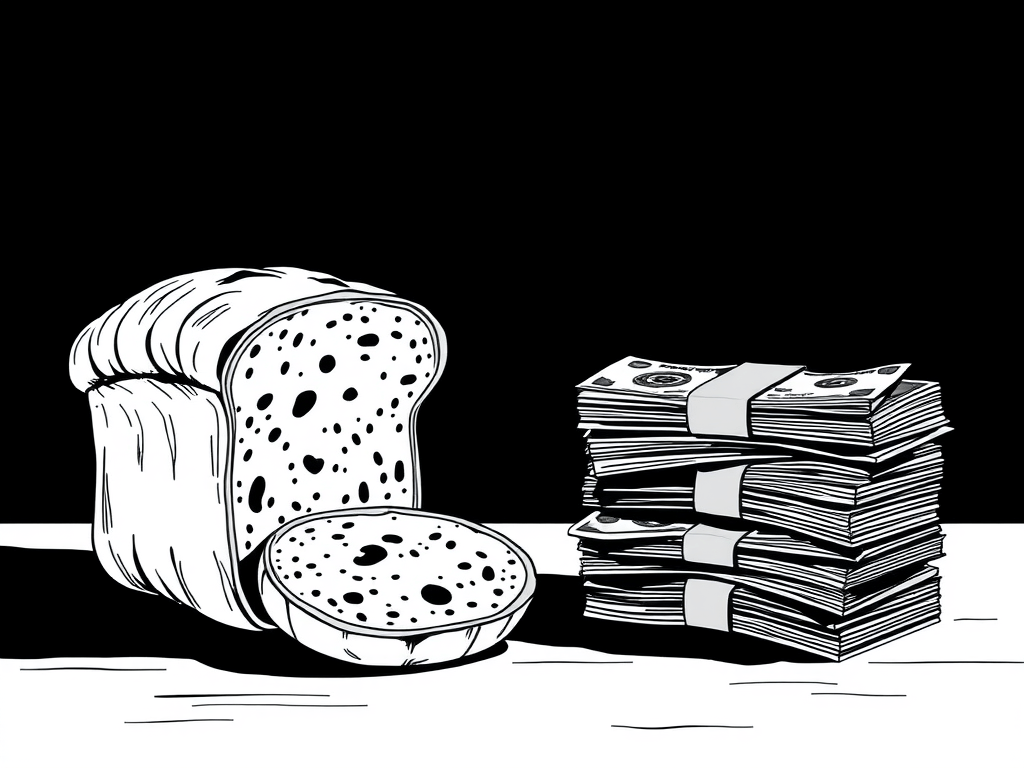
The concept itself is strikingly simple, almost painfully so. Use-value pertains to an object’s actual utility—its ability to satisfy a human need or desire. A loaf of bread provides nourishment, a coat offers warmth, a book imparts knowledge (or, depending on the book, the illusion of it). Exchange-value, by contrast, is the quantitative worth of that same object when placed in the market and traded for another commodity or, in our more advanced stage of abstraction, for money. The two are neither synonymous nor naturally aligned, and herein lies the devilry.
The capitalist mode of production does not privilege use-value; it is indifferent to it. The primary, indeed sole, concern of capital is exchange-value. Profit does not emerge from the production of goods necessary for human flourishing, nor does it depend upon the moral worth of the object in question. A life-saving medicine and a garish trinket might command identical prices, depending on the whims of speculation, monopolistic maneuvering, or artificial scarcity. The absurdity of a system in which commodities are produced not for their intrinsic worth but for the accumulation of exchange-value should be evident to anyone who has ever been confronted with the grotesque spectacle of unsold food being destroyed while thousands starve.
This is not, as some crude misreadings would have it, an argument against trade, nor is it the romantic fantasy of a barter economy populated by noble peasants exchanging sacks of grain. It is, rather, an exposure of the inhuman logic by which production is governed not by need but by the cold arithmetic of profit. The capitalist, we are told, seeks only to meet demand—but demand, in its market sense, is merely the ability to pay. A dying man in the desert may have infinite use for water but, in the absence of cash or credit, precisely zero demand in the economic sense. A billionaire may never wear his fiftieth suit, but his ability to purchase it ensures its continued production.
What Marx understood, and what remains stubbornly beyond the grasp of those who would call themselves his critics without having read him, is that this dynamic is not merely an unfortunate quirk of capitalism—it is capitalism. The very essence of the system is the commodification of human life, the transformation of all that is necessary into all that is profitable. Education, healthcare, housing—none are produced or distributed on the basis of their use-value but according to the grim calculus of exchange. If it is more profitable to leave apartments empty than to house the homeless, then empty they shall remain. If curing disease is less lucrative than managing it indefinitely, then the latter course will be taken.
What follows from this realization is not necessarily an immediate call to revolution—though one could hardly fault those who make it—but at the very least, a demand for honesty. The defenders of the market must cease their pretense that capitalism is about efficiency or fairness or meeting human needs. It is about one thing and one thing only: the relentless pursuit of exchange-value, irrespective of whether it serves any rational or humane purpose. The question we must ask is whether we are content to remain the passive subjects of this system, or whether we possess the courage and imagination to envision an alternative.
The choice is ours, but as Marx himself would remind us, history has a way of making choices for those who refuse to make them.
 Letters from Tomis
Leave a comment