An ongoing series of reflections on Marxist economics after reading What is Marxism: An Introduction into Marxist Theory by Rob Sewell and Alan Woods. The thoughts, opinions, and any errors are mine alone.
Karl Marx, a man whose mind was as sharp as it was relentless, never lacked for enemies or fools to lampoon. Among his many contributions to our understanding of history and economics, one concept stands out for its brutal clarity: primitive accumulation. Like much of Marx’s work, it has been misunderstood by the shallow and vilified by the cynical. Yet, for anyone willing to face facts rather than ideological illusions, it reveals one of capitalism’s original sins: how wealth and power were seized and concentrated, laying the foundation for modern economic relations.
To understand primitive accumulation, one must first dispense with the mythology that capitalism grew out of hard work and virtuous thrift. This is the fairy tale that continues to be peddled by those who benefit most from its illusions. The story goes something like this: in a time long ago, certain industrious individuals worked harder and saved more than others. Through their diligence, they acquired wealth, which they then invested in production, and capitalism was born—a peaceful, bloodless miracle of progress.
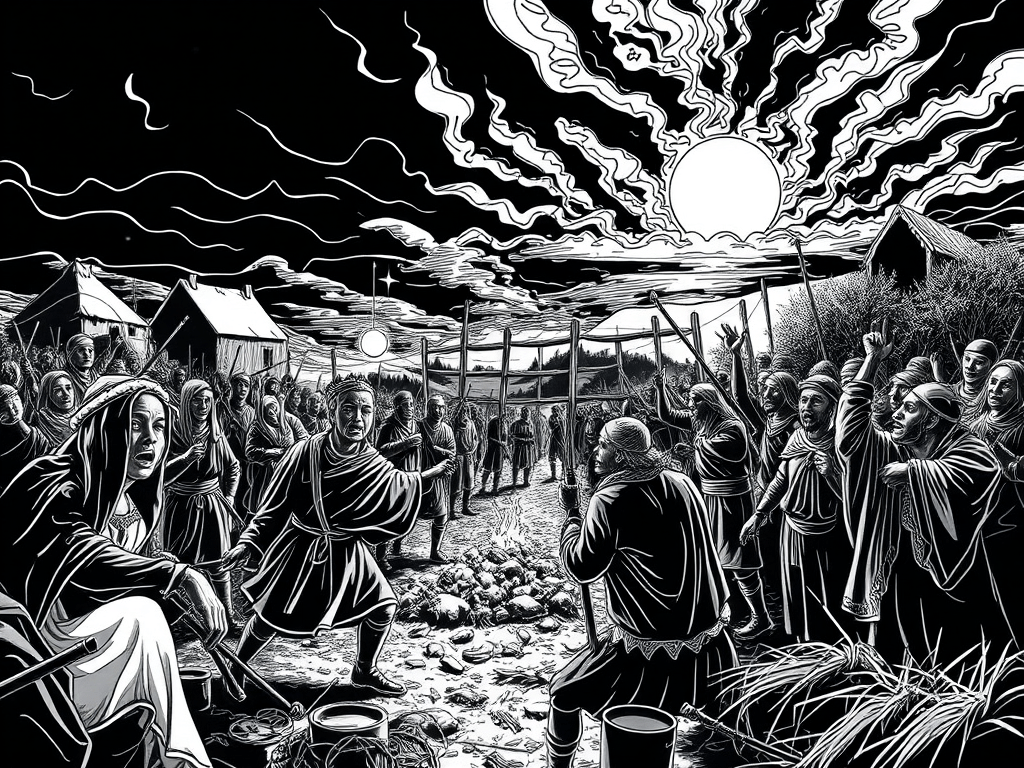
Marx, in Capital, calls this what it is—nonsense. Primitive accumulation, in reality, is not the story of savings and industrious entrepreneurs, but rather one of violence, expropriation, and theft on a grand scale. It is the “prehistory” of capitalism, in which entire populations were dispossessed of their means of subsistence. Land was enclosed, communities were destroyed, and the peasantry was driven off their land by force, leaving them no choice but to sell their labor to survive.
This process was anything but subtle. Marx points to the enclosures in England, when common lands that had once been accessible to peasants were seized by the landed elite. Laws were passed, backed by the force of arms, and those who resisted were dealt with brutally. What we call the modern proletariat was not born through the miracle of free enterprise but created through the brutal compulsion of necessity. One by one, entire populations were forced into wage labor after being deprived of their ability to sustain themselves independently. The enclosures were a form of legalized robbery dressed in the garb of “progress.”
Of course, it was not just in Europe where this story unfolded. Marx only hinted at the broader global implications of primitive accumulation, but history has done the rest of the work for him. The conquest of the Americas, the Atlantic slave trade, and the plunder of entire continents are all chapters in the same tale. When gold and silver were looted from South America, when enslaved Africans were shipped across the ocean in chains, when India was drained of its resources by the British Empire, these were all acts of primitive accumulation—acts that fueled capitalism’s rise to global dominance.
Now, there are those who might object and say that this is all in the past. The enclosures, the slave trade, and colonialism are now consigned to history, and today’s capitalism functions on different principles. But this objection, much like capitalism itself, rests on a wilful denial of reality. As Marx noted, the original crimes of primitive accumulation are never truly erased. The wealth accumulated through violence and theft does not disappear—it compounds and consolidates, flowing through generations like inherited sin. One need only look at the obscene concentration of wealth in the hands of a few multinational corporations or the enduring poverty of formerly colonized nations to see that the legacy of primitive accumulation is alive and well.
Furthermore, the process never really stopped. The same mechanisms of dispossession that Marx described continue in new forms. Land grabs in the Global South, forced evictions under the guise of “development,” and the privatization of public goods are all part of this ongoing story. The actors have changed, the rhetoric has shifted, but the basic dynamic remains: the few expropriate the many, claiming that it is all for their own good.
There is, of course, an ideological apparatus that defends all of this. Capitalism, as Marx understood, is not merely an economic system but a system of ideas that legitimizes itself through myth. The myth of primitive accumulation as a peaceful and voluntary process is just one of many such fictions. Today, we are told that “market forces” are natural, that inequality is the result of differences in talent and effort, and that wealth “trickles down.” These ideas are not merely wrong—they are lies, designed to protect the interests of those who benefit from the system.
Marx’s concept of primitive accumulation, then, is not simply an economic theory. It is an indictment of power—a reminder that the wealth of nations is often built on violence and suffering. It forces us to confront the uncomfortable truth that the world we live in was not created by noble entrepreneurs but by ruthless opportunists who took what they wanted, often at the expense of others’ lives and dignity.
The defenders of the capitalist order would rather we forget this history, but Marx—irritating, inconvenient, and often infuriatingly correct—refuses to let us. In his brutal prose, he forces us to look at the skeletons in the closet of modernity and ask ourselves a simple question: How much blood is on the balance sheet of “progress”? The answer, as Marx understood, is more than any of us would care to admit.
Primitive accumulation, in the final analysis, is not just a concept for academics to debate. It is a challenge to those who believe that injustice is merely a relic of the past. It is a reminder that beneath every gleaming skyscraper and every stock market success story lies a foundation built on theft and suffering. And unless we are willing to confront that history, we are condemned to live in its shadow.
In short, Marx knew what the comfortable would prefer not to know. And for that reason, The German Ideology, Capital, and his other works continue to haunt us like the ghosts of those who were robbed so that a privileged few might prosper.
 Letters from Tomis
Leave a comment